Kerry lawyer accused of people smuggling for trying to rescue refugees from sea back in court next month
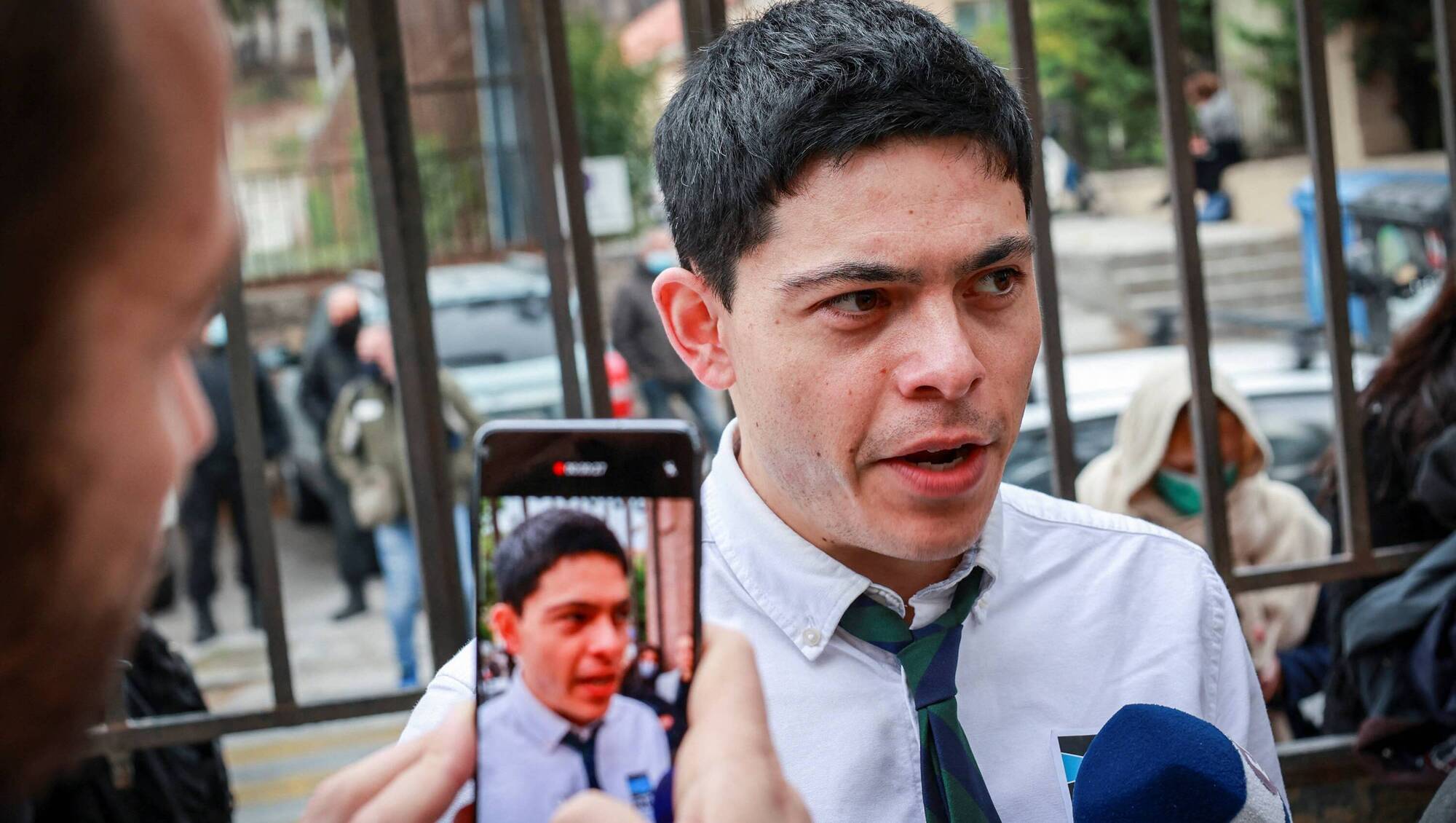
Seán Binder answers journalists' questions outside the court of Mytilene in the island of Lesvos on November 18, 2021. File picture: Manolis Lagoutaris/AFP/Getty
A Kerry humanitarian and lawyer is due back in court in January on people smuggling charges after trying to rescue refugees from drowning in the sea.
Seán Binder is one of 24 defendants charged in connection with efforts to save refugees from drowning off the Greek island of Lesvos in 2018.
Witnesses gave evidence at the Mytilene Court of Appeals in Lesvos, Greece, over two days earlier this month.
“The very first witness, who was from the United Nations High Commissioner for Refugees, described the prosecution against us as ‘the criminalisation of humanitarian action'," Mr Binder said.
The next two witnesses were from the coast guard, who both confirmed the humanitarians had contacted them about any refugees in trouble at sea or arriving on the shores and had fully co-operated with relevant authorities.
To find the humanitarians guilty of people smuggling, the prosecution would have to show they had refused to co-operate with authorities.
Police investigators were the next two witnesses, he said, who had examined their phones and laptops and looked for money laundering evidence with nothing more incriminating found than use of the common WhatsApp encrypted messaging app and an online fundraiser to pay for a washing machine.
The secret police commander of Lesvos island, who Mr Binder said initiated the investigation against the humanitarians, was the final and most important witness for the prosecution.
“His evidence was, in a nutshell, ‘I didn't know that the Coast Guard had been cooperating, or that they'd been cooperating with the Coast Guard'," Mr Binder said.
The police chief said he viewed the humanitarians as suspicious because they were using WhatsApp.
This was despite the police chief admitting to using WhatsApp for general communication with his own family, Mr Binder said.
The trial has been adjourned until January 15. Mr Binder and his fellow humanitarians will then take the stand with their own evidence.
They face charges of participation in a criminal organisation, people smuggling, and money laundering.
Mr Binder could face up to 20 years in prison if convicted.
He is still “between two minds” about what will happen with the trial.
“On the one hand, I’m very optimistic. But nothing is a certainty.
“I'm pretty confident that the prosecution doesn't have any compelling argument as to why we're guilty, whether or not that manifests in an acquittal ultimately.
“But it's so frustrating that we had to wait seven years, having the suspicion over me, not being able to work.
“And this entire narrative built up around our humanitarian activity. You'd hope that they'd have more than, ‘well, they used WhatsApp, so they might be guilty’.
“That doesn't justify three and a half months in prison, seven years of limbo [waiting for trial], the fear of 20 years of imprisonment hanging over us."
All search and rescue on the island was effectively stopped over those seven years too, he said.
“People [have been] drowning as a consequence."
Mr Binder, age 31, began volunteering for the search and rescue NGO ERCI on Lesvos in 2017, a lethal year for crossing the Mediterranean, with more than 3,000 people reported dead or missing.
In 2018, the Greek authorities arrested Mr Binder, then age 24, and detained him for more than 100 days before releasing him on bail.
Mr Binder has been trapped in limbo for the seven years since, with limitations on his career, unable to start a family, and having to save to potentially pay for an apartment in Greece so his mother and partner could visit if he is jailed.
“The uncertainty has scared people away from doing search and rescue,” Mr Binder said.

CONNECT WITH US TODAY



Be the first to know the latest news and updates