Time to tackle council underspend on Traveller accommodation
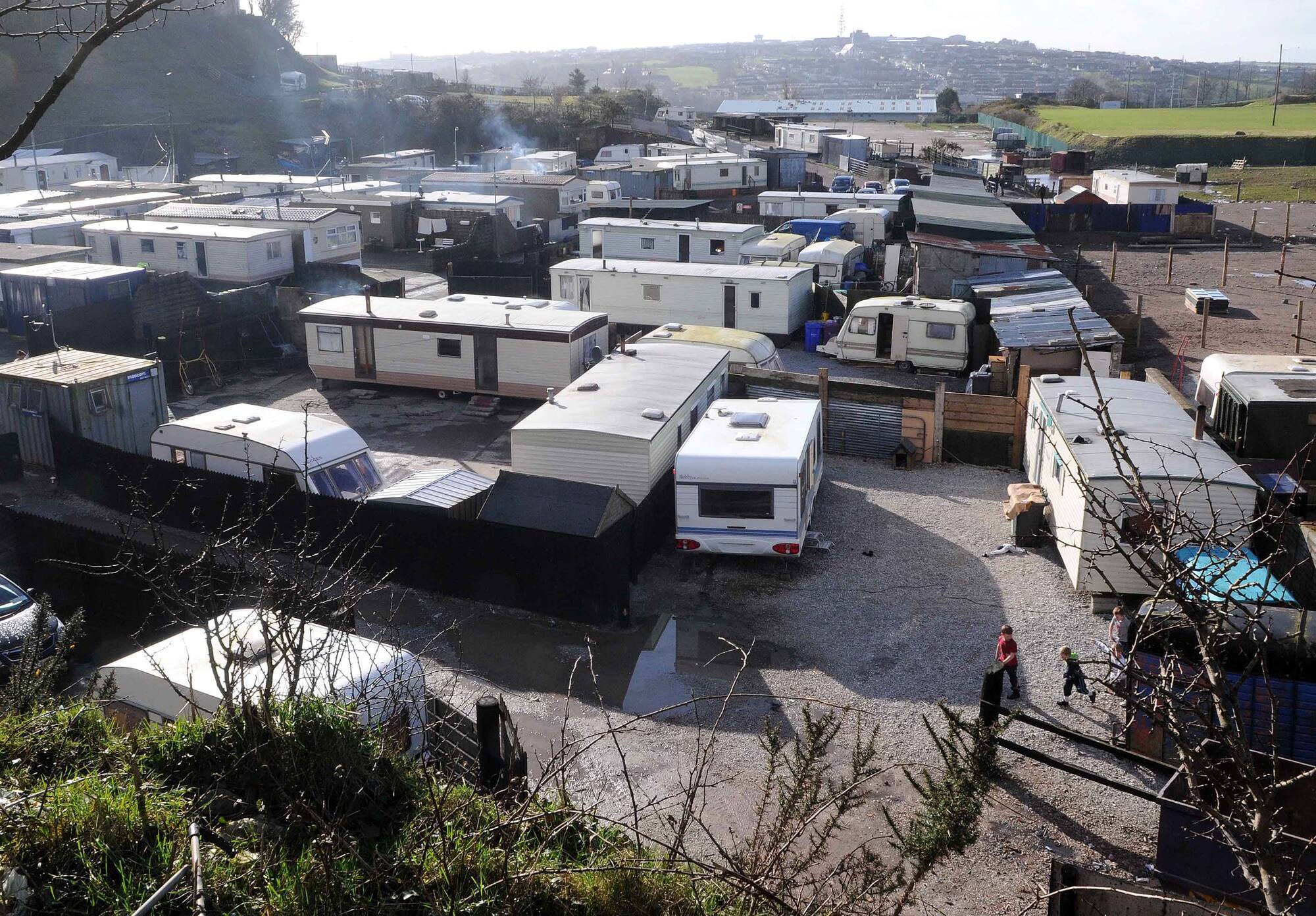
The Travellers' Halting Site in Spring Lane, Cork, where families have been left to live in filthy, overcrowded, rat-infested, and unsafe living conditions. Photo: David Keane
Picture your newborn child sleeping through winter in a car with nowhere else to go. Or recovering from surgery with no running water or electricity. Imagine sending your child to play in severe pollution, next to waste facilities on vermin-infested sites. Or living with the constant threat of eviction.
In our country, these real experiences are an all-too-frequent reality for Travellers, and reflect a meagre record of Traveller-specific accommodation provision.

In Irish law, local authorities have responsibility for the provision of Traveller accommodation set out in the Housing Act 1998, and obligations not to discriminate unlawfully under the Equal Status Acts 2000-2018. Members of the Traveller community comprise 9% of the homeless population and are nine times more likely to experience discrimination in access to housing.
To further highlight the Traveller experience, 39% of Traveller households live in overcrowded conditions compared with less than 6% of all households. Why then have local authorities not been spending designated money on Traveller accommodation?
Between 2008 and 2018, of €168.8m allocated to local authorities for Traveller-specific accommodation, just two-thirds (€110.6m) was drawn down. With ample evidence of underspend, the Irish Human Rights and Equality Commission has sought to further highlight why this underspend has been happening, and to examine what systemic changes are required to improve the situation.
For two years, we have exercised our statutory powers through a formal legal process, called an equality review inviting all local authorities to audit their service provision of Traveller accommodation.
Specifically, we asked them to explore the extent of the failure to draw down their available allocated budget, and to explore the level of discrimination for Travellers opting for culturally appropriate accommodation such as halting sites, transient bays or group schemes.
Today, we publish our analysis of local authorities' provision of Traveller-specific accommodation, including individualised recommendations from the commission to each local authority. These accounts highlight the underlying issues in the current system of drawdown, evidence poor information gathering to inform decision-making, and identify problems in identifying Travellers’ true accommodation preferences.
Local authorities identify several reasons for underspend, including planning, management, funding, and site-related issues. With the State’s effort, these structural issues can be remedied by national policy and procedural overhaul.
For example, we found evidence that the process for assessing the number of Travellers in a given local authority area varies from council to council, and that the process itself can be deficient in capturing accurate information.
Councils typically base their current and future needs on social housing applications and the annual estimate of Travellers in their area. There has been no facility for people to simply identify themselves as members of the Traveller community on the social housing application form.
This lack of an ethnic identifier over the period examined has implications for the identification of and inclusion of Travellers within particular housing streams. We understand that this is now being put in place and is a welcome development.
A much more evasive obstacle to overcome is the importance of cultural difference in the treatment of Travellers by the State in providing accommodation.
Ireland recognised Traveller ethnicity in March 2017. Today, however, there is scant evidence of a full appreciation of the practical implications of cultural difference when providing services and when engaging with the Traveller community. We must ensure that the State recognition of Traveller ethnicity goes beyond a statement in the Dáil, and translates into appropriate service provision by public bodies across Ireland.
From our equality reviews work, we found that local authorities showed little understanding of the practical implications of cultural difference for service provision.
Aspects of Traveller culture such as ethnicity, nomadism, use of caravans, and horsemanship are not adequately provided for in accommodation plans.
The commission also found local authorities showed limited understanding of the positive action allowed by the equal treatment legislation, and the imperative of positive action in addressing entrenched situations of inequality and disadvantage, and legacies of discrimination.
While most local authorities suggest Traveller preferences are moving substantially towards standard housing, there was, without exception, no analysis provided of the reasons Travellers cited for such a shift in preferences. We’re concerned that the lack of availability and poor standards in Traveller-specific accommodation is a contributing factor in this shift.
"A 2018 report from the Irish Human Rights and Equality Commission found Travellers to be 22 times more likely than any other group to be discriminated against in the private rental sector." @_IHREC https://t.co/JgnnwDFtcL
— Womenscouncilireland (@NWCI) July 2, 2021
In most cases, local authorities made no reference to participation by the Local Traveller Accommodation Consultative Committee (LTACC) or to any consultation with local Travellers or Traveller organisations, by local authorities, to inform the equality review. Participation is a key human rights principle to involve people in the decisions which affect them.
Ireland’s provision of Traveller accommodation has drawn widespread international criticism, including from the UN, the Fundamental Rights Agency of the EU, and the Council of Europe. The last 12 months alone have been marked by regular and disturbing reports and testimony on Traveller accommodation, and the commission’s own legal casework has shown the appalling conditions in which many Traveller families are forced to live.
Accommodation needs and preferences, and specifically demand for culturally appropriate or Traveller-specific versus “settled” or standard housing, is a subject of intense dispute between Traveller organisations, local authorities, and the State.
Local councillors and CEOs within authorities are the drivers of change, with the power and the duty to collectively transform Traveller-specific accommodation.
With our practical recommendations published today, local authorities are newly empowered to address identified gaps, failures, and inadequacies in their service provision. And the Traveller community is better equipped to hold them to account.
- Sinéad Gibney is Chief Commissioner of the Irish Human Rights and Equality Commission