Accommodation crisis in Traveller community
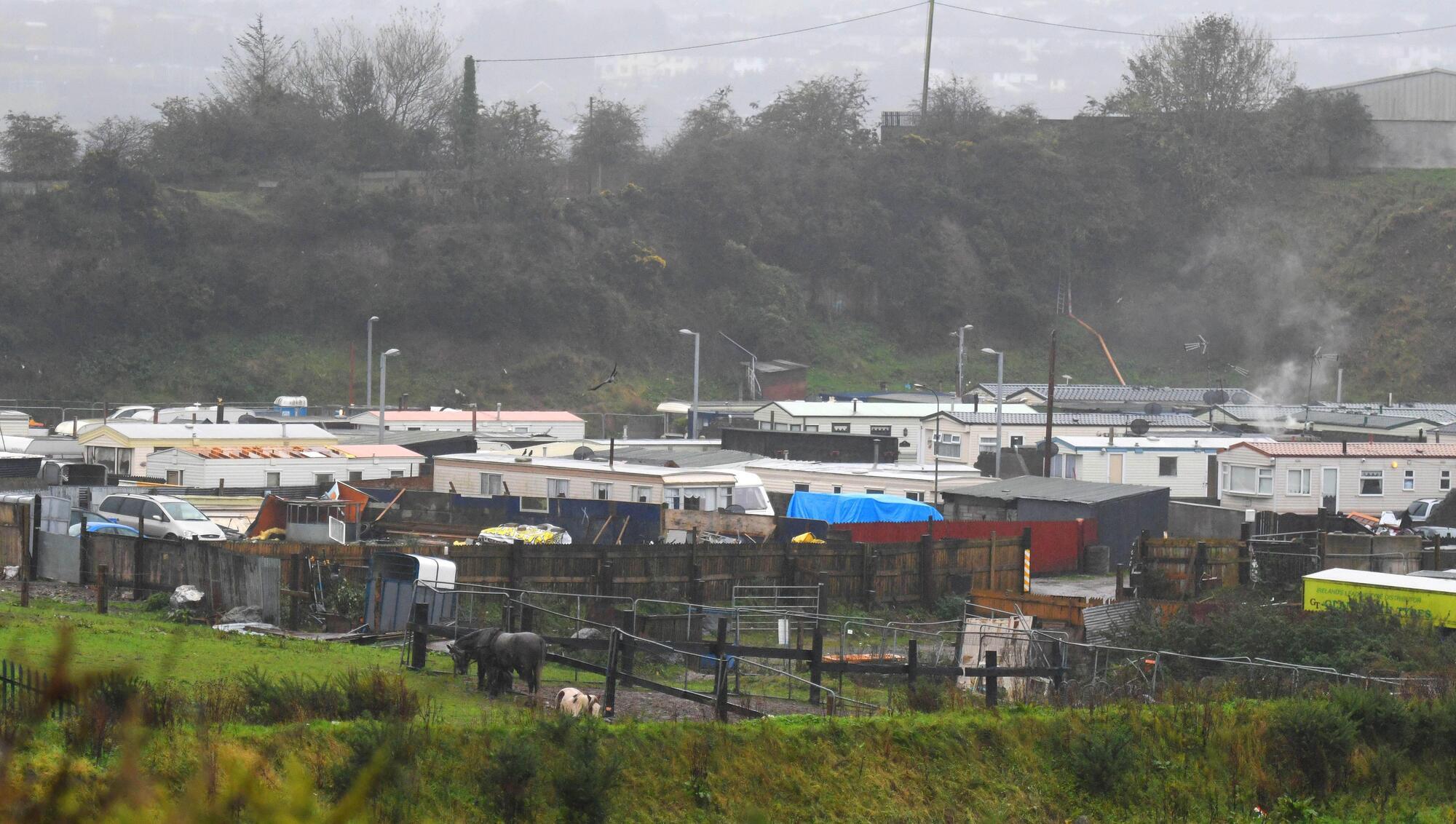
The Spring Lane halting site in Blackpool, Cork. File picture: Larry Cummins
There are more than 1,000 households on the social housing list with a Traveller-specific accommodation need but the actual housing need is likely to be higher, the head of the Housing Agency told an Oireachtas committee on Thursday.
Addressing the Oireachtas committee on key issues affecting the Traveller community, Housing Agency chief executive John O’Connor confirmed that 1,047 households were recorded as having a Traveller-specific accommodation need in 2020.
However, he said the housing need was likely to be higher: “In addition to that, on the general social housing list there are more Traveller families that aren’t specifically identified”.
Discrimination and issues with the Housing Assistance Payment (HAP) scheme contributed to a high proportion of Travellers living in homeless emergency accommodation, the committee heard.
A 2018 report from the Irish Human Rights and Equality Commission found Travellers to be 22 times more likely than any other group to be discriminated against in the private rental sector.
Data from 2018 for Dublin city and county recorded 504 homeless Travellers in emergency accommodation in October 2018, including 100 families with children – this represented 9% of all homeless families in Dublin.
Fianna Fáil TD Éamon Ó Cuiv said the scale of homelessness among the Traveller community was a “fair measure” of the housing challenges they faced. In Galway City, he said, half of those living in homeless accommodation came from the Traveller community.
Focus Ireland policy coordinator Rosemary Hennigan said the Traveller community was “over-represented” in emergency homeless accommodation:
When asked by committee chair Senator Eileen Flynn how discrimination in the private rental sector could be addressed, Ms Hennigan suggested an authority, such as the Ombudsman, could investigate such cases.
The implementation of recommendations made by the Traveller Accommodation Expert Group in 2019, such as the inclusion of an ethnic identifier in social housing assessments, will help to identify and respond to Traveller accommodation needs.
“Having a standardised way of collecting information will be a big step forward for understanding what needs to be planned into the future,” Roslyn Molloy, head of policy and practice at the Housing Agency, said.
A programme board, set up last year to implement the expert recommendations, is progressing 18 recommendations this year, with 11 projects up and running.
Mr O’Connor added the Housing Agency was supporting Traveller-specific accommodation projects in Cork City, Kerry and Monaghan, and CENA, the Traveller-led housing association.
While Cork City Council came in for criticism following the recent Ombudsman for Children’s investigation into the Spring Lane site, he said the council had delivered “positive” Traveller-specific schemes, such as the Hollyhill development, which included a mix of houses and bays.
Mr O’Connor, who sits on the board of the Land Development Agency (LDA), also committed to raising the need for Traveller accommodation with the LDA, which is tasked with using public lands to meet housing need.
CONNECT WITH US TODAY



Be the first to know the latest news and updates