Philosophical lessons from lockdown: Why everything must change
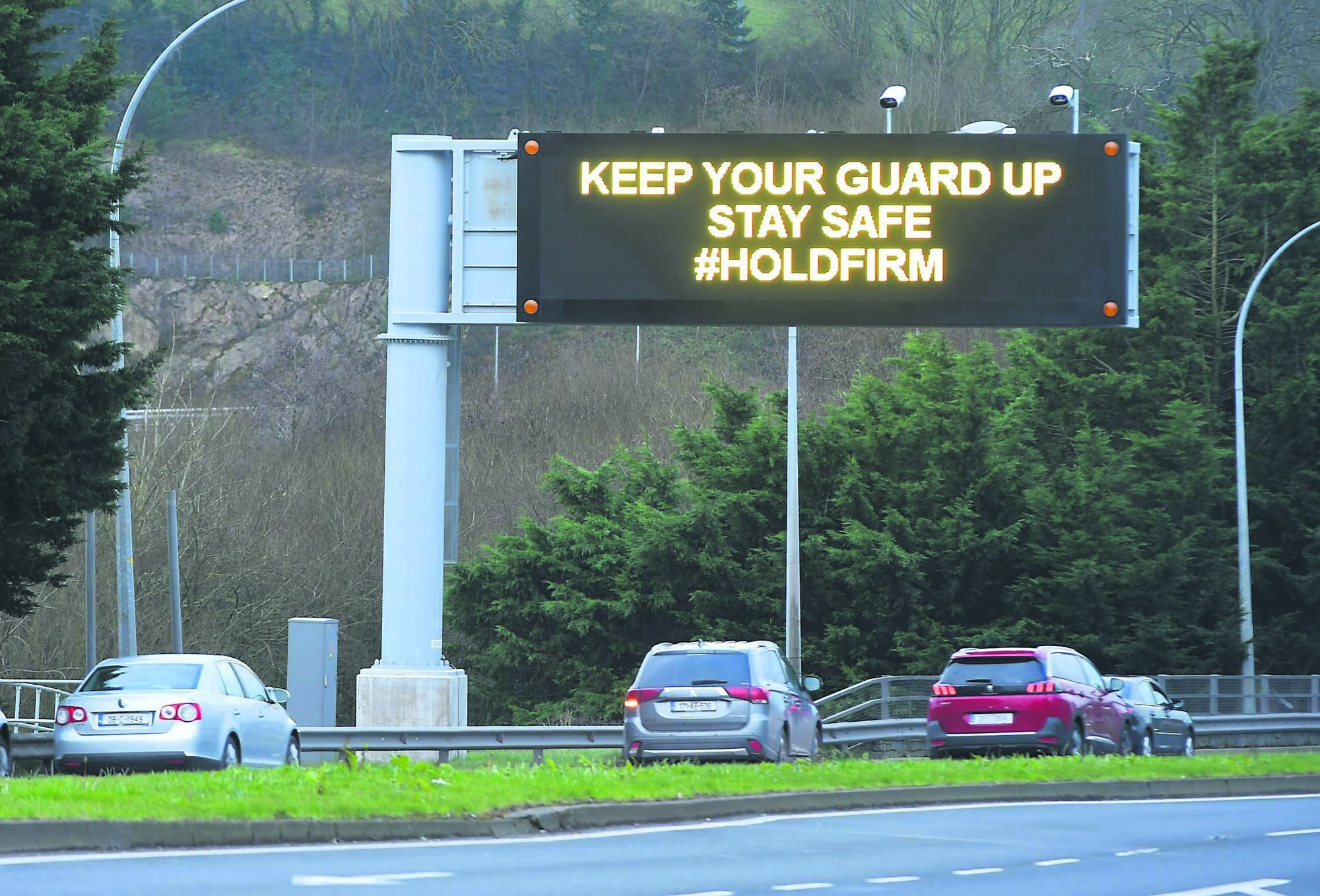
A traffic information sign on the N27 South Link Road states âkeep your guard up, stay safe, #holdfirmâ. Over the last 18 months, we have seen a surge in Covid-19 related slogans, all apparently sensible and well-intended: to educate us, to comfort us, to encourage us. Unfortunately, all these slogans are also profoundly problematic, for a variety of different reasons.
âWe are in it all togetherâ. âWash your handsâ. âLetâs go back to normalâ. In the last 18 months we have seen a surge in Covid-19 related slogans, all apparently sensible and well-intended: to educate us, to comfort us, to encourage us.Â
Unfortunately, all these slogans are also profoundly problematic, for a variety of different reasons.
We are not in it all together, because contrary to what we were told initially, we are not all equally vulnerable to this pandemic, and Covid-19 is not blind to social class, race, or gender. How this virus affects people has very little to do with misfortune, and everything to do with underlying inequalities in the existing social structure.Â
Gender, class, race and disability are still determining factors in the identity of those worst affected by Covid-19. Pandemics strike hardest where there is inequality and poverty, and predictably Covid-19 has had a different impact depending on the status and social class of its citizens, and often victims.Â
There is a class and race divide in the Covid-19 death rate, with those in low-paid, working-class jobs clearly worse affected than those in middle and upper-class jobs, where people have the luxury to self-isolate and work from home. We know that low-paid working-class jobs are not equally distributed across ethnic and racial minorities; it is not a coincidence that in the UK minority ethnic groups account for 34% of critically ill Covid-19 patients despite constituting only 14% of the population.Â
In the US, during the worst peak black Americans were dying of Covid-19 at three times the rate of white people. In Ireland between November 2020 and April 2021 there was approximately a total of 179,000 Covid-19 cases reported, of which 16,700 (9.3%) were healthcare workers.
Wash your hands, and keep your distance, are impossible tasks for billions of people around the world. Home to just 8% of the global population, by June 2020 Latin America had suffered half the world's new coronavirus deaths.Â
And then there is India. According to a report from the World Health Organization from June 2019, some 3 billion people around the world lack basic handwashing facilities. In developing countries, three-quarters of the population live in âslumsâ: overcrowded, without adequate access to safe water and sanitation, and insecurity of tenure.
The virus will have a devastating effect on all poorer nations, and the reason for this is the precarious conditions of poverty people find themselves in. David Malpass, the head of the World Bank, has warned that the Covid-19 crisis could push another 60 million people into poverty, worldwide, while according to Oxfam 121 million more people face being pushed to the brink of starvation because of the pandemic.Â
It is not surprising that early indications suggest that this pandemic has exacerbated individual vulnerabilities to human trafficking.
In order to remedy the inequalities generated by the current system of social injustice, radical changes are necessary, including in Ireland. A comprehensive redistribution of wealth is imperative.Â
Oxfamâs The Inequality Virus report, published in January 2021, highlights how the worldâs 1,000 richest people had recouped their Covid-19 losses within just nine months, while it could take more than a decade for the worldâs poorest to recover economically from the pandemic. In the United States billionaires saw their wealth increase by $1.1 trillion, or almost 40%, during the first 10 months of the coronavirus pandemic.Â
According to Oxfam, Covid-19 has the potential to increase economic inequality in almost every country at once, the first time this has happened since records began over a century ago.
Covid-19 has fully exposed the true character of our society: its remorseless injustice. No one is responsible for the fact that viruses exist, nor for the fact that some viruses are more harmful than others, but collectively we are responsible for the fact that pandemic preparedness plans were grossly insufficient, and the response to the crisis almost totally inadequate.Â

Not to mention the fact that across the globe, bar a few exceptions, decades of many years of privatisations and austerity have left many countries ill-prepared to deal with this major crisis. This is when injustice creeps in.
Speaking at the International Labour Organisation (ILO) Global Summit on July 8, 2020, President of Ireland Michael D. Higgins made the point that the pandemic has exposed the stark reality of the paradigm in which our economies have operated for the last four decades: a shrinking of the space of the State, including the undervalue of frontline workers: âFrom this demonstrably failed model of economy we must free ourselves, make a new balance between economy, ecology, society and cultureâ.Â
President Higgins is right, as always, and more governments need to find the courage to call spade a spade, instead of indulging in nostalgic reminiscences about the âgood olâ daysâ pre-Covid-19 of galloping inequalities and relentless exploitation. Ireland could be a world-leader on this issue, but early indications suggest that nothing has been learned from this tragic episode.
We must have the courage to fundamentally reshape our society. Covid-19 is a warning bell: radical changes to our economy are now an imperative, and nothing should be off the table: an unconditional basic income to everyone between the ages of 18 and 25 would be a sensible place to start; the vital work of our nurses should be recognized, and properly remunerated; universities need to be properly funded, since thatâs where our future experts will emerge from.
Of course, over the last 18 months there were worse places to be than Ireland, but things could have been done much better here. The government went along with expertsâ advice some of the time, except when it didnât suit them.Â
When last October Nphet recommended that the whole country move to Level 5, the government not only rejected the advice, but Leo Varadkar even had the audacity to say that recommendations to move to Level 5 had not been âthought throughâ. And so, instead of having a short, sharp but effective lockdown, we had an ongoing porous lockdown for many months, which inevitably punished some members of Irish society much more harshly than others, almost inevitably the most vulnerable ones amongst us.
If we are to adopt one slogan from the experience of this pandemic, it should be this: âEverything Must Changeâ.
- Dr Vittorio Bufacchi is Senior Lecturer in Philosophy at University College Cork. His book Everything Must Change: Philosophical Lessons from Lockdown will be out on June 10.