Antigen testing is set to increase – but what does this mean in the fight against Covid-19?
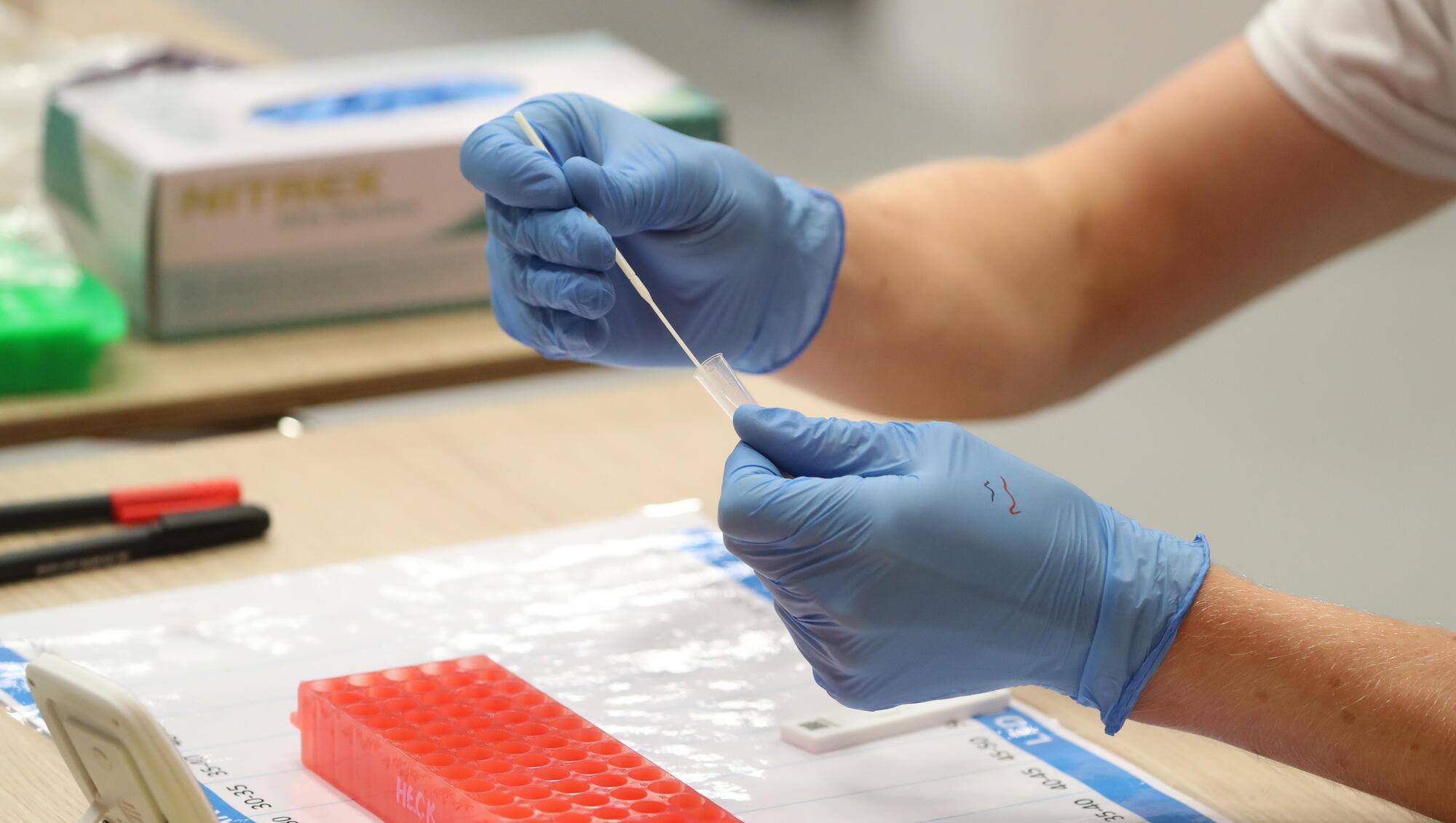
Antigen tests deliver results in about 20 minutes and do not need to be sent to a laboratory.
File picture
The wider use of antigen testing is set to become a key part of Ireland's ongoing fight against Covid-19.
An expert group – the Covid-19 Rapid Testing Group, which had been commissioned by Health Minister Stephen Donnelly – has now recommended that pilot schemes be run in a number of settings, including schools, colleges and some workplaces.
But, despite this endorsement, there is still some scepticism about the broad use of the tests, which are not 100% reliable.
These tests, also called lateral flow tests, identify proteins on the virus. They deliver results in about 20 minutes and do not need to be sent to a laboratory.
Instead, a tester places the swab into a tube of liquid for reading. Some show a line to indicate Covid-19, like a pregnancy test.
They were described as portable, easy to prepare and not requiring specialised staff to run by the authors of a review by medical research evaluators the Cochrane Collaboration published last week.
This review looked at 64 international studies covering 24,087 antigen and molecular testing swabs taken in Europe and America.
It sounds positive, but, the review found, they are most accurate in the first week after symptoms develop.
The authors cautioned: “In people with confirmed Covid-19, antigen tests correctly identified Covid-19 infection in an average of 72% of people with symptoms, compared to 58% of people without symptoms.”
This is of particular concern in Ireland as up to 46% of people infected with the B117 variant, the most dominant in Ireland, have been asymptomatic, according to some studies.
This has been a crucial sticking point in the debate.
Supporters say doing the tests regularly with a group of people will catch infections over time, while others warn false negatives lead to a misplaced sense of safety.
While the Covid-19 Rapid Testing Group report backed their use, two of the six-person committee did not support the recommendation.
It recommends piloting antigen testing in sites including nursing homes, retail, manufacturing plants and universities, while supermarket chain Lidl is offering tests for its 6,000 staff. And yesterday, Higher Education Minister Simon Harris announced pilot programmes for four universities.
At least one nursing home was ahead of this curve.
In Tipperary, manager of the Patterson Nursing Home Sandra Farrell began offering tests to family members last month when visiting re-started. She described it as an extra “safety measure”.
In Cork, CEO of Advanced Medical Services Ed Donovan said Covid-19 pressures changed the antigen testing scene.
“I was looking at antigen tests back last year, and at the time, we weren’t that comfortable with launching it. We couldn’t stand over a test from the quality point of view,” he said.
But since January, having invested in a test made by Abbott and approved for use in some settings by the HSE, the company has sold 13,000 tests. They work mainly with the food industry and have been approached by pharmaceutical companies.
And like Ms Farrell, he says the tests are only part of the solution.
The HSE has now used more than 7,700 tests in a validation process, a spokeswoman said. This is expected to conclude “in the coming weeks”.
They are used in hospitals, food production plants and during outbreaks in parallel with PCR tests.
Quick results mean infected people can be identified and sent home right at the start of an outbreak.
The spokeswoman said: “The antigen test currently deployed within the meat production sector is an Abbott nasal antigen test. The choice of test can differ based on a range of criteria.”
Going forward, the Covid-19 Rapid Testing Group report cautions that there are gaps in the knowledge about how effective such tests are so the idea we can pop out and do a test before safely going for a pint is still quite some way off, judging by these findings.
But taken together with vaccinations, PCR testing and public health guidelines, the antigen tests could be another way for us to get back to that elusive normality.

CONNECT WITH US TODAY



Be the first to know the latest news and updates