Government must grasp the nettle on housing and tackle land speculation
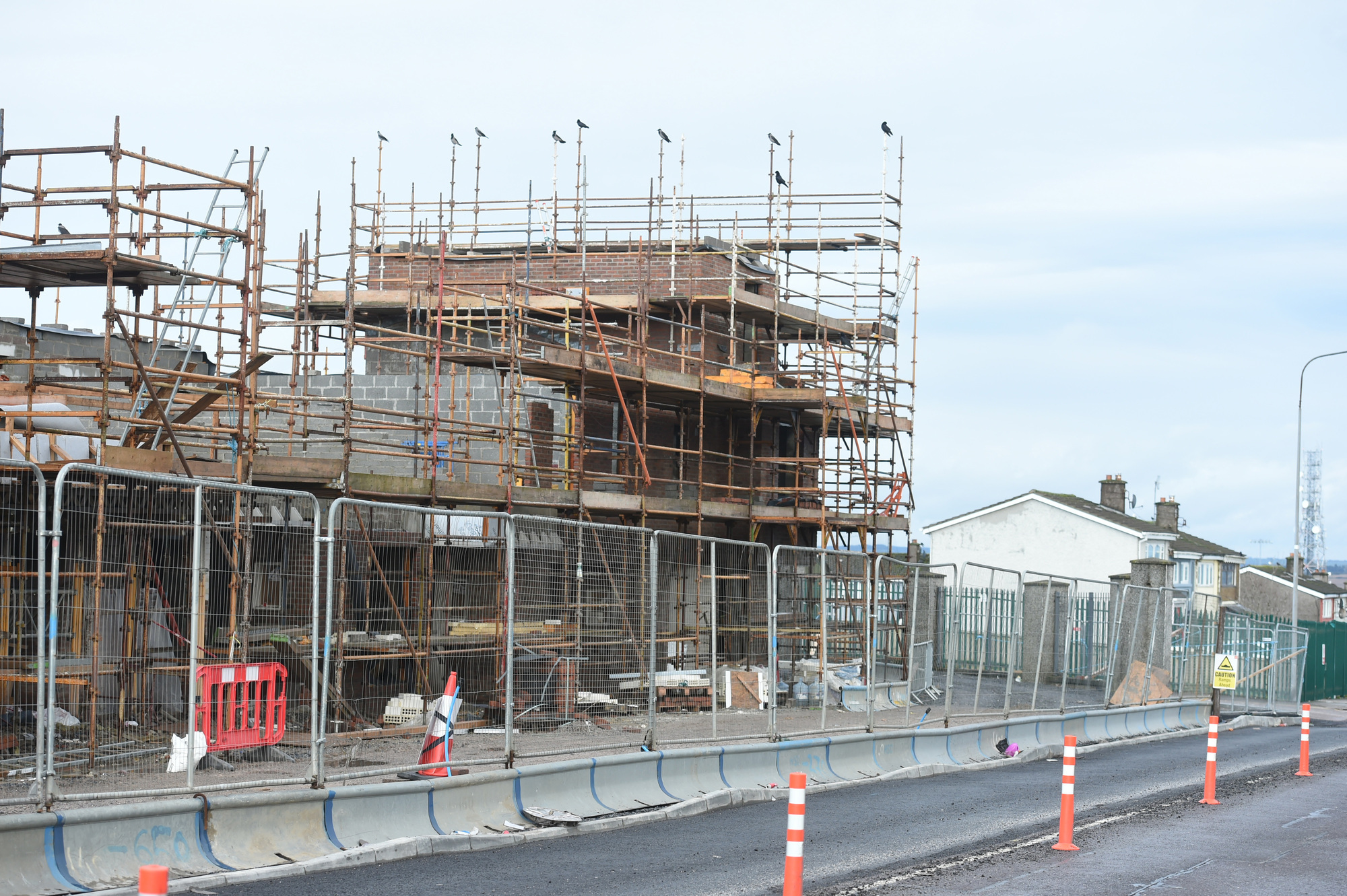
Earlier this year, the Minister for Housing Darragh O’Brien stated that his department needed to be “ambitious in our aims and be imaginative and practical in our solutions”.
A laudable sentiment, but one undermined by a continuation of the failed housing policies of the previous government and a reliance on the private sector.
The previous government launched the Land Development Agency (LDA) in 2018, with an initial capital investment of €1.25bn, to build 150,000 units over 20 years.
One of the objectives of this LDA, to which public lands will be transferred, was to deliver at least 40 per cent of housing built on lands transferred from the State in the form of social (10 per cent) and affordable (30 per cent) housing.
The remaining 60 per cent would be privately owned.
With over 60,000 households on the most recent social housing lists (November 2020), more than 8,000 people accessing emergency homelessness accommodation, 4,000 households in direct provision and inadequate spending on Traveller accommodation for decades, we should expect more from the development of public lands than more privatisation.
The LDA is now to be placed on a statutory footing, which will see an increase in its powers of procurement.
The Land Development Agency (LDA) Bill 2021 was published on February 5, 2021 and gives the LDA wide-ranging powers to acquire (including by Compulsory Purchase Order) public and other lands for development and to sell lands to local authorities and others, and to enter into contracts and joint ventures in respect of these public lands.
The breadth of the remit proposed by this legislation is alarming. The most recent Residential Land Availability Survey, published in 2014, indicated that local authorities owned enough zoned land to build 414,712 homes.
A scenario where 60 per cent of those homes would be sold privately is not acceptable.
In January 2021, Government published the General Scheme of the Affordable Housing Bill 2020. While various mechanisms are set out within the terms of the general scheme to provide affordable housing to purchasers, many of these are unclear and problematic.
The general scheme continues to provide for a situation where a housing authority may enter into an agreement with a developer to build housing at a set price and sell that housing at a price that is less than the price agreed with the developer.

The housing authority will then pay the developer the difference between the purchase price and the price agreed.
This type of arrangement is currently in operation in respect of some Part V developments and generally results in local authorities spending more on the delivery of social and affordable housing by private developers than they would have if they had developed their own lands.
The key difference with the general scheme, however, is that the opposite is also provided for.
So, if the housing authority enters into an agreement with a developer to build housing at an affordable price, and the actual sale price is higher than the unit cost agreed, the developer will pay the housing authority the difference between the agreed price and the sale price.
The general scheme is itself unsure as to how this provision would apply to sales by the Land Development Agency and the statement that this “…can be dealt with in regulations if necessary” is of little value given the potential powers of the LDA to acquire large swathes of public lands.
One of the most talked about provisions of the general scheme is that it provides for the housing authority to provide an equity loan to first time buyers for the purchase of newly constructed housing.
This loan will be in addition to the first time buyers’ mortgage which will continue to have precedence when it comes to repayments.
In a move away from previous schemes, any subsequent loan the purchaser might take out with their lending institution will also be charged ahead of the housing authority’s equity loan.
In the event of the purchaser wanting to sell their property, they then repay their mortgage, any other loans charged against their property, and the market value of the equity stake at the time of sale.
There are several issues with this. It specifically provides for situations where the purchaser of an affordable home, by definition a mid- to-low-income household (although with the cost of “affordable housing”, this is not always the case), will access increased borrowing and allows the State’s charge to continue to rank last.
It should be telling that shared equity was proposed by a bank (AIB) in response to what it called the “slowdown in residential property prices, particularly in the Dublin market” as a result of the Central Bank’s macroprudential rules.
While acknowledging that supply-side measures would be the most appropriate way to address affordability, the lack of delivery of these necessary measures leaves “the other option” of demand-side subsidies.
This is a tacit acknowledgement that house prices are too high but, rather than make them more affordable, the option chosen is to artificially subsidise the incomes of buyers by circumventing the Central Bank rules.
And that’s perhaps the biggest issue with the equity loan. Affordability for housing under the general scheme will be assessed, not on the basis of 35 per cent of net household income as was previously the case, but on the purchaser’s inability to access a mortgage from a bank or lending institution for 90 per cent of the purchase price.
An equity stake would then be available to make up the difference between the purchase price the purchaser can pay using the maximum loan they can obtain from the financial institution (or the lowest price the housing authority agrees the unit can be sold for, whichever is the lower and the market value of the property.
This acts to effectively circumvent the Central Bank of Ireland’s macroprudential rules, leaving the purchaser with a level of housing debt they cannot objectively afford.
In addition, the purchaser of an affordable home must be able to have saved at least 10 per cent of the market price.
As of Q3 2020, almost one in 10 of all private dwelling house (PDH) mortgages in arrears were in arrears of more than 10 years, and almost three in 10 were in arrears for over five years. For buy to let mortgages (BTL), those figures are 12 per cent in arrears for more than 10 years and 42 per cent for over five years.
This Government must learn from that experience and develop truly affordable housing, rather than implementing policies that only serve to artificially increase housing costs and facilitate over-borrowing.
Social Justice Ireland proposes that this Government truly grasp the nettle of affordability and to look at the supply-side barriers, such as land speculation.
The primary purpose of the LDA should be to restrict the sale of public land suitable for residential development and develop it for public housing.
And Government should introduce a social housing target of 20 per cent of all housing by the year 2030.
CONNECT WITH US TODAY



Be the first to know the latest news and updates