Q&A: What's going on with the AstraZeneca Covid-19 vaccine?
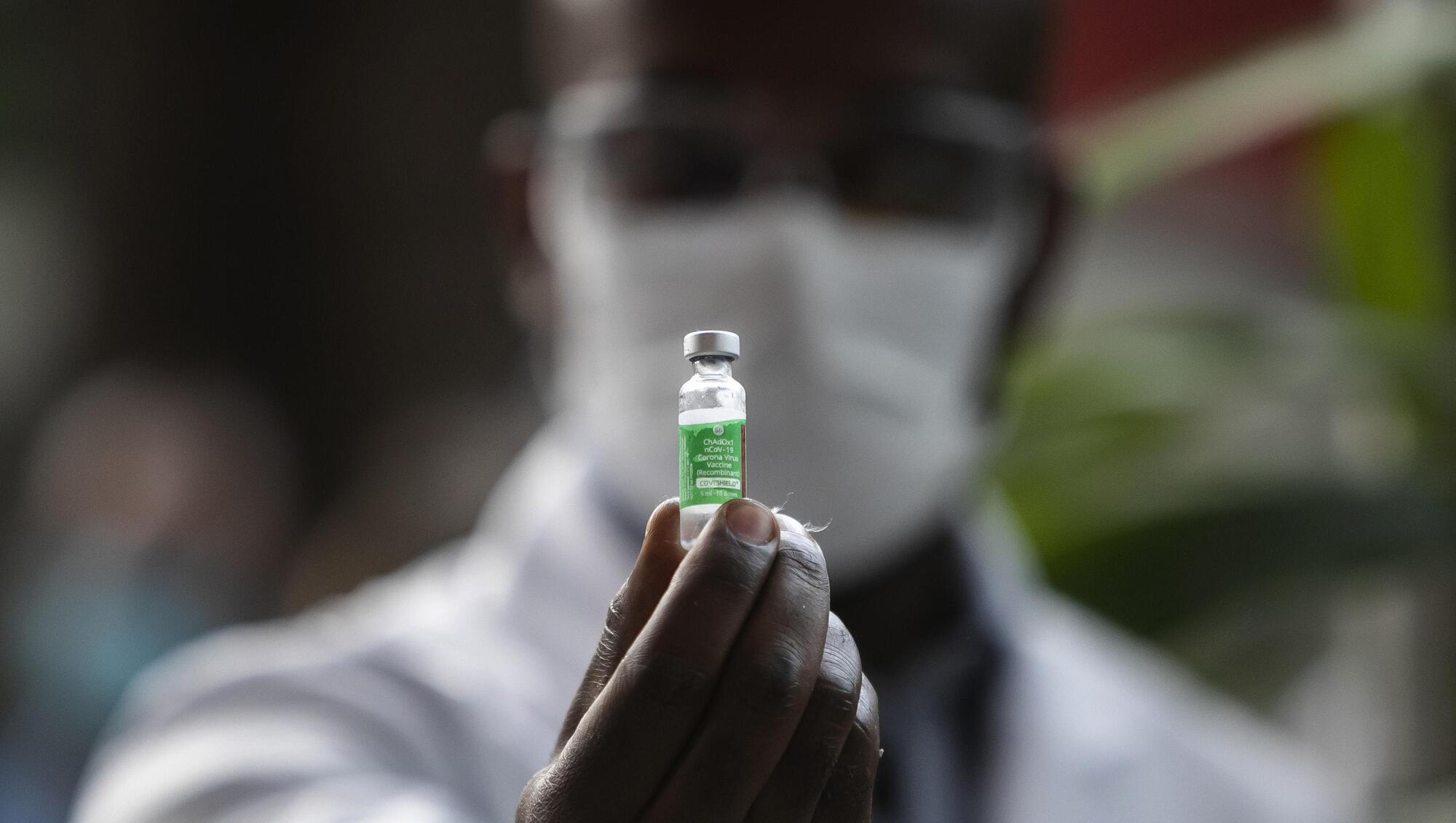
A healthcare worker holds up a vial of the Oxford-AstraZeneca vaccine for COVID-19. Picture: AP Photo/Bruna Prado
Ireland has temporarily suspended the AstraZeneca vaccine while reviews are done into a small number of blood clotting incidents in vaccinated people in other countries.
No reports of similar events have yet been received in Ireland, according to the National Immunisation Advisory Committee. Over 124,000 doses of AstraZeneca were given here up to last Friday.
More than 17m AstraZeneca doses have been given in the EU and the UK. The company said this process “has shown no evidence of an increased risk of pulmonary embolism, deep vein thrombosis (DVT) or thrombocytopenia, in any defined age group, gender, batch or in any particular country.”
The European Medicines Agency (EMA) meet this week to consider any new evidence but advised vaccination to continue in the meantime. They said so far the benefits of the vaccine outweigh the risks. The World Health Organisation said yesterday: “As of today, there is no evidence that the incidents are caused by the vaccine and it is important that vaccination campaigns continue so that we can save lives and stem severe disease from the virus.”
Results from the EMA review are expected by the end of the week, according to Damian McCallion, HSE national lead for the vaccination programme.
An abundance of caution has characterised the Irish approach to vaccine approval. Opinion is divided on whether this encourages or discourages vaccine hesitancy. The Health Products Regulatory Association which monitors medicines said: “It is essential that reports of potential safety concerns, even if very rare, are rigorously and swiftly investigated”
About 20,000 people are on the group 4 priority list — those aged 16 to 69 with specific illnesses — will miss out this week. Your hospital will contact you, you do not need to call them.
If you already received the first dose, talk to your GP if you feel increasingly unwell more than 3 days after the jab, notice blue spots on your skin or have a non-blanching skin rash.
It does not affect you. All over-70s receive Pfizer/BioNTech or Moderna m-RNA vaccines.
But you may still have your appointment rescheduled this week. Some GPs will not receive their full allocation of the Moderna vaccine due to a smaller than expected delivery to Ireland. The HSE says this is a “reprofiling” and will be made up by the end of the month.
Yes, at least eight other countries made some temporary changes to their programme. Thailand was among them but yesterday announced they will start again.
The UK has not suspended use. Yesterday, Northern Ireland’s chief medical officer Dr Michael McBride was vaccinated with AstraZeneca. Anyone over-50 can now be vaccinated there.
He said: “Let’s remember this virus kills people … The benefit is strongly in favour of people getting this vaccine at this time.” The British Medicines and Healthcare products Regulatory Agency (MHRA) said yesterday they do not advise any suspension.
Supply shortages are the main issues. Deliveries to the EU by March were downsized from about 100m doses to just 30m. Just 100m are expected by June instead of 300m. And it has now emerged a key factory in the Netherlands does not yet have regulatory approval from the EU.
CONNECT WITH US TODAY



Be the first to know the latest news and updates