Michael Clifford: To die on the streets is an unthinkable way for a life to end
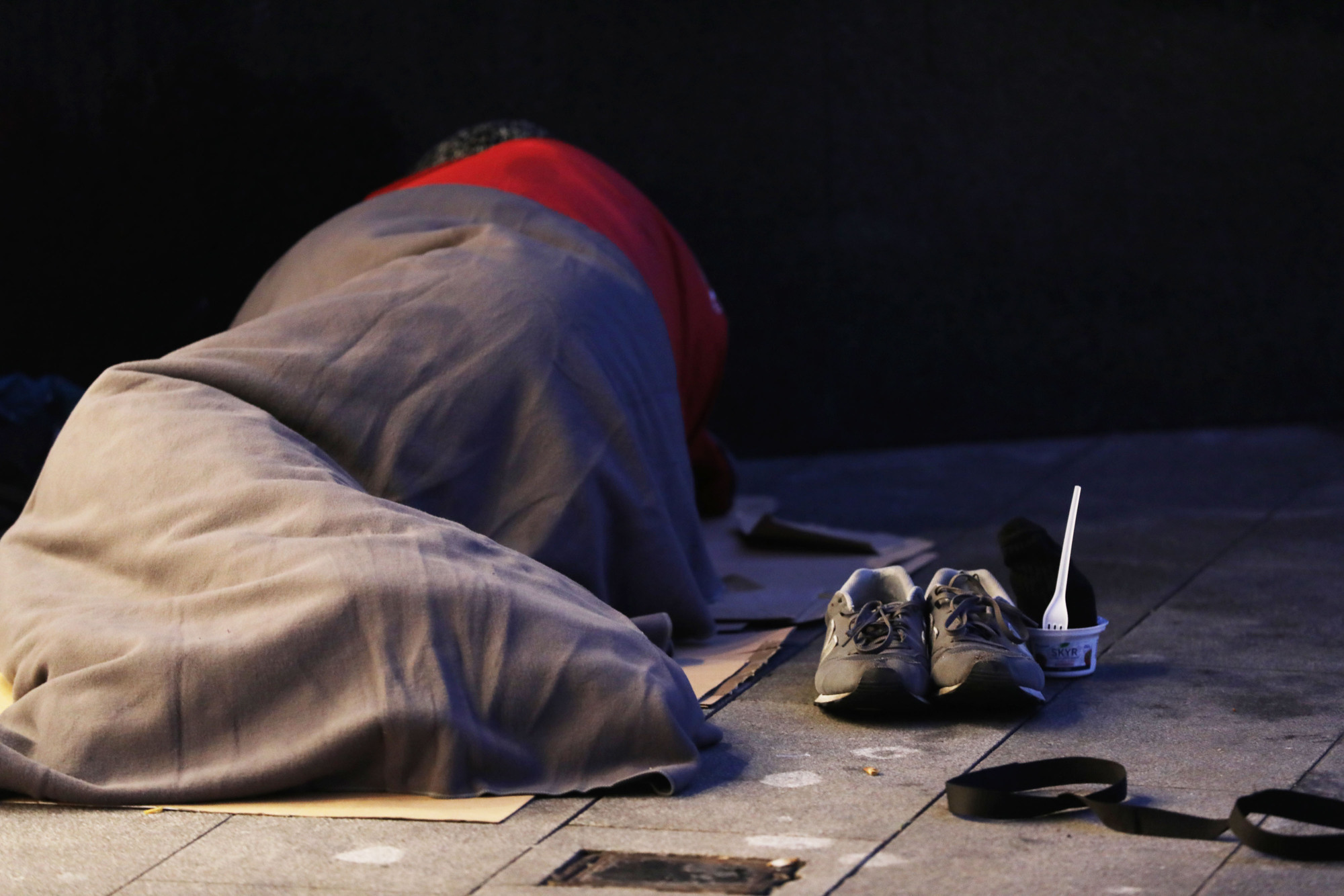
Undoubtedly, the general health and welfare of the average rough sleeper would render him or her more likely to suffer a premature death. Picture: Leah Farrell / RollingNews.ie
Particular poignancy attaches to the death of a person who is without a home. There is habitually an assumption, often correct, that the person’s demise is directly related to their circumstances.
During a time of a housing and homeless crisis, any such deaths take on an elevated significance. There is often an assumption, sometimes politically driven, that people are dying because of the pursuit of particular housing and homeless policies.

As is often the case, the reality is more complicated. A report from the Dublin Regional Homeless Executive (DRHE) about deaths in 2020 presents some shocking results. A total of 79 people who could be categorised as homeless died in 2020. This was up from 49 and 47 respectively in the preceding two years, and while a different method of counting was used in 2020, there was still a notable increase.
There was a particular increase in deaths in the second half of the year, to the extent that the DRHE and the HSE are conducting a review to examine the circumstances.
Five of the deceased were not in contact with the DRHE but were among eight who died while sleeping rough. To die on the street is an unthinkable way for any life to end. Such a death attacks basic human dignity and is an outrage on society.
Undoubtedly, the general health and welfare of the average rough sleeper would render him or her more likely to suffer a premature death. However, a recent programme highlighted some major shortcomings in the homeless agency. Just over a quarter of 80 rough sleepers surveyed by the programme responded that they had been refused emergency accommodation since the onset of the pandemic.

This outcome is against a background in which the homeless agency points out in the report into deaths that there was no lack of beds in the city.
“During most of 2020, there was excess capacity of emergency beds and during the latter months of 2020, there was a consistent and unprecedented number of unused beds available each night,” the report states. In such a scenario, the refusal of a bed to anybody is unconscionable.
Alice Leahy, who runs the Alice Leahy Trust, the social and health service for people who are homeless, has personally known many who died on the streets of Dublin down through recent decades.
“It’s always very sad,” she said.
“We’ve been in contact with families [of deceased people] who didn’t even know their loved one was homeless.
Some 45 of those who died in 2020 were living in emergency accommodation. Addiction is a constant presence in emergency hostels. There is also, shockingly, a considerable prevalence of mental illness among those cast out onto this margin of society. As a result, life expectancy in places like emergency hostels is reduced from that among the general population.
There are also those living in emergency accommodation who are simply without a home. These are the people at the frontline of the current housing crisis. They do not carry the kind of emotional or psychological baggage that see some predestined to be homeless.
They are simply victims of a housing crisis that remains acute. For this cohort, existing in an emergency situation – a hotel room or hostel – takes a major toll on their physical and mental health. This in turn will inevitably impact on life expectancy, particularly when the emergency persists from months into years, as is the case with many.
Some 27 of the deceased had been living in long term tenancies with the DRHE where, the report states, “there is on-site medical services”.
Of these deaths, three were attributable to Covid-19. While individual circumstances are at play in all deaths, general concerns about welfare would not be as serious for those living in long-term tenancies.
What is unclear from the report is the impact of the pandemic on those without a home, and whether or not any deaths are attributable to the fall-out.
“There are a whole range of problems that can lead to deaths on the street or in hostels,” Alice Leahy said.
“Sometimes it can spark off a blame game but really what we need to look at and give proper attention to is why somebody is on the street in the first place. That is key to everything.
“We have always also said that you need smaller units to deal with people, so that they can get proper care and attention and work can be put into building up a relationship with people so they can trust you.”