Michael Clifford's A to Z of 2020
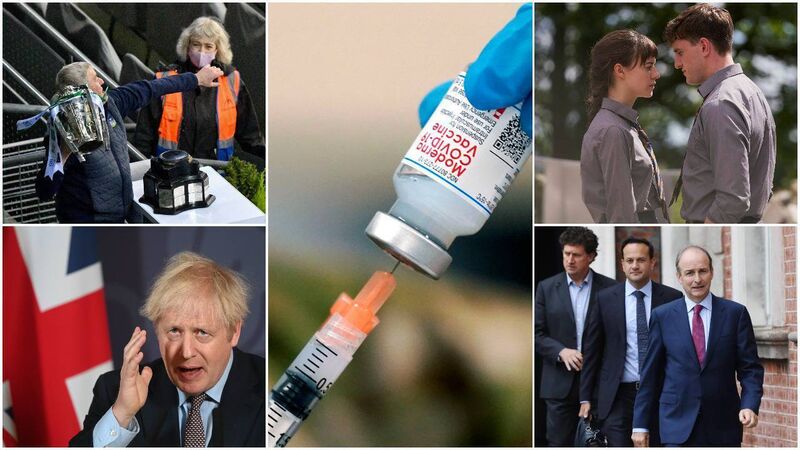
Our Special Correspondent rounds up the strangest of years - 2020.
Michael Clifford's A to Z of 2020

2020: The strangest of years. 

A – All Irelands

In the strangest of years a foundation was firmly laid and an old empire consolidated. Limerick got over their exit from the Liam McCarthy cup competition last year with a frightening display of power and skill through the Autumn into winter.


By the time they arrived at an empty Croke Park on 13 December, they were primed to deliver the perfect 10. And they did. Waterford tried valiently, but were no match. The aftermath analysis converged on the prediction that this team is in the early stages of a serious journey.

The mens’ football was as expected. Mayo fell short once again on final day, 19 December. They were beaten by a medium sized county from the east of the island. The victors, it is rumoured, have had a small bit of success in recent years.

The same county-that-shall-not-be-named won the women’s football the following day. This team also has enjoyed a modicum of success over the last decade.

Say no more, or we might get into an argument about the structure of the GAA no longer being fit for purpose.

B – Brexit

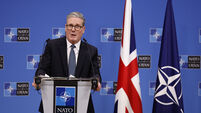
Four and a half years on from the Brexit vote who would have thought it would come to this? The UK has seen not one but two prime ministers sacrificed on the alter of Britannia ruling again. Instead of a politician, it now has a second rate entertainer as its prime minister. 

The country, and particularly England is going through a slow nervous breakdown as it continues to parse the statement “Brexit means Brexit”.

The year saw interest in the wider EU fade as the Sean Bean Bhocht continues to grapple with the biggest fall out. Meanwhile, the adults in the room, Michel Barnier and Ursela Von Der Layen, have been poise and precision personified in the face of bluster. In terms of fall out, the next twelve months will tell a lot.

C – Covid-19

The world has changed, changed utterly. The grandchildren will be confused when we tell them what the year 2020 was like. “But pops, why do they call it Covid 19 when it all happened in 20.” They won’t be the only ones confused about the origins of this scourge. 

Back in April, then Minister for Health Simon Harris had this to say: “Remember, this is covonavirus Covid 19 – that means there have been 18 other coronaviruses and I don’t’ think they have actually successfully found a vaccine for any,” he said in an interview on 2FM.

He later apologised for his “major bo-bo.” So here is the full meaning of the phrase we came to know and dread over the past ten months.

The CO stands for conona, the VI for virus and the D for disease. At first this disease was known as the ‘2019 novel conronavirus’, which is a mouthful for anybody who isn’t a scientist. Then it was called the ‘2019-nCOV’ which isn’t much better. So we were left with Covid-19, as it was actually discovered in 2019, even though it ran riot the following year. Hopefully, all this will be long forgotten when it comes time to compile the 2021 A-Z.

D – Dryrobe 

The fashion accessory of the year, or at least it is for those embarking on the latest craze – winter swimming. This was the year that swimming in the sea went from a dip on holliers to a frequent form of self flagellation through all seasons. Some of this was attributable to the closure of pools during the pandemic. Some of it may be attributable to the softening of brains during the pandemic.

In any event, the craze has seen the elevation in fashion stakes of the dryrobe, which is effectively a towel with a hood.

As Autumn turned to winter, the dryrobe became the subject of some controversy in the salubrious enclaves of south Dublin where theretofore the swimming business had been the perverse of an exclusive minority.

The old money was getting agitated at the noveau riche, shivering inside their dryrobes. A few homemade signs were spotted at the Forty Foot in Dun Laoighaire, where the sea meets the snobs.

“By order: No dryrobes or dryrobe types” read one. Another said: “Warning! Bathers are advised that sightings of dryrobe w*nkers have increased in this area”.

There was even a sighting of a dryrobe in Longford, many miles from the sea. If you haven’t heard about the dryrobe over the last year, consider yourself lucky.

E – Election, General

Held on Saturday 8 February, this was one of the most extraordinary general elections in the history of the State. Prior to being called, the smart money said Fianna FĂĄil was poised to gain power with the help, most likely, of a few small parties and maybe the odd independent.

Something happened during the campaign. Sinn Féin, which had suffered badly in local and European elections in 2019, came up strong on the outside. Mary Lou McDonald appealed to many disaffected with the two civil war parties. The Shinners, for the first time, offered realistic alternative solutions to bread and butter problems, principally housing.

The party won the most votes and only for an understandably cautious approach to candidate selection, could have pulled in an extra ten seats. In the end they ended up with 37, one behind Fianna FĂĄil. Fine Gael returned with a disappointing 35 seats.

Tortured negotiations followed, culminating in a three way FF FG and Green party coalition. The Civil War in politics is finally over. The new configuration has the makings of a European style left-right political culture. Right now, the smart money says Sinn FĂ©in will be leading the next government. Then again, there’s nothing to say that the smart money is any smarter than it was prior to February’s contest.

F – Floyd, George

On 25 May, an African American man walked into a store in Minneapolis and the clerk alleged that he attempted to pass a false $20 note. The clerk rang the police. Outside, 46-year-old Mr Floyd was arrested. A police officer knelt on his neck for at least eight minutes, squeezing the life out of Mr Floyd while three of his colleagues looked on.

A mural of George Floyd in Dublin.

The killing was the latest of a Black person by police forces in the USA. The capturing of this outrage on video, and perhaps the timing, saw the issue of race and police brutality explode in protests across the USA and beyond. The Black Lives Matter movement grew in size and influence as America attempted for the umpteenth time to come to terms with its racist element.

All of this was played out against a background in which the American president had over the course of his tenure in office given succour to racist organisations. Mr Trump attempted to portray the protestors as lawless socialists against whom he was the only bulwark. As events in the presidential election were to show, this time it didn’t work out too well for him.

G – Golfgate

On Wednesday 19 August, a party of 80 sat down to their dinner in the Cliff House Hotel in Clifden. Little did they know then that this would be the last ever dinner to be eaten by members of the Oireachtas golfing society.

Within 24 hours the Irish Examiner’s intrepid political correspondents, Aoife Moore and Paul Hosford broke the story. The Minister for Agriculture Dara Calleary had been present at an event that was in breach of Covid restrictions. He resigned within twelve hours of the story breaking. Others followed. Jerry Buttimer stepped aside as Leas Cathaoirleach of the Seanad and more lost party whips.

Then came the big cheeses. Phil Hogan sort of apologised, but the hunt was on and it emerged that the EU commissioner had been having a rare old time of it buzzing around the country just when mortal folk were told to stay at home.

He didn’t help his cause by his handling of it. In the end, he resigned before being pushed after his boss, commission president Ursela Von Der Leyen, appeared less than impressed.

Seamus Woulfe was the last man standing. He was a newly minted Supreme Court judge at the time of the dinner, and he was determined to hang onto his job.

He did in the end despite being advised by chief justice Frank Clarke that he should resign. Never in the history of golf has so many with so much power been dragged so low by public opprobrium.

H – Hand of God

On the 25th day of November, God laid his hand down on a footballing genius and carried him off this mortal coil.

Diego Maradona died of a heart attack at the age of 60, ending a life touched by genius but troubled by living. His death was a shock but not a surprise Often bracketed with George Best, both men were examples of football deities who struggled with life off the pitch just as they dazzled and delighted on it. Both could have done with some minding.

The English have never got over the fact that Diego put one over on the ref during England’s match with Argentina in the 1986 World Cup quarter-final. His ‘hand of God’ illegal goal has been passed down through the generations since as proof that the English, who revel in their reputation for fair play, were victims of calumny.

They remain blind to the fact that his second goal in that match was possibly the greatest ever seen in the World Cup. Footage from the day in question also highlighted how a succession of the English players repeated attempted to effectively cripple the Argentinian with savage tackles. That, of course, wasn’t cheating at all. We will not see his likes again.

I – Italy, where the virus first landed in Europe

By mid-March the fate of the northern region of Lombardy spread fear throughout a continent and beyond. The virus was wreaking havoc and accounting for a horrendous death toll.

The abiding image was the deployment of a procession of military vehicles to ferry away the dead. Intensive care units in hospitals in what is the richest area of the country, were overflowing.

The outbreak centred on the village of Codogno, around 50km from Milan. From there it spread exponentially throughout the region.

The news and pictures were enough to provide other governments, including Ireland’s, with the moral ballast to shut down economies in order to ensure that hospital services wouldn’t be overrun.

J – Johnson, Boris, the prince and pauper of Brexit

It was the best of years and the worst of years for Boris, the morality free politician who thrives of an image of bumptious gladhandler.

He was slow to act against the virus, contracted it himself and spent two days in intensive care fighting for his life. Not that it changed him much.

He oversaw one of the worst reactions to the virus in Europe. This should not come as a surprise as the composition of his cabinet was based not on competence, but on loyalty to him and a thirst to “Get Brexit Done.” This, he kept repeating, would be achieved through an “over-ready deal”.

The man exels with soundbites but there is every possibility that he will well and thoroughly be found out in the coming year.

His approach to governing was summed up by the Labour leader Keir Starmer last October when he accused Johnson of “serial incompetence”.

“The prime minister is governing in hindsight,” Starmer told the Observer newspaper. “So he charges forward, not recognising the problem, has a car crash, looks in the rear mirror and says, ‘what was that all about?’” 

K – Kardashian, Kim

“The rich,” F Scott Fitzgerald once remarked to Ernest Hemingway, “are different from you and me.” 

Hemingway’s perceptive reply was: “I know. They have money”.

Kim and her husband, the rapper and former presidential candidate, Kanya West, have so much money that they can’t spell vulgar.

They invited their thirty closest friends in late October to Kim’s 40th birthday on a private island in Tahiti, in the south Pacific, at the height of the pandemic.

Kim and her husband, the rapper and former presidential candidate, Kanya West.

The highlight was Kanya’s birthday prezzie for Kim, a “message from Heavan”, hologram of Kim’s long dead father Robert Kardashian, who, when he represented OJ Simpson in THAT murder trial, must have thought he would be the most famous Kardashian for generations.

Anyway, Robert said all the things that one might expect a father to say from beyond the grave, and he had a few kinds words for the hubby as well, describing Kanya as the “most, most, most, most genius man in the world.” 

Some saw a fix in this. Kanya organised the messaging across the mortal divide and the messenger then hails his genius. Thankfully, Kanya abandoned his run to be president of the United States, as in today’s world, who knows how far he might have gone.

L – Lockdown

Word of the year, according to the Collins dictionary. Lockdown is defined by Collins as “the imposition of stringent restrictions on travel, social interaction and access to public spaces.” In 2019, there were 4,000 recorded instances of the word being used across websites, books, newspapers and in spoken form on radio and TV. This year the use of the word had soared to more than 250,000 instances.

In this country, we had two defined lockdowns. The first began on 27 March and ran until the first easing of restrictions on 18 May.

Everybody behaved as we all recoiled in shock at what had become of our world. There was, for a brief period, a real sense of solidarity across society, at least until it became apparent that some – such as those working in meat factories – were being left to their own devises.

The second lockdown kicked off on 21 October and lasted until 1 December. The mood had shifted to restlessness and fatigue. The big question, at the time of going to print, is whether we are facing into a third.

M – Murphy, Roisin

The Wexford born, London based, Murphy released her fifth solo album, entitled Roisin Machine, in October. She is around for a while now, her career dating back to the trip hop due Moloko which made a splash in the 1990s. Age has, if anything, improved her output. The latest offering has received major plaudits and demonstrated the artist as willing to keep pushing the boundaries, something she has been doing all her life.

She remains a cult figure for many, including, it would appear the reviewer in the Metro newspaper, who described Roisin Machine as “the mother lode, the cornucopia, the phantasmagoria, of lovingly reconditioned disco pop.” In all fairness.

N – Northern Lights

Seamus Mallon died on 24 January. John Hume died on 3 August. Their passing in the same year was somehow appropriate. For the decades during which violence devastated the lives of thousands, Hume provided leadership to the majority of nationalists in the North committed to righting the wrongs through peaceful means.

Mallon was Hume’s deputy in the SDLP and his own man. In 2019, Mallon sent out a warning about the apparent march towards a united Ireland being led by Sinn FĂ©in.

 John Hume
John Hume

“My concern is that a very narrow vote for unity would lead to more division,” he wrote. “Look at the chaos caused by the narrow vote for Brexit in the UK, and by the lack of preparation, reasoned debate and public education before that referendum.” 

His words were informed by a life given over to the service of people in which humanity and understanding were guiding principles.

O – O‘Neill, Luke

Did you know there were so many epidemiologists in the country? Did you before this year know what an epidemiologist does? Since the onset of the virus they have been coming out of the woodwork, providing the benefit of their expertise morning, noon and night. And we are grateful for it at this scary time.

Contrary to much opinion, Luke O’Neill is not an epidemiologist, but an immunologist, and the good prof is also a breath of fresh air.

Luke O’Neill is rock ‘n roll in the world of science. Throughout the year he freely offered the benefit of his expertise in a reassuring manner that came across as an oul chat about this oul virus, and don’t be worrying yourself unduly. He didn’t preach. He didn’t lecture. He is not burdened by any requirement to demonstrate why he is such a brainy fellow.

During the year he published his latest tome, Never Mind the B*ll*cks Here’s The Science. And he managed to sell a research company he set up for untold millions. Apart from that, his street cred went through the roof with the circulation on social media of a clip of him banging away at his guitar on stage at last year’s Electric Picnic. It’s only rock and roll, but he obviously likes it.

P – People, Normal

The TV sensation of the year. Not since possibly The Godfather has a critically and commercially successful book translated onto the screen to such a reaction.

The adaptation of Sally Rooney’s book was the BBC’s most popular programme of the year with over 62 million streams on its iplayer. It was also the hit of the year on RTÉ where it first screened on 28 April.

A few lost souls, including the A-Z compiler, simply couldn’t get it. Sure it was beautifully shot and well acted, but it was also as slow as a wet week. And the beautiful sex among such young people was hardly believable.

Still, a star was born in Paul Mescal, for whom it now appears Normal People was a launching pad for a highly successful career. All very well for him and his bank balance, but if the formerly accomplished footballer had stayed at home he had a good shot at making the Kildare county senior team. He coulda been a contenda and look at him now, Just a bum movie star on his way Hollywood and worldwide stardom.

Q- QAnon

In the year that conspiracy theories reached a new high, QAnon took hold like wildfire. In its initial guise, QAnon was conspiracy theory founded on the belief that Donald Trump is waging a secret war against elite Satan-worshipping paedophiles in government, business and the media.

Since its emergence in 2017 it has spread far and wide and elements of it are embraced by right wing groups across the world, including in this country.

During the US election campaign, Trump was asked whether he subscribed to QAnon to which he replied that he wasn’t sure what it was but said he’d heard “these are people who love our country.” QAnon has had serious traction on social media, like Snow White And The Seven Dwarfs once had serious traction among 7-year-olds.

R – RIC Commemoration

The mayor of Clare was the first to sound alarm bells. Cathal Crowe announced early in January that he would be boycotting a proposed commemoration event for the RIC. This was to have been the first event in the centenary of the most intense year of the War of Independence.

The ensuing controversy awoke a nationalist impulse many thought was dead. Sinn Féin spotting an opportunity weighed in heavy and twitter went into overdrive.

Before long, the event was being cast as commemorating the Black & Tans. One by one senior politicians declared they could not allow themselves to attend. In the end, the Minister for Justice Charlie Flanagan thought it best to throw in the towel and cancel the whole thing.

Holding it as the first event of the year had been a tone deaf decision. Some say that the nationalist impulse fed into the burgeoning vote for Sinn FĂ©in in the election that followed. Questions also arise about the border. If we down here can’t forgive the sins of the RIC from a century ago, how can we expect unionists to forgive the killers in the IRA.

Cathal Crowe was elected to the Dail in the subsequent general election.

S – Staycation

Once upon a long ago, people went on holidays to the beach and brought an umbrella to keep the rain away. In 2020 everybody went on a staycation.

The pandemic kept people away from planes and the smallest of boons to a year in which the tourist industry was devastated was the swelling numbers who found out what it was like to holiday at home.

A major survey conducted at the outset of the Summer months found that 89% of people were planning a staycation. The most favoured destination was Kerry with 19% bound for the Kingdom, followed by Galway on 14% and Cork at 13%.

As Summers go the weather was fair to middling but the big question is whether or not the staycation trend lasts into the coming year.

T – Trump, Donald J. Loser. 

On 3 November, Mr Trump’s reign as president of the USA came to a de facto end when he was beaten in the election by Joe Biden.

The term reign is used advisedly as over the course of his presidential term Mr Trump repeatedly did all he could to undermine democratic institutions and reframe his role as that of ruler. He had some success.

Over 74m Americans voted for him despite his role in rendering the allegedly most advanced country in the world as one of the worst hit by the pandemic. In fact, if it wasn’t for the pandemic he may well have won re-election.

Since the result became known, Mr Trump has repeatedly stated that the election was fraudulent. There is absolutely no evidence of this and a raft of legal challenges on his behalf at state and national level have all failed.

A series of opinion polls have found that over half of Republican party voters believe Trump’s conspiracy theory that the election was robbed from him. This is his legacy to democracy.

He has also managed since the election to raise $130m to allegedly challenge the result. What becomes of that money is anybody’s guess, but most likely it will go towards his massive business debts.

U – US Supreme Court

The importance of the US Supreme Court was underlined when the long serving justice Ruth Bader Ginsberg died on 18 September. The judge was 87 and had been suffering from cancer for some time. 

Yet she refused to retire, largely, it is believed, in an attempt to ensure that she might live past the presidential election date, allowing Trump’s successor to pick her successor. In all likelihood her patriotism in that respect took a toll on her declining health.

Against all convention Trump rushed through her replacement, the conservative Amy Coney Barrett. She is known to be an opponent of abortion and is thus a darling of Christian conservatives, a key constituency in Trump’s base.

Now the court has a 6-3 conservative majority and may reverse the right to abortion in a country where a considerable majority favour access. That’s America, Jim, but not as we thought we used to know it.

V – Vaccine

Here comes the cavalry. On 8 November, the news the world had been waiting for arrived. A vaccine for the Covid is on the way.

US pharmaceutical giant Pfizer and Germany BioNTech were first out of the blocks with products which they said was shown in trials to be 90% effective. Within eight days, another outfit, Moderna, said their vaccine would be 94.5% efficacy in clinical trails. There are now up to seven vaccines en route across the developed world to take the fight to the Covid.

Britain was first out of the blocks to give it the ok through its regulatory authority. The first dose was administered to 90-year-old Margaret Keenan in Coventry at around 6.45am on 8 December.

All going well, most wealthy countries should have mass inoculation more or less sorted by the back end of the coming year. Poorer countries will have to wait much longer amid reports that it could take up to an extra twelve months before many in the developing world are vaccinated. 

Contrary to the many platitudes issued at the outset of the pandemic, we are not all in this together.

W – Where is George Gibney? 

Podcast of the year must surely go to this series which revolved around the story of the former national swimming coach who was accused of multiple cases of child sex abuse but has never stood trial.

The podcast, produced and presented by Mark Horgan – sibling of former rugby player Shane and writer/actor Sharon – was first released on 27 August. It traces the story of how Gibney was unmasked, charged, won an action to prevent his trial and promptly disappeared in the USA.

The most arresting feature of the story was Gibney’s successful challenge to the charges on the basis that he was at a disadvantage because some of the allegations dated from years previously. That was just in 1993 when the country was awakening to the horrors of child sexual abuse. Safe to say, there is no way the courts would allow such a challenge today.

One major outcome of the broadcast is that the gardaĂ­ are now investigating further allegations of abuse against Gibney.

Well worth a listen.

X – X-rated political tweets

In late November, on the 100th anniversary of the ambush at Kilmichael during the War of Independence, Sinn Féin TD Brian Stanley hit the twitter machine.

“Kilmicheal (sic) (1920) and Narrow Water (1979) the 2 IRA operations that taught the elective of (the) British army and the establishment the cost of occupying Ireland. Pity for everyone they were such slow learners.” 

There was war. Old wounds were opened, new divisions opened up. The chairman of the Public Accounts Committee was condemned for insensitivity towards the relatives of those murdered at Narrow Water and for conflating the 1920s conflict with the Provos killing campaign.

Then a second tweet was dragged up from 2017, tweeted on the day that Leo Varadkar became leader of the Fine Gael party.

“Yippee 4 d tory. it’s Leo. U can do what u like in bed but don’t look 4 a pay rise the next morning,” tweeted Stanley at the time of Varadkar’s election.” This caused the Shinners greater grief among their younger members, who have presumably bought the party’s rewriting of history, but laudably won’t tolerate what they consider homophobia.

Stanley duly apologised but you won’t find him on twitter again anytime soon.

Y – “You’ve got a lot of nerve...” 

So goes the opening line of the Bob Dylan classic, Positively Fourth Street. In early December it was announced that 79-year-old Dylan had sold his back catalogue of around 600 songs to Universal Music. The deal was understood to be worth in the region of €300m. The move was significant in that it effectively put a value on the work of a songwriter who has also received the Nobel prize for Literature for a body of work spanning sixty years. As a Y for the A-Z it might be a bit of a stretch, but it’s been a tough year.

Z – Zoom

Hands up how many of you ever heard of zoom before last March? Hands up how many of you feel you’ve been zoomed half way into next year and don’t’ ever want to hear of it again?

Zoom was the big winner of the pandemic but it also produced a few big losers. Like New Yorker writer Jeffrey Toolin who forgot to turn And then there was the two lecturers in the Galway Mayo IT who thought their screens were off and silent as they got stuck into the students whose work they had just analysed.

For the rest of us, Zoom has been both a blessing and a curse. It has meant that meetings can now be conducted without every leaving your home. And it means that meetings can now be conducted without ever leaving your home. Geddit?

The video conferencing company gained 635% in its stock market value during the year, with its worth reaching $140 billion by October. However, the following month, after word seeped through that a vaccine to save the world was nearly ready, Zoom’s share price dropped by more than 15%. Seems like saving the world is not the best of news for some folk.

More in this section

Revoiced

Newsletter

Sign up to the best reads of the week from irishexaminer.com selected just for you.

Cookie Policy Privacy Policy Brand Safety FAQ Help Contact Us Terms and Conditions

© Examiner Echo Group Limited