Erica Cody: 'It's easy to excuse casually racist behaviour'
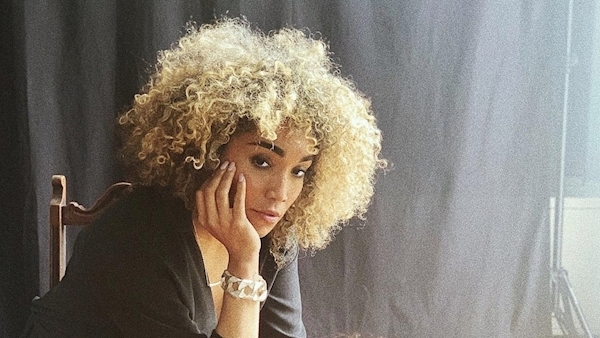
This week, columnist asked Dublin singer-songwriter Erica Cody to write in her usual column space. Below, she explains why:
Regular readers â I know you might have turned to this page and expected to see my face on the masthead. But when I sat down to write my column this week, there was only one issue I could think about â the murder of George Floyd and the Black Lives Matters protests. What is happening in the States right now is shocking for many of us, although our shock is, in and of itself, a privilege too.
Black people have never had the luxury of being shocked by racism as itâs been their lived experience since the day they were born. But it would be a mistake for us in Ireland to condemn whatâs happening in America without taking a good, hard look at ourselves.
A study undertaken by the European Union Agency for Fundamental Rights in 2018 showed that Ireland ranked as the 2nd worst in the EU for racial violence against black people, with 51% of black people in Ireland saying they have been harassed in the form of verbal, physical, or online threats.
Direct Provision, a system put in place over twenty years ago as a short-term solution to housing asylum seekers, is a human rights violation, cramming traumatised and vulnerable people into overcrowded conditions and ensuring they remain isolated from the communities in which they live by refusing to allow proper integration in the way of employment.
In recent years, we have wondered how Irish people could have allowed the Magdalene Laundries and the Mother and Baby Homes to exist, how they looked the other way as such atrocities occurred. Take one look at us today, eating brunch in bougie restaurants owned by the same corporation responsible for the operation of Direct Provision centres, and you will have found your answer.
But in reality, I shouldnât be writing this column. Iâm a white, Irish woman, working in a disproportionally white industry. Iâve never experienced racism, Iâve never been unfairly treated because of the colour of my skin. This is not my story to tell.
Erica Cody

âMy heart is heavy, my brain is as coily as my hair right now. There is no denying the struggles we face accompanied by the colour of our skin. What is going on in America right now is sparking outrage over there, but itâs also happening around the world, especially on our shores. Itâs easy for people to say,
Ah sure weâre in Ireland, thatâs not our problem
.
Itâs easy to say, âBut I canât be racist, I have a black friend!â, to excuse casually racist behaviour. Itâs easy to say, âThis is not the right time to protest, weâre in the middle of a pandemicâ, when you have never had to endure the racism we have. Enough is enough. Donât wait on a black person who is already exhausted from the day-to-day struggle of dealing with prejudice to educate you on white privilege and racism.
The information is there, many just arenât looking or willing. Itâs easy to spew so much hate towards a black-led anti-racism protest, but to stay silent at the photos of packed beaches all over Instagram⊠What double standards!
There is more than one pandemic happening right now. All it takes is the modern-day lynching of George Floyd, his life stolen from him under the knee of a cop, for the seriousness of racism to be recognised.
Born and raised in Dublin to a white Irish mother and a black American father from South Carolina, much of my existence was based on my âIrish-nessâ being diminished because thereâs âno waaaaaayâ you can be black and Irish at the same time. Itâs been an identity crisis for me most of my life, being told to âGo back to my own countryâ when Ireland is all I have ever known.
I often found it difficult to understand my fatherâs frustration towards racist behaviour and I realise now that itâs not that I didnât want to know, but I had just become completely desensitised to the way I was being racially targeted in my own life. People grabbing my hair as they passed me on a bike, pulling me back as if Iâm some sort of petting zoo.
The years I have endured of racial slurs, staying quiet to the casual racism so I donât come across like the âproblematicâ one in the group, when in reality, Iâm just the minority. The monkey noises being shouted at me across streets. Being pushed into walls in the primary school yard, losing my two front teeth as a result and not knowing if theyâll every grow back again.
I robbed my momâs razor and attempted to shave my face of my dark facial hair at the tender age of seven, just so I wonât get called a gorilla in school the next day.
The constant questioning - âWhere are you from?â, followed by, âNo but where are you REALLY from?â when I say Iâm from Dublin. I am left questioning my own identity when I was already very sure. I have to ask the question - why are black and people of colour always the ones left to educate the ignorant on racism? You ask me how I am, how we are. This is all I have to say. We are TIRED.â
Further Reading Read: Donât Touch my Hair. Emma Dabiri is an Irish-Nigerian author who was brought up in this country, where, she says, her hair was a âconstant source of deep, deep shame.â Itâs an incredible book.
Do: Me and White Supremacy by Layla F Saad. This is a how-to guide for white people to confront their own privilege and internalised racism. Essential reading.