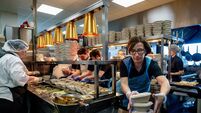
Why authentic local food experiences must be on the menu
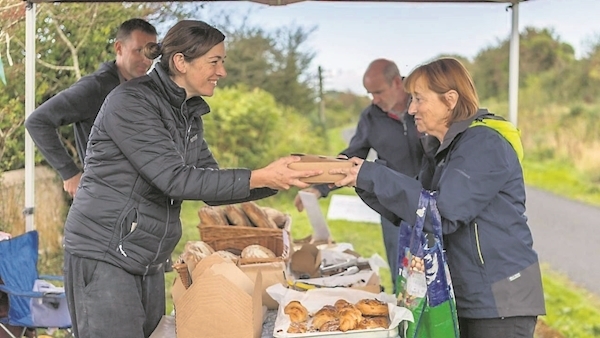
We must develop a reputation for the quality of our produce but also offer tourists the opportunity to be actively involved in the food experience, says Samantha Morris

Why authentic local food experiences must be on the menu

We must develop a reputation for the quality of our produce but also offer tourists the opportunity to be actively involved in the food experience, says Samantha Morris

We all know that when on holiday food and drink are an important part of the experience. For some enjoying local food on holiday can offer a chance to spend time with families and friends, while for others it’s a way to understand the culture and traditions of an area. Others thrive on sharing pictures of exotic dishes not available at home.

But can authentic local food be more than that? Can truly authentic local food experiences actually act as a driver in determining where people choose to go on holiday?

For the last two years, I have been researching tourist attitudes to local food as part of a master’s in business at IT Carlow.

The main aim of my research was to explore if authentic local food can motivate tourists to travel to particular destinations.

To find out, I conducted a survey at two major Irish food festivals, the Harvest Festival, Waterford, and the Savour Kilkenny Festival, and with various food producers and providers across Ireland.

What I discovered was that food tourists are not motivated to travel just to taste local food.

Rather, tourists want a memorable experience, one that’s unique and authentic. But what is an “authentic food experience”?

In terms of food tourism, the term authentic is as much about the people and the place as it is about the food and drink.

Local food is an important link to the traditions and heritage of a place. By consuming local food, the tourist is getting a first-hand cultural experience. An ‘authentic food experience’ is also about the surroundings, the atmosphere, and the people.

Eating pasta and pizza may be an everyday occurrence for some people, a typical midweek, after-work meal. But being served a plate of linguini alfresco while overlooking the Piazza San Marco in Venice turns this daily routine into a whole new food experience.

Another interesting discovery I made was that food tourists don’t agree on what the term “local food” means. Nearly half of those questioned believe that local food is any food which is produced in small supply by local people, whereas the other half believed local food was any food linked to a specific place at an even commercial scale.

These differing views may present a problem for those trying to promote local food. However, this can be solved by providing information about the producer and the locality on labelling or in brand promotion.

This will leave no doubt in the tourist’s mind that a particular product is indeed local.

So, what can we learn from this research in terms of food tourism in Ireland?

Tourists to this country spend an estimated €2bn on food and drink during their stay. Despite this, Ireland is not considered a food destination. In fact, if you asked tourists to rhyme off authentic Irish food and drink, they will probably list rather traditional foods such as Irish stew, corned beef, potatoes, whiskey, and stout.

In recent years, Ireland has made huge advances in the quality of our local food offering.

However, few potential tourists seem to realise the quality and abundance of local Irish food.

According to Fáilte Ireland, this perception changes dramatically among outgoing tourists, with most satisfied or highly satisfied with the food they encountered.

But, as my research shows, it is not just about providing quality authentic local food, tourists want the full-on food experience.

They want to participate in cookery courses with local chefs or chat to local food producers at the farmers’ markets. Tourists want to discover how goat’s cheese is made or want to go on a guided foraging adventure in the countryside.

Above all, tourists want not only to taste authentic local food, but they also want to hear its story and learn how it connects to a place and its people.

Fáilte Ireland’s new initiative Taste the Island is hoping to do just that. This 12-week campaign celebrates the best of local food across the whole island. The initiative also aims to link food producers with tourists, giving them a chance to “meet the hand that feeds you”.

An initiative such as this provides new opportunities for producers and destinations to put their region on the map, a chance to showcase unique specialities to a wider audience.

What is clear is that Ireland has tremendous potential to promote itself as a food destination, attracting food tourists looking for their next great culinary adventure.

We need to tell a new story focusing on authenticity, developing a reputation not just for the quality of our produce but also as a place where tourists can be actively involved in the food experience.

Samantha Morris is a postgraduate student at Institute of Technology Carlow, Wexford Campus, and recipient of the President’s Research Fellowship Scholarship. Her paper focusing on local authentic food was awarded best paper in track at the 2019 Irish Academy of Management Conference held recently in Dublin.

More in this section

Revoiced

Newsletter

Sign up to the best reads of the week from irishexaminer.com selected just for you.

Cookie Policy Privacy Policy Brand Safety FAQ Help Contact Us Terms and Conditions

© Examiner Echo Group Limited