Will CIA nominee admit to her torture links?
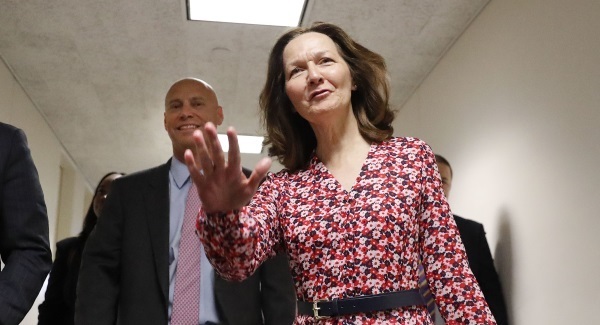
The Senate confirmation hearing for Gina Haspel to be director of the Central Intelligence Agency will be the last chance for the United States to confront its history of torturing terrorist suspects.
Haspel got cold feet a few days back, as she prepared for her first public appearance representing the CIA. Who wouldnât? She was contemplating a confession to countenancing violations of the laws of war.
But I suspect that when todayâs hearing is done, the record of denial and deception will be largely intact.
No one will be held to account. One of the darker chapters in 21st-century American history will be shoved farther down the memory hole.
The CIA, having acted with impunity and then absolved itself of wrongdoing, now likely will be led by Haspel, who both oversaw brutal interrogations at a CIA prison in Thailand and then drafted an order to destroy 92 video recordings of these and other horrors.
âIâve said to the people that we donât torture, and we donât,â President George W Bush insisted in 2006. But we did.
âTorture works,â Donald J Trump proclaimed in 2016. But it doesnât. If Haspel isnât compelled to say otherwise, these lies may someday be seen as truths.
The spy service conned US Congress over the efficacy of torture; CIAâs counterterrorism chiefs held steadfast to the idea that torture worked. It didnât. The agencyâs inspector general found that the torture programme failed to produce significant intelligence.
Those who were tortured, including the mastermind of the 9/11 attacks, cannot be prosecuted; the evidence against them is fatally tainted by waterboarding, beatings, and death threats at the point of a handgun and a hand drill.
Nor can the CIA officers who oversaw and conducted torture be brought to trial; Bush granted them all immunity.
The senator uniquely qualified to bear witness against torture is John McCain, the Arizona Republican, who spent five and a half years as a prisoner of war in Vietnam.
To make someone believe that you are killing him by drowning is no different than holding a pistol to his head and firing a blank, he once wrote. It is torture, very exquisite torture.
McCain wrote those words in 2005, in a debate over Americaâs compliance with the United Nations Convention on Torture. He wrote an amendment into law, banning torture, and it passed, 90-9.
Among those opposed was Jefferson Beauregard Sessions III, now the attorney general.
At that time, the horrors of the prison at Abu Ghraib, in Iraq, had come to light. But the full facts regarding the CIAâs black sites for prisoners still were a very dark secret.

And Haspel, with her boss at headquarters, Jose Rodriguez, was trying to make sure they stayed secret.
She drafted an order, sent by her superior, to destroy all videotapes recording torture. Rodriguez wrote, in a memoir, that he reviewed Haspelâs work, then âtook a deep breath of weary satisfaction and hit sendâ.
It was just as George Orwell described the memory holes in the novel, 1984, which were situated throughout the Ministry of Truth, and where history was rewritten to match state propaganda:
When one knew that any document was due for destructionâŠit was an automatic action to lift the flap of the nearest memory hole and drop it in, whereupon it would be whirled away on a current of warm air to the enormous furnaces, which were hidden somewhere in the recesses of the building.
The CIAâs destroy order was executed immediately after the Senate proposed an independent commission to investigate the black sites. Into the fiery furnaces went the evidence.
An epic showdown would be certain if McCain, who is fighting brain cancer, were well enough to attend Haspelâs confirmation hearing.
In any event, he already has sent her detailed written questions about the techniques, which, in his words, âcompromised our values, stained our national honour, and threatened our historical reputationâ.
âDid you advocate for the destruction of tapes or any other material containing potential evidence of the torture of, or the use of âenhanced interrogation techniquesâ on, detainees in the custody of, or under the effective control of, the CIA?â
McCain wants to know. âAt the time, what were your personal views of the legality, morality, and effectiveness of âenhanced interrogation techniquesâ?
What is your assessment, today, of the effectiveness of âenhanced interrogation techniquesâ and their impact on the United Statesâ moral standing in the world?â
I would add a few questions of my own for the nominee. President Donald Trumpâs first CIA director, Mike Pompeo, now newly sworn in as US secretary of state, said last October that the CIA needed to become a âmuch more vicious agencyâ in its covert operations.
Does she agree?
President Bushâs White House lawyers argued that it would be unconstitutional for Congress to outlaw torture if the commander-in-chief said it was needed to protect national security.
If Trump secretly ordered the CIA to resume waterboarding, would she follow that command, in the face of American law and the Geneva Conventions? These questions go to the heart of who and what America now stands for.
Haspel can disavow her past, or embrace it. Her nomination should stand or fall on that point.