Statutory obligation is crucial as the HSE is still refusing to admit mistakes
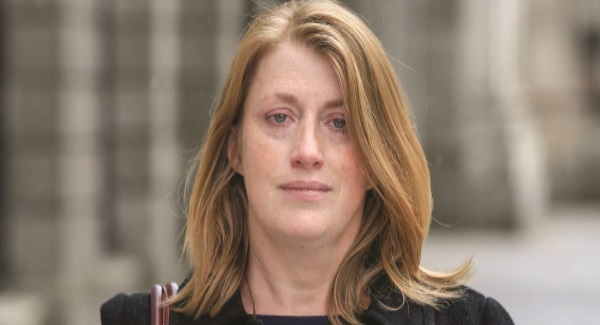
Hers is just one woman’s story, but the experience of Geraldine Barry, who watched her partner die from sepsis because of mistakes made at the Mercy University Hospital (MUH), is typical of the long, cruel and unnecessary delays brought about by the HSE and its indemnifiers, the State Claims Agency (SCA), refusing to accept liability, when they have clearly been at fault.
Geraldine’s partner, Chris Sayer, was a jazz musician and antiques dealer. Chris was 29 years older than Geraldine, but the age gap meant nothing to a couple who regarded each other as soulmates. “He was the love of my life,” Geraldine, 44, said.
But the system sometimes doesn’t seem to see patients and their loved ones as people. When mistakes are made, all too often the instinct is to close ranks and not admit errors, as they fear — wrongly as it happens — that admitting mistakes and apologising early, might in some way increase the amount of damages that will have to be paid to victims, or their surviving loved ones. It’s a group-think reaction that treats the patient and their loved ones as ‘clients,’ rather than people. And ultimately, it is costing the HSE and taxpayers more money than would otherwise be the case.
The only way around this is to have a statutory duty of candour and open disclosure. The word statutory is important here, because what the Minister for Health, Leo Varadkar, is currently proposing falls significantly short of that.
If we examine what happened to Chris Sayer, for example, it is clear that there is a major deficiency between what Mr Varadkar is proposing, and what both the international and Irish experience indicate is demanded here.
In March 2010, Mr Sayer was diagnosed with colon cancer. Unfortunately, only five months earlier, in October 2009, the cancer had been missed on a CT scan by a radiologist in a separate hospital. That was mistake number one.
As a result, emergency surgery was required on March 11, 2010, to remove the cancer. The surgery went well and initially Mr Sayer made a good recovery.
However, he subsequently developed an anastomotic leak — a well-recognised complication of this type of surgery. Due to the negligence of MUH, this wasn’t detected in a timely fashion, he developed sepsis and while he had further surgery, six days later, on March 17, it was too late. He never regained consciousness and died from complications of the sepsis on April 19 2010. Indeed, prior to this second surgery, Geraldine was told he was unlikely to survive the operation, and, as this information was presented to her, his belongings were dropped beside her in green plastic bags.
It is impossible to imagine in that moment, that Geraldine was treated as a person, a distraught and traumatised loved one, rather than a ‘client’ or ‘service user.’ The most tragic aspect of this case is the appalling lack of communication and empathy by hospital staff. Ms Barry was forced to watch her partner die, while all her emotional protests and questions were ignored. None of the medical or nursing staff listened to her concerns. Ultimately, she was forced to ambush doctors in order to find out what she needed to know about Chris’s condition. She was told in reply that his condition was “as good as it gets” and that he would never regain consciousness.
The decision was then made to take him off the ventilator. He died 10 days later. But, even during those harrowing 10 days, watching and waiting for her partner to die, there was time for another shocking display of insensitivity by medical staff. Geraldine was asked by a doctor on April 15, five days into her deathbed vigil, and in front of Mr Sayer, “do you want a postmortem?”.
The HSE knew Chris’s cancer had been missed by a radiologist on a CT scan. The HSE knew he was not treated early enough for a post-operative infection and that this was negligent. Yet, MUH denied responsibility for five years and five months. It was only when they were faced with the prospect of a judge some 12 days prior to the trial that they admitted liability. On Wednesday, December 16, 2015, Geraldine was awarded €500,000 in compensation.
The legal bills incurred will run to several hundred thousand euros. The taxpayer could have been spared that expense if the HSE had adopted a stance that is used in the United States, in Australia and in the UK — and simply admitted their mistakes.
There is clear international research showing a significant reduction in legal bills, when a duty of candour is introduced. Research by the University of Michigan Health System found the average time to process a claim in Michigan went from approximately 20 months to eight months, and costs per claim were halved, after a duty of candour was introduced.
A duty of candour is simply a responsibility on hospital, medical and nursing staff to tell the truth to patients, when there has been a mistake, which has adversely affected the patient. So if a radiologist misses a cancer reading on a CT scan, or if a patient contracts sepsis after surgery, the onus is on the medical staff to admit that to patients or their families as soon as they realise their error.
“I knew from the outset that he was mistreated. I wrote to the hospital a number of times asking them what had happened. They fobbed me off,” Geraldine Barry, from Skibbereen, Co Cork, said.
“I went to Cantillon Solicitors in desperation. They too wrote to the Mercy University Hospital and they equally were fobbed off. Cantillon Solicitors retained independent experts who gave me the true story of what had happened to my beloved Chris.”
Compiling independent expert reports on medical negligence cases is expensive. Had the Mercy admitted liability as soon as it knew of its negligence, such expense could have been avoided. Not only would the taxpayer have been saved, it would have spared Geraldine Barry some of the extraordinary psychological impact suffered over a five-year legal battle, where she was faced with stonewall denials . The court heard she still suffers flashbacks and profound loneliness.
So what is Leo Varadkar proposing? The HSE has had a national open-disclosure policy since November 2013. But this was clearly ignored in Mr Sayer’s case. It is merely a policy, a guideline. There is no statutory duty of candour in Ireland. Mr Varadkar has promised to bring forward legislation — as part of the Civil Liability (Amendment) Bill 2015 — but it appears to be more concerned with protecting doctors and nurses who do make open disclosure, than with giving patients and their families the right to open disclosure. The proposed new legislation merely supports a national policy of open disclosure — this will not be a statutory requirement. In other words, it will not be mandatory for medical and nursing staff to admit errors that have caused harm to patients.
I note, with interest, that Tony O’Brien, HSE director general, recently criticised the adversarial framework used to resolve litigation. It should be noted that the SCA cannot interfere with clinical practice.
Telling the patient what happened is part of (good) clinical practice. Thus the solution to the problem is within the gift of Mr O’Brien and his organisation. Tell the patient what happened, admit lability and stop paying illegal and unnecessary deference to the SCA.
A predecessor of Leo Varadker’s in the Department of Health, Mary Harney, set up an expert group which recommended a policy of open disclosure. That was in 1997. A lot has changed since. And a lot hasn’t.

CONNECT WITH US TODAY



Be the first to know the latest news and updates