BUDGET 2016 FROM A TOWN: Carrigaline gives its verdict

You don’t need to look at the census numbers to know that Carrigaline is a commuter town. If you were to cast an eye over the CSO figures, you would see that of the 5,378 workers living in the town, just 897 stay in Carrigaline, with 4,481 putting in their day’s work else where. It is Cork City’s largest feeder town, supplying the second largest city in Ireland with 2,954 workers.
But this is evident from a simple glance at the daily tailbacks on Carrs Hill every evening as motors inch their way home southbound along the N28.
“Any night, if you drive out of Carrigaline between half five and half six, you have a three- to four-mile tailback of cars coming into Carrigaline. You wouldn’t see it in LA,” David Collins of Barry Collins SuperValu in the town said.
David is quick to point out that it is great to see so many people working, but queries why Carrigaline itself cannot entice employers to a town with a potentially large workforce on its doorstep.
“I think Carrigaline needs local, direct employment, we don’t have a whole lot of employment in the town of Carrigaline. We have lots of employment in Ringaskiddy, and that is fantastic to have them, without them we’d be goosed.
"I like the idea of the Port of Cork going to Ringaskiddy, I think that will be great for the area. But in the town of Carrigaline, there isn’t a whole lot,” he said.
David believes that with a staff of 140 or so people, SuperValu is Carrigaline’s largest employer. David’s brother Peter, is the proprietor of the Carrigaline Court Hotel. They employ around 100 people, between full- and part-time staff.
“There’s a great spirit within Carrigaline. I don’t think there’s any place in the county that has weathered the recession well. It’s been very tricky, but Carrigaline has an immense spirit within the town,” Peter said.
“We would love a western relief road to alleviate some of the traffic issues and I would hope the Government would put get the funding for that, it’s a big issue for the town,” he said.
David believes more needs to be done to help start-ups, and he hopes the budget will do something to do that.
Sarah Marks agrees that more needs to be done to help new business. Sarah’s Tea Rooms celebrated a year open in August. Sarah closed her previous business, a take away, at the height of the recession.
She says that employers’ PRSI and the upcoming increase in the minimum wage means that it is not worth her while to employ someone, even on a part-time basis. She wants to see tax breaks for new businesses.
“Whatever profit you are making as a small business, as small as it is, if it’s enough for them to take something out of it, they will,” she said.
“People come into the café and think it’s lovely, but they don’t see the inside cost that I have,” said Sarah.
“It might cost €2 for a cup of coffee, but the cost around that is the water, the heating, the electricity, the price of the coffee and then the Vat on top of that. I’m not getting much out of that.”
Case Studies
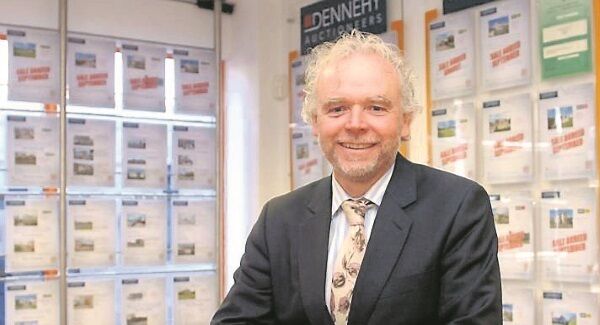
Roy Dennehy - Dennehy Auctioneers
“Locally there’s huge demand for rental property and affordable properties for sale. I would like to see the Government tax take out of new-builds reduced to make it more profitable for builders to build at the existing price.
“I would like to see a radical reduction in some of the building regulations, in terms of what I would see as wasteful ideas that areperceived as energy-saving devices which in reality, given the size of the houses, are not.
“To me it’s wasteful to be getting people to put in solar energy in a three-bed semi. We don’t get that much sun here and I don’t see that much solar energy being used in places where they get loads of sun, so I think we’ve been codded in that way.
“It’s crazy that the council are looking for contributions off a builder, but he’s putting in the roads, the footpath, the lighting and then the government are charging property tax to the resident. When they brought in the property tax they should have done away with the contributions.
“Overall it’s very good.”“Given the changes in property prices, people will be thankful that the revaluation has been kicked on to 2019,” he said.
Roy also welcomed the changes to the tax system for the self employed, and said that he hoped it would be the beginning of a move to a system that sees the self-employed enjoy parity with employees when it comes to taxes.
“If I were being critical, I don’t know if they are doing enough to stimulate construction in the housing market. I thought maybe an idle land tax or something like that would have been good. Certainly for the capital, maybe not for the rest of the country.”
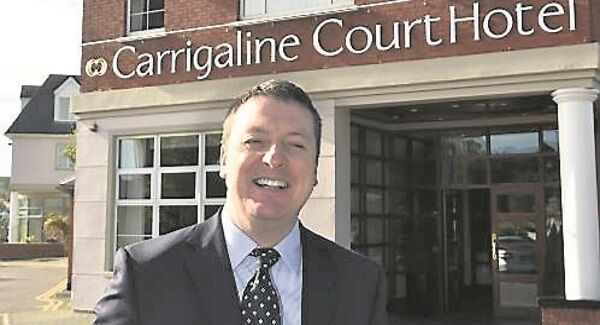
Peter Collins - Carrigaline Court Hotel
Peter Collins is the proprietor of the Carrigaline Court Hotel.
Before the budget, he said: “The most important thing, from a hotelier point of view, is that we retain the 9% VAT rate. That’s been very, very important.
“Since it came in a couple of years ago it gave the industry the kick that we needed. It’s also contributing hugely to employment in the area. We employ nearly 100 people between full and part-time at the hotel.
“If that VAT rate is changed it would be detrimental to employment rates.”
“As for “the old reliables” it’s a lottery really trying to predict if they’ll be touched. We come from a very difficult trading position as an industry. We’d love to see them untouched.”
“We’d love to see something like an apprenticeship scheme for chefs and staff with some kind of government agency established to tackle this.
“There is a huge shortage of chefs, particularly in our industry. Some sort of government scheme or promotion to entice people into that would be welcome.”
“I know it isn’t part of the budget, but commercial rates on the premises are absolutely crucifying big properties like ourselves. We’d love to see some sort of reduction or form of rebate for the hospitality industry for that.
“The hospitality industry gives so much back to the local economy in what it does for tourism.
“If you don’t have a sustainable tourism base then a lot of other things can be affected by it. We pay a quarter of a million in rates in the hotel, and we’d love some form of reduction on that.
After the budget was delivered he said:
“I’m quite satisfied with it. The retention of the 9% is very welcome. It’s a massive boost to us.
“The changing of the tax bands and the USC is going to make people happier and that has to be welcomed.”
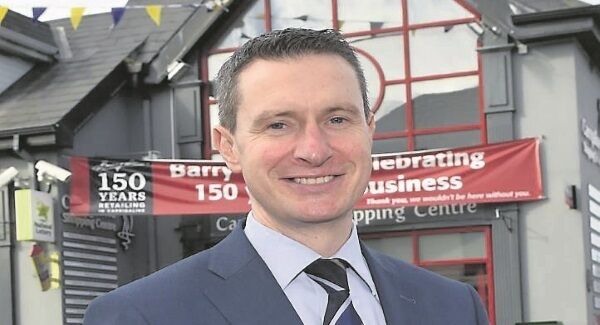
David Collins - Barry Collins Supervalu
“Anything the Government do to put more money back into people’s pockets is what we all want.
“For business to survive and prosper, particularly in our business, people have to have money to spend.
“The Universal Social Charge has probably been the most draconian aspect of that in recent years, necessary and all it might have been to have it.
“A reduction in the USC would be a big thing, and they could look at the tax bands too.
“Anything that will put money into the customer’s pockets is good for everyone and good for business.
Mr Collins also wants to see more help for start-ups.
“When you see out there the amount of anxious, enthusiastic new start-ups there are, particularly in the food area, you get more of an insight.
“I think the Government could do more to encourage that through tax incentives. The focus is always on multinationals, the big pharmas and so on, and that’s great, but I see it here where you have a huge proportion of customers, a lot of them women, who have given up their careers in the past to start a family, and their kids get to a certain point where they want to get back into the workforce.
“There are local enterprise officers who are helpful, but they say something like 70% of new start-ups fail in the first 12 months.
“These are people who want to pay tax, they want to contribute to the economy and grow a business, but at times it seems like there is so much in their way.
“If the Government were able to incentivise new start-ups that were indigenous and local, that would be something well worth looking at.
He said of Budget 2016: “What was expected has been delivered.
“Anything that stops austerity and starts the reverse of it is positive.
“There’s no big surprises, but what is there is good.”
James O’Sullivan - M&P O’Sullivan
James O’Sullivan of M&P O’Sullivan is also involved in the local Lions Club.
He wants to see funding for LEADER development companies protected.
“It wouldn’t have been possible for us to build our new youth centre in Carrigaline without a substantial grant from SECAD (South & East Cork Area Development initiative). While the country is developing, in places like Carrigaline and Ballincollig, we’re still short of infrastructure. Without SECAD, lots of projects wouldn’t be done in our community,” he said.
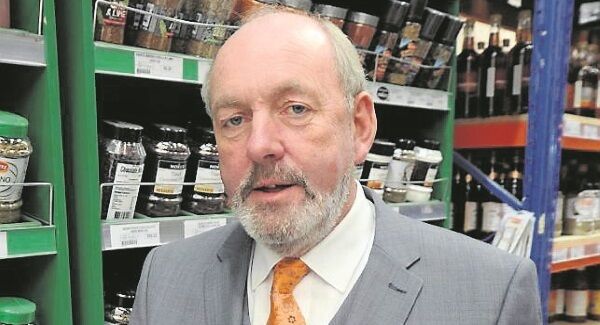
“It’s not just Carrigaline, people all over the county and country depend on these groups and their matched funding to put infrastructure into their communities.
“Capital Gains Tax is at 33%. That was at 20% at one stage and it really discourages people from selling businesses. Having the tax that high means that the yield is probably lower than what it would be if they were to drop it back to the original 20%.
“If they brought it back to a manageable 20% they would probably get a lot more people selling assets and by selling assets they would get a lot more tax.
“We’re celebrating 110 years in business this year and we did that without any real help from government agencies over the years. We employ over 50 people, but because we are in the service industry we are not treated equally to those in manufacturing for some reason.
“There are over 800,000 people in the service industry in Ireland and I think that we feel a little bit unloved and undervalued for the contribution we make to the economy. There are all sorts of grant aids available to the manufacturing industry, and agencies like the IDA to help manufacturing. People in the service industry really have to fend for themselves.”
Afterwards, James was happy with the changes to Capital Gains Tax and tax changes for self employed people. “The USC cut will bring more money into the economy and that’s positive.
Sarah Marks - Sarah’s Tea Rooms
Sarah Marks runs Sarah’s Tea Rooms. The cafe has been open a year, after her previous business, a take away, closed during the recession.
“It’s a struggle, you try to balance out things and you try to make a wage. You want to make a profit, but you’re trying to balance everything so you can survive without making too much of a profit for them to take it away. They will tax you, the more you get the more they take. You end up with nothing.
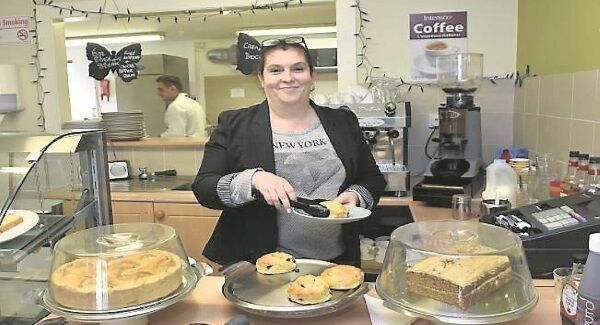
“The best for me would be if they reduced the tax for small business.
“You’re paying taxes when you buy it, and taxes when you sell it. Rent is so high because of taxes as well. If there was less tax on rent for landlords it would have a knock-on effect.
“At the moment it’s just myself and my husband working here.
“If I want to bring someone else in, I have to pay employer’s PRSI, to have someone full-time it’s all about taxes again. It’s not busy enough to do that. But there are busy enough times during the day where I could bring someone in.
“The rate of pay is going up after Christmas to €9.15. For me to hire someone on that, even for four or five hours a day, is just not worth it.”
Sarah wanted to see an initiative like a tax freeze for businesses in their first year.
“For big companies coming into Ireland there’s a tax freeze for them, I don’t see why they can’t do something for small businesses as well.
“It takes two to three years to find your feet at least and people come into business and struggle in that first year. They think ‘it’s not going to work’, but they don’t know that because they don’t give it a chance to actually see.
“More incentives for new businesses is what is needed, and a look at taxes on rent. There are a few places around here where people just can’t afford the rent. Small town rents are too high and the rates are too high so they can’t afford it.”
Conor Phelan - Phelan’s Pharmacy
Conor Phelan opened his first pharmacy in Carrigaline in 1988, and now owns seven across Cork and Dublin.
He said he would personally like to see further investment in sporting amenities such as cycleways and walkways.
From a pharmacy point of view, he wants a reduction in prescription charges, and reveals how they can act as a deterrent for people who need medication.
Prescription charges have gone from 50c per item when originally introduced in 2010, to €2.50 per item today.
While there was hope for a cut in the charges, or hospital fees in this budget, they were not reduced.
“I’d like to see prescription charges reduced for patients. The Government did make a promise to abolish them when they came into government and that hasn’t happened yet.
“We do see patients skipping medicines that they should have because they have charges on them,” he said.
While free GP care has been extended to all children aged 11 or under,Conor believes there is scope for pharmacists to play a greater role in healthcare.
“I think they could fund a minor ailments scheme whereby patients can visit their pharmacy for minor ailments instead of going to their doctors — it is a scheme that has been successful in other countries.
“For example, if you had a minor eye infection you could go to your pharmacist for an antibiotic eye drop instead of going to the doctor, things like that.
“I think the vaccination services could be expanded beyond the flu vaccine to other vaccination services.”
CONNECT WITH US TODAY



Be the first to know the latest news and updates