Special Report: Rural Ireland must define its own vision
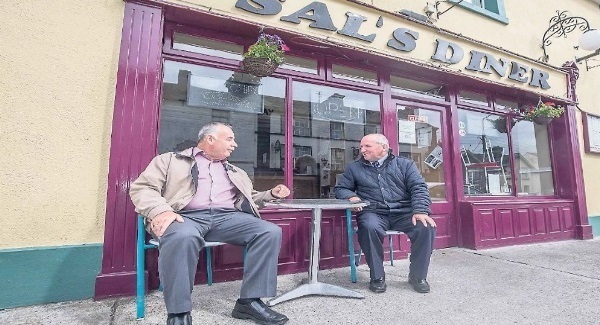
In the speech, he said: “The Ireland that we dream of would be the home of a people who valued material wealth only as a basis for right living, of a people who, satisfied with frugal comfort, devoted their leisure to the things of the spirit, a land whose countryside would be bright with cosy homesteads, whose fields and villages would be joyous with the sounds of industry, with the romping of sturdy children, the contest of athletic youths, and the laughter of happy maidens, whose firesides would be forums for the wisdom of serene old age.”
In the Government White paper of 1998, an initiative spearheaded by the late TD Noel Davern, the vision was more practical: “The ensuring of economic and social well-being for rural communities by providing the conditions for a meaningful and fulfilling life for all people living in rural Ireland.
“It will become a dynamic, adaptable and outward looking multisectoral economy supporting a resilient and diverse communities experiencing a high quality of life with an energised relationship between rural and urban Ireland.”
As recently as 2014, the CEDRA report, chaired by Pat Spillane and launched by Taoiseach Enda Kenny, states a vision where: “Rural Ireland will become a dynamic, adaptable, and outward-looking multisectoral economy supporting vibrant, resilient and diverse communities experiencing a high quality of life with an energised relationship between rural and urban Ireland which will contribute to its sustainability for the benefit of society as a whole.”
Special Report (Rural Ireland): Galway spirit shines through http://t.co/vsBUgLXHY0 pic.twitter.com/7lZg9Cb8S2
— Irish Examiner (@irishexaminer) August 11, 2015
Coming back down to earth, economic and social indicators would suggest that we have a bit to go before we achieve any or all of the visions listed. CEDRA’s report stated that unemployment in rural areas rose by 192% between 2006 and 2011, compared to 114% in urban centres.
Social Justice Ireland states in its latest report, that poverty in rural areas is 4.5% higher than in urban areas. According to the latest unemployment statistics, unemployment in rural areas continues to average between two to three percentage points above the national average.
In the last year, the plight of rural towns and villages has featured in all parts of the media and has been pinpointed in the CEDRA report as in need of serious resuscitation.
Irish Rural Link has been battling with Bus Éireann on their proposed route closures. Closures to a range of services from banking to post offices, to credit unions and rural schools are habitual occurrences. Places such as Ferbane in Offaly, Croom in Limerick, and Ballinasloe in Galway have protested these closures, citing among their many grievances the complete lack of consultation with the local community before these decisions were made.
Rural isolation is heightened by the closure of garda stations and the increase in rural crime figures recently published.
Special Report (Rural Ireland):‘We’ll get it up and running again’ http://t.co/ktKbqUAes5 pic.twitter.com/30CsmL0tiA
— Irish Examiner (@irishexaminer) August 10, 2015
The example of a Clare manwho cycled 50km so that he could sign himself into a nursing home because his house had been broken into appalled the nation and reminded us all why rural isolation cannot be ignored.
Community-based transport has been delivering a good service, but rationalisation and a fixed budget of €9m, which in real terms is declining, it there is little opportunity to expand it in a way that will cater for the real needs of people.
Highlighting these issues should not be seen as a rant about rural Ireland. There are plenty of reasons to be positive. We know agriculture has performed well in the last five years. We know the efforts of Leader companies continue to improve employment as well as social well-being in rural areas. Government initiatives such as publishing the CEDRA report, complete with the appointment of Ann Phelan as minister of state for rural development, must be welcomed. Equally, the planned roll-out of eight regional jobs plans, which is part of a €250m regional jobs strategy under the Department of Jobs, Enterprise, and Innovation, has the potential to make a huge difference to rural areas. Recent announcements that broadband will be everywhere by 2020 must also be welcomed.
Special Report (Rural Ireland): ‘Don’t pigeonhole rural communities as a burden’ http://t.co/qlIUCNWK4U pic.twitter.com/8r6tPVDOOJ
— Irish Examiner (@irishexaminer) August 10, 2015
However, the need for policy-makers to make the leap from potential to actual achievement in rural areas would be helped by two underlining principles. The first is a new White Paper complete with an extensive implementation plan and secondly the existence of a voluntary Rural Protocol, where all rural stakeholders would agree to a process of negotiation with local ommunities before closing services.
The need for the White Paper should be a no brainer. Its existence becomes an essential document in real time delivery of policies and programmes by Government in rural areas.” The protocol allows communities to propose alternative ideas that will allow a rethink of services closures or indeed show why the service is no longer fit for purpose.
Finance Minister Michael Noonan’s vision is that Ireland should move away from a boom and bust economics. Applied to rural Ireland, such a vision would be a godsend.
Séamus Boland is with Irish Rural Link.
Community makes sure area stays safe despite the lack of a Garda presence - http://t.co/pFyhMDMW7a
— Muintir na Tíre (@Muintir_na_Tire) August 10, 2015
DAY 1
Special Report (Rural Ireland): Community makes sure area stays safe despite the lack of a Garda presence
Special Report (Rural Ireland): ‘We would love to be employers, to employ locally and to invest locally’
Special Report (Rural Ireland): ‘Don’t pigeonhole rural communities as a burden’
Special Report (Rural Ireland): ‘We’ll get it up and running again’
DAY 2
Special Report (Rural Ireland): Galway spirit shines through
CONNECT WITH US TODAY



Be the first to know the latest news and updates