Tunisia terrorist cell promises more attacks in video
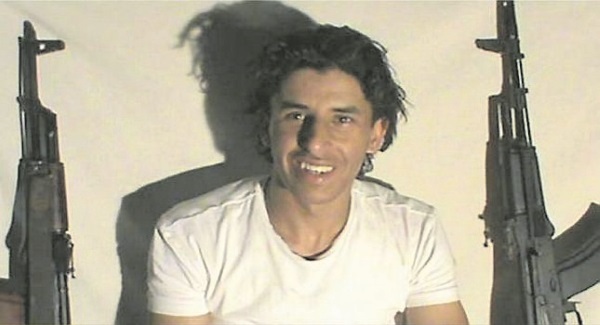
Port El Kantaoui, the tourist complex 10km to the north of Sousse where 23-year-old Seifeddine Rezgui gunned down 39 tourists, is deserted.
On the outskirts, a novelty train crawls along the roadside; empty but for two perplexed-looking middle-aged tourists. On the pristine white sands of the beach where Rezgui had rampaged, the remaining tourists make their way to the site of the massacre, carrying flowers and makeshift signs of hope and consolation.
The carnage Rezgui unleashed on Friday has left an indelible mark. For Tunisia’s tourist industry, struggling to reassert itself after a similar attack at the capital’s Bardo museum in March, this slaughter is a body blow. For the people of Tunisia, conditioned and proud of a long history of secular politics and religious moderation, the 39 dead on Sousse’s beaches stand as a bleak affront to everything they have striven for since the 2011 Jasmine Revolution.
However, for the security services of Tunisia and those connected to them, this latest atrocity not only marks the arrival of the Islamic State (IS) on Tunisia’s shores, but it also carries with it the sure promise of further violence to come from sources they are not equipped to predict.
In Rezgui’s former home, the small, poverty-riven town of Gaafour in Tunisia’s north-west, friends and family are struggling to understand how the football-loving and polite student, who had never left Tunisia, could have committed such an atrocity.
“He was good, good, good!” Monia Riahi, a neighbour and family friend said. “I’ve known him since he was small. He was never in trouble with anyone ever. Maybe he was brainwashed or something.”

To all extents and purposes, Rezgui was anonymous — unknown to the security services and apparently unsuspected by those who knew him.
Some blame the local mosque, a stronghold of Tunisia’s ultra-conservative Salafist community; others see his time at Kairouan University, where he studied aviation, as the source of his radicalisation.
Others point to Rezgui’s social media history, a dark testimony to his fascination with jihadi violence, as well as his means of communicating with the legions of Tunisian fighters engaged with the Islamic State, as the motivating factor in this ‘lone wolf’s’ rampage.
However, for the mourning families of the dead and wounded, Rezgui’s motivation will have little meaning.
Scott Atran is the director of research in anthropology at the Centre National de la Recherche Scientifique in Paris and senior research fellow at Oxford University.
“So many guys radicalise because they can universalise their own personal, often frustrated, aspirations with something that is adventurous, glorious, and seemingly sublime,” he says.
“The conversion of personal problems into universal moral outrage and willingness to kill, and die killing, perfect strangers innocent of direct harm to others, much less to that person, is what Isis is all about. With that kind of brutal, sublime commitment, even failure is victory.”
Rezgui’s targets were clear — Tunisia’s desperately needed foreign tourists and the money and cultural mores they bring. Witnesses even reported him telling Tunisians to get out of his way as he continued his onslaught.
“Tourists and tourism have been clearly the target of the attack, similarly to the March events at the Bardo,” said Ludovico Carlino, Middle East and North Africa analyst at security group IHS Country Risk.
“This is in line with the current jihadi strategy in Tunisia of targeting both a pillar of the country’s economy, to undermine the secular government, and Western tourists, deemed by jihadists as ‘kuffar’ [infidels].”
Despite its religious moderation, Tunisia has long been a fertile recruiting ground for jihad, with a terror export industry stretching back to the mujahideen of Afghanistan.
Terrorism at home, though deadly, has largely been sporadic and, prior to March’s attack at the Bardo, mostly confined to the mountainous reaches along the Algerian border, where al Qaida in the Magreb- sponsored Ukba Ibn Naffi Kalibat has fought a bloody low-level insurgency.
However, recent months have seen the group stymied in its mountain strongholds and isolated from the urban centres that feed it. With Ukba Ibn Naffi’s decline has come IS’s ascendancy.
Since December 2014 and with increasing frequency since, IS has been making its ambitions for Tunisia ever clearer. On May 18, hitherto unknown Tunisian terrorist cell, the Mujahideen Tunisia Kairouan, declared both its presence within Tunisia and fealty to IS, giving the terror group its first tangible foothold within North Africa’s most celebrated democracy.
On June 28, it published a further video featuring Rezgui and footage of an attack it claimed was aborted due to the presence of good Muslims, a distinction echoing that of Rezgui’s on Friday.

Chillingly, the video promised more attacks. “I think we can assume that Rezgui was one of the ‘lone wolves’ of the Mujahideen Tunisia Kairouan,” Tarek Kahlaoui, a researcher on jihad and ex-director of the Tunisian Institute of Strategic Studies said.
“Young men like him are drawn to the idea of the Caliphate that Isis is creating in Syria and Iraq and what it stands for. They see jihad as an obligation, a calling to fight the conspiracy between the West and the Shia against them. They’re impressed by the killing machine that is Isis, by the sheer ruthless efficiency of it all.”
Recently, Tunisians already within the ranks of IS have been reaching home to the disaffected young men of the impoverished towns that, like Gaafour, litter Tunisia; angry young men with no identifiable link to any terror group other than a fibre-optic cable and a gateway to the logistics and weaponry available to them via Tunisia’s porous border with war-stricken Libya.
“When the message comes from someone in Syria and Iraq, it’s incredibly powerful,” says Dr Kahlaoui. “These guys, the Tunisian fighters, are contacting the undecided and unsure back home and they’re asking them to do their bit. The thing is, they’re not asking them to come to Syria and Iraq, they’re asking them to become the lone wolves of Tunisia.”
Rezgui’s slaughter came in the holy month of Ramadan. Within this there are days when martyrdom is considered more sanctified. These are the 15th, 17th, and 27th days. Asked if further bloodshed is to come, Dr Kahlaoui doesn’t hesitate.
“Absolutely.”