Why papal encyclicals continue to be relevant
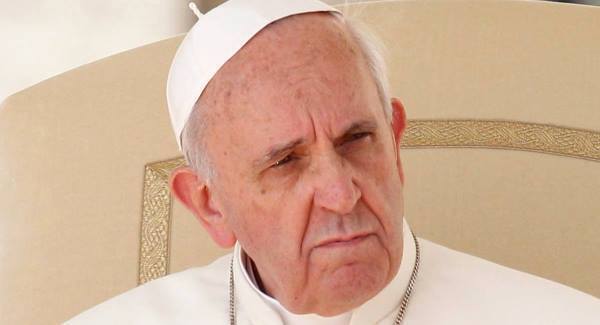
YES, Pope Francis’s encyclical was a passionate plea to safeguard the future of the planet, but will anyone listen? That was the question put to the Pope’s biographer, Paul Vallely, on the BBC, following the publication of Laudato si, the hard-hitting encyclical on the environment and climate change, in which the Pope said: “The Earth, our common home, is beginning to look more and more like an immense pile of filth”.
Leading figures on the American right — dismissing the Pope’s anti-fossil fuel message — have rejected the encyclical, which they regard as a challenge to the core beliefs of US conservatives. That challenge will undoubtedly be reiterated in September, when Pope Francis is due to address the US Congress. He is sure to repeat the key question asked in his encyclical: “What kind of world do we want to leave to those who come after us, to children who are now growing up?” But will anyone listen? “The Pope ought to stay with his job, and we’ll stay with ours,” said James Inhofe, a leading climate-change denier in the US Congress and chairman of the Senate environment and public-works committee.
So will the Pope’s message make a difference? The wider question is: Do papal encyclicals matter? Patrick Regan, who teaches the politics of climate change at Notre Dame University,says they do.
“If I were a Catholic climate-change denier, I would be worried about the Pope,” he said. “And if I had a vested interest in not changing climate policy, the Pope would be a threat to my political stance.” Papal encyclicals (the word ‘encyclical’ comes from the Greek ‘enkyklike’, meaning a circular letter that is meant to ‘go the rounds’) have a long and controversial history. Some scholars trace the tradition of apostolic letters back to the First Epistle of St Peter.
The documents are known by their first words in the original Latin versions (usually the first two words, sometimes the first three). The history of apostolic letters is divided into three phases — early, medieval and modern. It is only in the modern phase, which began in the 18th century, that the use of the word ‘encyclical’ has became common.
“In the middle of the 18th century, the uninterrupted sequence of historical encyclicals begins,” wrote Anne Fremantle in her book, The Papal Encyclicals in Their Historical Context. She cites Pope Benedict XIV (1740-58) as the first Pontiff to give the name ‘encyclical’ to a letter sent by him to all Catholic bishops “in peace and communion”. This first encyclical of modern times was called Ubi primum, and is dated December 3, 1740.
Some encyclicals are remembered for the wrong reasons. An outstanding example is Quanta cura, published by Pope Pius IX on December 8, 1864, to which was attached the ‘Syllabus of Errors’. This denounced a list of 80 propositions said to represent the “principal errors of our times”. Among the propositions rejected by the Pope was the following: “The Roman Pontiff can and ought to reconcile himself to, and agree with, progress, liberalism and modern civilisation”. The encyclical also condemned freedom of speech and the press. The document caused an enormous furore. It dealt, in the words of JND Kelly, author of the Oxford Dictionary of the Popes, a “fatal blow to liberal Catholicism”.
The era of the great social encyclicals began in May, 1891 with the publication, by Pope Leo XIII, of Rerum novarum, which was in part a reaction to the dire consequences of the Industrial Revolution. The encyclical championed workers’ rights, trade unions and the concept of a just wage. Its advocacy of social justice earned Leo XIII the title of “the workers’ Pope”.
One of the most controversial encyclicals of the 20th century was published by Pope Pius XI on March 14, 1937. It was written in German and so broke with tradition. Mit brennender Sorge (“with burning anxiety”), condemning Nazism, was addressed to all German bishops. The Pope ordered that it be read in all churches on Palm Sunday, March 21, 1937, but copies had to be smuggled into Nazi Germany.
The result was a dramatic illustration of the effect of encyclicals. In his book, The Pope & Mussolini, David Kertzer said: “Hitler was furious, outraged not only by the unprecedented attack, but the Pope’s ability to have the message distributed so widely without his knowledge”.
The same Pope, seven years previously, had issued an encyclical entitled Casti connubii (December 31, 1930), dealing with Christian marriage. It included the first formal prohibition of contraception by a Pope. This was reiterated by Pope Paul VI in Humanae Vitae (July 25, 1968), one of the most divisive encyclicals ever. Paul VI was so hurt by the hostile reception of the encyclical that for the remaining 10 years of his pontificate (he died in August, 1978) he refused to write another one. Nevertheless, the prohibition on artificial methods of birth control remains such that Pope Francis, as the latest encyclical shows, feels bound to uphold it, even if indirectly.
One of the criticisms made of Laudato si is that it takes too cavalier an attitude to the population explosion and the appalling misery, hunger and deprivation that this causes. In today’s overcrowded world, birth control is an environmental necessity. Yet the Vatican continues to use its influence in international forums to oppose family planning programmes.
Encyclicals matter because Popes wield a power that is derived from their position as the world’s highest moral authority (one could cite the role of the encyclicals of Pope John Paul II, in helping to bring about the collapse of Communism in Europe in 1989). It remains true, of course, that papal authority, especially in the sphere of sexual morality, has been diminished by the controversy over Humanae Vitae, and the refusal of successive Popes to revisit and rethink the outdated morality behind Paul VI’s document. Nevertheless, the need to safeguard that authority, and the absolute independence of the Papacy on which it depends, may also be — as John Allen, formerly of the National Catholic Reporter and now religion editor of the Boston Globe, has argued — the best justification for the existence of the Vatican City State. Allen’s argument is that statehood, and the immunity it confers on the Papacy, are necessary so that the Pope can act as “a neutral voice of conscience on the global stage”. Papal encyclicals are the products of this conscience. They are the nearest we have to a predominant world vision guiding the peoples of the Earth.

CONNECT WITH US TODAY



Be the first to know the latest news and updates