Broken Nepal will bury more of its children
Providing poor accommodation for a desperate people simply will not suffice — it risks walking them into a disaster that will recur, writes Conor O’Loughlin in Kathmandu.

Broken Nepal will bury more of its children

The drive from Kathmandu airport to the city is shocking but not, perhaps, for the reasons you might expect.

You step off the plane expecting to walk immediately into a disaster zone. Yet the roads close to the airport reveal only slightly damaged buildings. Were it not for the chaotic scenes at the airport, where a combination of fleeing crowds and incoming aid have resulted in lengthy delays, you would wonder whether you were in the right country.

Where is the rubble? Where is the earthquake damage?

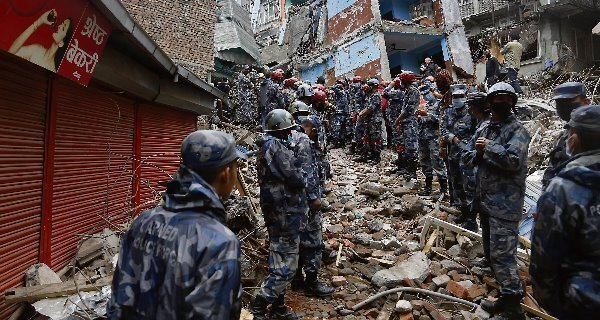
Then you enter the poorer districts of Kathmandu and the horror of April 25’s earthquake strikes you. It is here, in the densely populated low-income districts of the city, that the impact was worst felt.

That the death and destruction was so localised in these poorer districts drives home the brutal reality of what happened in this country: Thousands of people were killed in an instant because they were too poor to protect themselves.

The earthquake was the catalyst for the destruction but most of those who perished in the earthquake died as a result of poverty.

DISCOVER MORE CONTENT LIKE THIS

Earthquakes differ from other natural disasters in that they do not, in themselves, kill in large numbers. It is not the earth shaking that will kill you but the effect that that shaking has on the environment around you.

Nepal is the most recent illustration of the reality that poorly constructed buildings are the single biggest killer in the event of an earthquake. This is why earthquakes in developed countries rarely result in mass casualties, whereas earthquakes in countries such as Nepal result in thousands upon thousands of people lying under rubble. When an earthquake strikes, the poorer you are, the less chance you have of survival.

Countries such as America and Japan experience earthquakes virtually every week. The majority of these are low magnitude, but even powerful earthquakes rarely result in deaths.

Alaska, Japan, Mexico, and Indonesia all experienced earthquakes on the same day as the Nepal disaster. Each measured between 4.6 and 5.4, yet no deaths were recorded.

Japan has been hit by five earthquakes since last Monday, the most powerful of which was a 5.3 magnitude earthquake that struck on Thursday. The worst earthquake in Japan’s living memory occurred in 2011 when a 9 magnitude quake — far more powerful than the earthquake that struck Nepal last Saturday — resulted in 15,890 deaths. Yet almost all of these deaths were caused by the resulting tsunami, not the actual earthquake.

New Zealand is another country with a propensity for earthquakes. A 6.3 magnitude quake in 2011 resulted in 185 deaths, six months after a 7.1 earthquake had resulted in no fatalities.

The outpouring of international assistance for the suffering people of Nepal has been heart-warming. People here tell me they are deeply touched at how the world has rallied to their cause. We run the risk, however, of helping the Nepalese people recover from one earthquake while at the same time walking them straight into the next disaster.

While our immediate focus much be on providing shelter and assistance to those left homeless, we must also plan for the long-term. We know Nepal will suffer further earthquakes. It is a simple fact of life here. It may be five years, it may be 10 years, it may be 50 years, but we know this will happen again.

Planning for Nepal’s next earthquake should start today. That process begins with a commitment to end the poor- quality housing that has caused so much needless loss of life here over the last week. Modern buildings constructed to proper building standards would have withstood the disaster.

Ultimately, this is where the aid focus must shift to. The international agencies arriving into Kathmandu airport with tents and water are welcome. They will bring immediate relief but not all will stay to see this through. Local organisations, such as Trócaire’s partner Caritas Nepal, will be the ones to take a long-term view.

Growing urbanisation around the world has made earthquakes more dangerous. Each day, tens of thousands of people flock into cities around the world, adding to already over-crowded slums and living in buildings constructed with little acknowledgement of standards.

If the poorer districts of Kathmandu were built to modern standards, the chances are that you might never have heard about last Saturday’s earthquake. The people of Nepal would be cleaning up broken glass instead of burying their children.

Conor O’Loughlin is Trócaire’s Humanitarian co-ordinator in Nepal

DISCOVER MORE CONTENT LIKE THIS

More in this section

Revoiced

Newsletter

Sign up to the best reads of the week from irishexaminer.com selected just for you.

Cookie Policy Privacy Policy Brand Safety FAQ Help Contact Us Terms and Conditions

© Examiner Echo Group Limited