Searching for ways to sustain the unsustainable eurozone
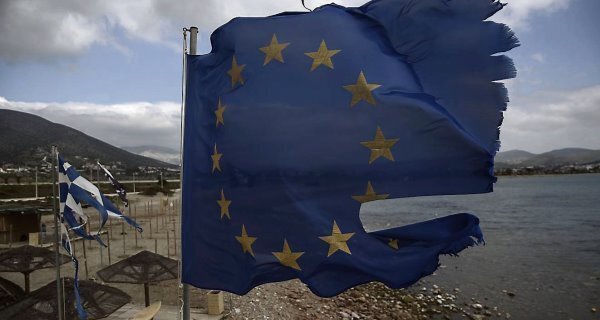
WHEN the eurozone was established, its creators envisioned gradual progress towards an “optimal curr- ency area,” characterised by fiscal integration, free movement of labour, and political union.
This process has not occurred, and, as the interminable Greek crisis has shown, the eurozone remains rife with structural weaknesses and extremely vulnerable to internal shocks. This is clearly not sustainable.
Despite efforts to promote fiscal-policy co-ordination, eurozone members’ budgets still fall under the purview of separate national authorities, and northern Europeans continue to oppose transfers from more to less prosperous countries beyond the very limited allowance of the EU’s regional funds.
Labour mobility is severely constrained by linguistic and cultural barriers as well as administrative bottlenecks. And “ever-closer” political union has ceased to attract public support — if it ever did — and is thus not feasible today.
A growing number of commentators, and no longer only in the Anglo-Saxon world, question the monetary union’s viability. Some encourage Greece to exit the eurozone, believing that a more restricted and homogeneous currency union would be stronger and easier to unite.
Others consider a Greek exit to be just the start of the inevitable unraveling of a scheme that does not serve the purpose for which it was created.
The eurozone has so far managed to prove the doomsayers wrong. By sheer force of political will, compromise after compromise has been reached, thereby sustaining a historic project that is not, in its current state, sustainable.
The need to maintain this commitment to European unity, and overcome the economic difficulties that arise, is reinforced by new geopolitical challenges.
Most notably, Russia’s perceived ambition of recapturing its Soviet-era influence is challenging the rules-based order that was established after the Second World War, and a surge in religious and political extremism is threatening democratic and liberal values.
The economic difficulties are bound to continue, fostering doubts about the currency union’s future — doubts that could become self-fulfilling by undermining the euro’s ability to function properly.
Already, economic pressures have fuelled anti-European sentiment in Spain, Italy, and even France; if allowed to continue, such sentiment could culminate in secession, with devastating consequences for the eurozone and Europe as a whole.
The first step in such a process would probably be the eurozone’s division into sub-areas, comprising countries of relatively equal resilience. As it becomes increasingly difficult to pursue coherent fiscal and monetary policies, the risk of the eurozone’s complete dissolution would grow. Greece’s exit could shorten this timeline considerably.
European leaders seemed to recognise the implications of allowing a country — even small, crisis-stricken Greece — to exit the eurozone. That is why, this year, a series of Eurogroup meetings were held with the avowed purpose of averting such an outcome.
The problem is that Europeans have become so accustomed to muddling through that long-term solutions seem all but impossible. Indeed, in recent years, eurozone authorities have introduced several policies for fighting financial crises — including government-backed rescue funds, a partial banking union, tougher fiscal controls, and a role for the ECB as lender of last resort.
Most of these policies — with the possible exception of the banking union — are aimed at managing default risk, not eliminating this risk’s root causes.
It is time to recover the capacity, displayed by the EU’s founders, to look ahead and pursue a dream of a better future. Specifically, eurozone leaders must introduce a mechanism for fiscal transfers from stronger to weaker economies.
In a currency union, individual economies cannot alter their exchange rates to account for changes in relative competitiveness.
The resulting price stickiness tends to delay macroeconomic stabilisation and structural adjustment, leading to rising debt and unemployment in weaker economies.
Without free labour mobility, fiscal transfers are the eurozone’s only option to ease debt repayment and, by stimulating economic activity, boost employment.
Establishing such a mechanism will not be easy, as it requires a resource that is in short supply in Europe today: Trust. Indeed, the north and south have struggled to overcome cultural differences and unequal economic conditions, preventing them from viewing the situation from each other’s perspective.
Binding the union closer together could prove critical to building such trust. One strategy that combines rationality with the gradualism needed to overcome political resistance would be to increase the EU budget steadily, so that it can ultimately play a macroeconomic role, promoting stability and reinforcing cohesion within the eurozone.
It is a tough sell, but also a vital one.

CONNECT WITH US TODAY



Be the first to know the latest news and updates