Taking on the terrorists
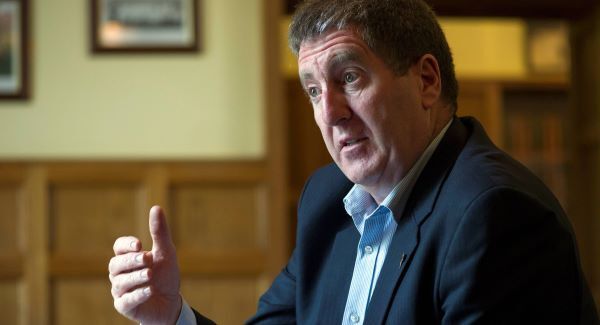
Pat Byrne is searching for pointers: Any clues that could prevent murderous acts of terrorism.
Along with his European and American colleagues, he is searching for markers that will highlight those ordinary civilians who are on the path of violent extremism.
Civilians such as Michael Adebolajo, one of two people being tried for hacking soldier Lee Rigby to death in Woolwich, London, in May.
Surreal pictures and videos of the 28-year-old brandishing a bloodied knife were beamed around the world.
From a Christian Nigerian background, Adebolajo was born and bred in England, before becoming radicalised when he was around 18.
Civilians such as Tamerlan Tsarnaev, 26, and his brother Dzhokhar, 19, both originally from Chechnya, but schooled in the US.
They walked through crowds of men, women, and children as they watched the Boston Marathon in April before dumping two homemade bombs, killing three, and injuring more than 260 people.
While news subsequently emerged of what intelligence agencies in Britain and the US may have known about some of the suspects, intensive work is being done by Europol and agencies such as the Department of Homeland Security to identify clues that might predict who the possible terrorists of the future might be, before they act.
“We are working together to counter violent extremism, to try and identify radicalised individuals before they move to action and to try and work with law enforcement to pick up the pointers that might bring out these people locally,” said Mr Byrne, head of Europol’s US office.
He said markers can involve the purchase of certain items and changes in the behaviour of individuals.
“We have to identify markers, identify issues where these individuals act out of the ordinary, act out of the norm, which can be picked up by law enforcement: Maybe the purchase of fireworks or goods that may be suspicious in nature.
“It’s multi-factorial, it’s not just about the purchase of equipment. I think that within people’s communities, within people’s friends and family circles, characteristics can develop with individuals where they may have a mood change, a change of character. They may be spending more time looking at radicalised websites or something like that.”
As part of this, he said, Europol was urging people in positions of influence in ethnic and religious communities to alert police if they suspect someone is going down a radical path, as well as concerns about those individuals who are radicalising young men.
“We all have a responsibility to protect our communities from potential violent acts like the ones in Boston and London,” said Mr Byrne, a former senior detective in An Garda Síochána who joined Europol in 2010.
He said Europe was now facing an increased threat from the return of fighters from North Africa and Syria to EU countries, many of whom have EU citizenship.
Europol’s 2012 terrorism report said there was a “distinct rise” in the number of EU citizens travelling to Syria, in several cases fighting alongside groups “associated with religiously inspired terrorism”.
The subject was discussed at a meeting of the EU Justice and Home Affairs Council last month. Speaking afterwards, Justice Minister Alan Shatter said these fighters may pose a threat by radicalising and recruiting others due to their combat experience.
Mr Shatter said there was “evidence to suggest that some travelling fighters are being exploited and radicalised” in trouble zones, such as North Africa and Syria, with a view to “creating a threat to Europe” upon their return.
Some media reports have estimated that up to 20 men from Ireland may have gone to fight in Syria and that four have been killed in battles there, including 16-year-old student Shamseddin Gaidan from Navan, Co Meath.
“As announced at the recent EU ministerial meeting in Dublin, terrorism remains a major concern especially the potential threats from radicalised fighters returning to the EU from conflict zones like Syria and the global challenge of counteringpotential homegrown violent extremism,” said Mr Byrne.
He said these men acquire increased technical knowledge in relation to the use of violence and may become anaesthetised to violence.
Mr Byrne said many who travelled to Syria joined radical Islamic brigades: “If they collaborate with religiously inspired groupings whose ideology is to attack the west, to attack the European Union, well clearly them coming back as EU citizens creates a bigger challenge for law enforcement.”
Europol’s terrorism report noted a rise in religiously inspired attacks on EU territory, with six attacks in 2012, compared to none in 2011. Related arrests rose from 122 to 159.
Mr Byrne called on community, political, and religious leaders to ensure that young people “do not radicalise to violence”.
He said his office worked closely with US authorities in preventing and combating terrorism and revealed that Europol was assisting them in their investigation into the Boston bombings.
“Europol is permanently engaged with its US and international partners in trying to prevent and detect violent acts carried out by organised terrorist groups or from radicalised individuals who have either received coaching from terrorist inspired groups or who have self-radicalised in their own right,” he said.
“We are supporting the US authorities in relation to the investigation of the Boston bomb attacks and although there are certain indications of individuals self-radicalising, the investigation is not complete and we should await its outcome before making a final determination.
“Europol is assisting our US colleagues, insofar as we are trying to fill in intelligence gaps in relation to the movements of the suspects prior to the attacks.”
Mr Byrne said Ireland could not consider itself to be “immune” to a terrorist attack, given the indiscriminate nature of these acts and our close connection with the US and our close proximity to Britain.
Observers have previously identified Shannon Airport, which has been used for some time by US military and, it is suspected, by CIA aircraft carrying terror suspects, as a possible target of extremists.
In May, the Irish Examiner revealed that the US government is seeking to erect a new defence perimeter at its Dublin embassy to protect staff against a terrorist attack.
It said it had information that al-Qaeda, its affiliated organisations, and other terrorist organisations continue to plan attacks against US interests in multiple regions. It said the Boston bombing highlighted the damage individuals can do.
“The threat assessment is of course a matter for the Garda Síochána, but we cannot be complacent when we see the globalisation and indiscriminate nature of how terrorist acts can be carried out,” said Mr Byrne.
“Given our close connection with the US, our close proximity to Britain, I don’t think we can ever rule ourselves out or immune to a terrorist attack happening.”
Mr Byrne said terrorism “undermines the fabric” of community.
“It’s dreadful for the victims, but it undermines confidence in the community, it makes people not go about their business, it wreaks havoc in the community, it can create divisions in communities, racial tensions,” he said.
“Community engagement is critical. Should there be an attack in Ireland or any European country, from an individual from a religious or ethnic grouping who has been radicalised to violence, it would be essential that open lines of communication are functioning and maintained with all communities, especially when the vast majority of them do not support radicalisation to violence.”
CONNECT WITH US TODAY



Be the first to know the latest news and updates