Champion of the poor
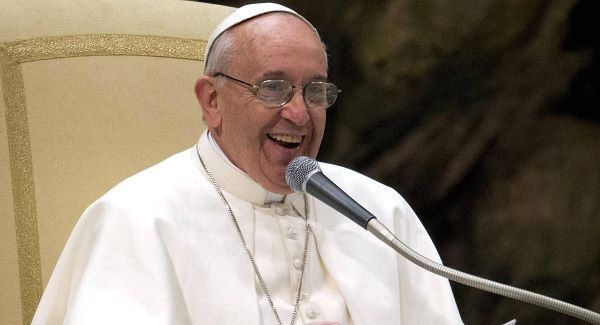
COULD the poor save the Catholic Church? Pope Francis seems to think so. Since his election, Jorge Mario Bergoglio has emerged as the champion of the poor, having declared at the outset of his pontificate that he desired to see “a poor church for poor people”.
This message was reiterated during his tour of the favelas (slums) of Rio de Janeiro — one of the most important features of his visit to Brazil. The theme of his speeches was set by a remark he made before leaving Rome.
“If investments in banks drop a little, it’s a tragedy. But if people are starving, if they have nothing to eat, if they are not healthy, it does not matter. This is our crisis today.”
In Brazil, he attacked the “culture of selfishness and individualism”, and urged more efforts to fight hunger and poverty.
“No amount of peace-building will be able to last,” he warned, “nor will harmony and happiness be attained in a society that ignores, pushes to the margins or excludes a part of itself.” There are clear echoes of a centuries-old tradition stressing the need for radical, progressive action, and insights on matters of social justice.
This tradition dates from the publication of the first of the great social encyclicals, Rerum Novarum, which was issued by Pope Leo XIII in 1891, highlighting the gross injustices of the Industrial Revolution. His intervention earned him the title of “the workers’ pope”. This was followed by Quadragesimo Anno from Pope Pius XI in 1931.
Then came two within the space of three years from Pope John XXIII — Mater et Magistra in 1961 and Pacem in Terris in 1963. In 1967, Pope Paul VI issued Populorum Progressio.
In the course of his long pontificate of 26 years, Pope John Paul II issued three social encyclicals — Laborem Exercens in 1981, Sollicitudo Rei Socialis in 1987, and Centesimus Annus in 1991 (marking the 100th anniversary of Rerum Novarum).
These are all major social documents, all analysing and reflecting on the challenges of the age, with the emphasis on human dignity and human rights, and the way these can be violated by the excesses of unregulated capitalism, the elevation of profit before people, and the misery and oppression caused by poverty and marginalisation.
A central theme throughout has been the injustices resulting from Pius XI called “the international imperialism of money”, and Pope Francis made an indirect reference to this when he said in Brazil that people who put their own interest above the common good are widening the gap between rich and poor.
This is a very fruitful tradition, from which Pope Francis will undoubtedly continue to draw inspiration in a pontificate that has already shown a marked commitment to the poor, though, sadly, it is a tradition too often overshadowed by the Church’s perennial preoccupation with sex, especially contraception, abortion, homosexuality, and gay marriage.
For a Church that has been severely buffeted by the appalling scandal of clerical sex abuse, and the way in which the attempted cover-up was deliberately orchestrated to help to keep the global brand alive and untinted, the road to redemption may well lie in the rediscovery of the Social Gospel.
Pope Francis shows every sign that he is committed to this, placing the Church firmly on the side of the poor and oppressed, and marshalling the Church’s resources in the struggle for a more just society and one not consumed with a desire for money and material wealth above all else.
According to the author of a new book on the Pope from Argentina, Francis has sent a message to papal nuncios around the world that, when it comes to recommending priests suitable to be bishops, he does not want “careerists, but simple pastors who are close to the poor”.
In an interview with BBC Radio 4, Paul Vallely, author of Pope Francis: Untying the Knots, said the Pope has changed his mind on liberation theology. This, if true, could add a potentially transformative dimension to the pontificate, not least because his two immediate predecessors — Benedict XVI and John Paul II — were hostile to this movement, which has its origins in South America.
While head of the Congregation for the Doctrine of the Faith (the old Holy Office), Ratzinger, with the encouragement and blessing of his boss, John Paul II, published a stinging critique of liberation theology in 1984. It accused liberation theology of uncritically importing Marxist analytical tools. In it, Ratzinger said: “This system is a perversion of the Christian message as entrusted by God to His church.”
In short, it was “too political” — though the strange thing is that this condemnation had the full support of Karol Wojytla, the most overtly “political” Pope of the past century. But the effect of the 1984 document was devastating for the proponents of liberation theology.
AS for what liberation theology is, the best short explanation comes from John Allen of the National Catholic Reporter, in his biography of Benedict XVI.
“Fundamentally, the liberation theologians aimed to dissolve the alliance of church, state, and military that had dominated Latin America for centuries,” writes Allen. “Taking their cue from the historical Jesus as champion of the marginalised, the liberationists argued that the church must exercise a ‘preferential option for the poor’. In practice, this meant supporting leftist political movements, some of which were avowedly Marxist and a few of which advocated violence in the cause of building a just society.”
In fact, according to Vallely, Cardinal Bergoglio was appointed Archbishop of Buenos Aires with instructions to sideline any clergy deemed to be promoters or supporters of liberation theology. And he set about this with his customary diligence.
As Allen wrote in his book on Benedict XVI, it “was the historical misfortune of the liberation theologians to encounter in Joseph Ratzinger someone predisposed to be a formidable opponent”. And thus it proved.
Now, if Vallely is right about Jorge Mario Bergoglio “conversion”, liberation theology may be about to come in from the cold. In his BBC4 interview, he said the Pope has had a private talk with Fr Leonardo Boff, a leading liberation theologian who was silenced by the Vatican. This augurs well for the future, but one telephone call and the expression of a desire to see “a poor church for poor people” does not in themselves mean a new era for liberation theologians.
However, Vallely assures us in his book that Pope Francis now believes the movement “had been more right than wrong”. The poor, he says, had “reshaped” the politics of Jorge Mario Bergoglio while he was archbishop of Buenos Aires. “He repeatedly denounced the political and economic system, warning that oppressing the poor and defrauding workers of their wages were two sins ‘that cry out to God for vengeance’,” said Vallely. “Extreme poverty and unjust economic structures were ‘violations of human rights’ that called for solutions of justice and not just philanthropy.”
Meanwhile, while it may be too late for Pope Francis to the derail the fast-tracking of the canonisation of Pope John Paul II, he is nevertheless going to have to confront the negative legacy of Karol Wojtyla’s 26-year pontificate. The Polish Pope may have enhanced the spiritual prestige of the Papacy, but terrible things happened on his watch. The consequences still have to be dealt with, and the reactivation of liberation theology is clearly just one facet of a very crowded agenda that awaits Pope Francis.