Vested interests may yet hinder probe
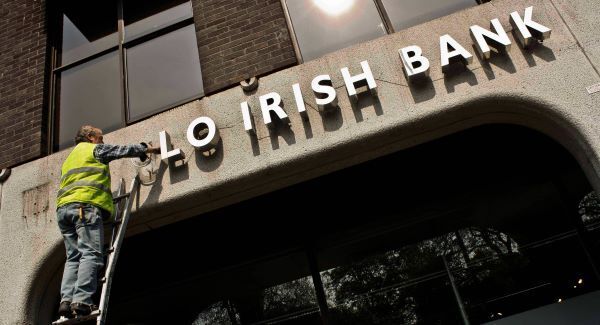
THE smoking gun has been found in the debris of Anglo Irish Bank.

Vested interests may yet hinder probe

The publication yesterday of the secret recordings from within the bank has firmed up what many had long suspected — that Anglo had run rings around those charged with regulating them and protecting the State’s finances.

The conversation between two top executives in the bank, John Bowe and Peter Fitzgerald, took place less than a fortnight before the bank guarantee in Sept 2008, and concerned the bank’s efforts to extract money from the exchequer to save the bank.

Mr Bowe had been present the previous day in a meeting between bank executives and officials from the regulator and the Central Bank. He relates that the Anglo people told the state officials that €7bn was required to ensure the bank’s survival.

Where did this figure come from, Mr Fitzgerald inquired of Mr Bowe: “As Drummer (then Anglo CEO David Drumm) would say, picked it out of my arse,” Mr Bowe replies. In other words, the extent of the problem that was conveyed to the regulator bore no relationship to how bad things really were.

Mr Bowe goes on say that more money will be needed and he outlines the bank’s strategy in drawing the State into the morass. “If they saw, if they saw the enormity of it up front, they might decide they have a choice. You know what I mean? They might say the cost to the taxpayer is too high. But… if it does look too big at the outset… if it looks big, big enough to be important but not too big that it kind of spoils everything, then you have a chance.”

The strategy worked in the short-term. The State was drawn in, and threw good money after bad, running up a bill of €30bn in the end.

What the tapes show is that well before the guarantee, bank officials knew that the situation was much worse than was being conveyed to the regulator (one might well ask why the regulator wasn’t on the ball himself, but that’s another day’s work). There are legal implications for such knowledge. The banks are legally obliged to inform the regulator of the state of their finances. Either Anglo executives had no idea how big the hole in the finances were, or else they deliberated downplayed it in order to draw the State in. The tapes suggest the latter, but who was responsible for misleading the regulator is not known. Who knew what and when is something that has yet to be discovered five years after Anglo collapsed, dragging the whole economy down with it.

In the round, the tapes once more bring to the fore the question of why we haven’t had a proper inquiry into the collapse of the banks.

There have been three inquiries, none of which examined the minutiae of what went on behind the doors of the banks. Patrick Honohan did one scoping inquiry, Klaus Regling and Max Watson another, and finally Peter Nyburg conducted his under the commission of inquiry model.

Together, they presented a picture of how a banking system and parts of the wider society lost the run of itself.

None of the reports, however, dealt with the specifics of what went on in the banks and what ultimately persuaded Brian Cowen and Brian Lenihan to couple the state’s future to that of the banks through the Sept 2008 guarantee.

The big questions are the focus and the means of any inquiry. One popular notion is that it’s all down to the guarantee. But any proper examination of the guarantee has to look at what led up to the fateful decision, how the banks lost all control, why warning bells that had sounded over the preceding 12 months were ignored.

Concentration on the detail of the infamous night might present political and banking heads on a platter, but would do little to provide a proper picture of how a government’s choices were so narrow that a guarantee was even on the table.

How reckless were those running the banks? How aware were those in charge of the risks that were involved? Was the State duped into forking out for the guarantee? Where was the law, not to mind regulation, deficient? These are just some of the questions that remain to be properly addressed.

ANOTHER issue is whether a proper inquiry can take place ahead of the criminal trial of three of the top Anglo executives.

A bigger question, however, is what form any inquiry should take. The most popular means of inquiry being mooted is through the Oireachtas. The Public Accounts Committee is being held up as the ideal vehicle to rake through the embers.

In theory, getting elected representatives to oversee any inquiry of this nature makes sense. They are, after all, tribunes of the people. In reality, the first problem could be the lack of expertise among the lawmakers. Another problem is how to stop any inquiry descending into political mudslinging.

Take, for instance, the prospect of Fianna Fáil continuing to recover in the opinion polls. Could Fine Gael or Labour avoid using an Oireachtas inquiry to remind the public of what Fianna Fáil had overseen back in those crazy days? Would such political sparring do anything to better understand what exactly had gone wrong?

Another option is a public inquiry. Tribunal land, anyone? If a tribunal was to properly investigate the issue, it would provide the greatest stimulus package the law business could ever receive, all at the cost to the exchequer.

Everybody would get lawyered up, and there would be regular excursions to the High Court to vindicate rights and whatever class of judicial review you’re having yourself.

The only realistic and relatively inexpensive option is the commission of inquiry model. This has been used to good effect in inquiring into clerical sex abuse.

Most of the commission’s work is done behind closed doors, which means that the public is robbed of the chance to see witnesses squirm, but it does cut out a major chunk of cost. It has all the advantages of a public inquiry, with few of the disadvantages.

The Nyburg inquiry was conducted using this model, but crucially the terms of reference of that inquiry were extremely narrow. Set up a new inquiry with proper and much wider terms of reference, and appoint a High Court judge experienced in commercial litigation to head it up. That would be the route most likely to produce results that might get to the answers with the least amount of fuss, and point out what to avoid in the future.

But nothing is that simple. Politicians want to be in on the act. An Oireachtas inquiry is seen in some quarters as a mean for politics to recover lost credibility. As always, there are vested interests at play, and don’t be surprised if they prevail, whatever the cost in finding answers to what really happened.

More in this section

Revoiced

Newsletter

Had a busy week? Sign up for some of the best reads from the week gone by. Selected just for you.

Cookie Policy Privacy Policy Brand Safety FAQ Help Contact Us Terms and Conditions

© Examiner Echo Group Limited