Keeping up the momentum
While the dramatic fall in road deaths over the past six years has been impressive, we face a harder task to maintain progress under the latest strategy, writes Seán McCárthaigh.

Keeping up the momentum

BY THE most obvious standard — the annual number of road fatalities — the 2007-2012 road safety strategy has been an overwhelming success.

A total of 338 people were killed on Irish roads in the year it was launched. By 2012, the figure had fallen to 162.

The 52% reduction in deaths over the six years has made Ireland’s record on road safety one of the most improved in the EU over the period.

The Government’s primary objective, which was set back in 2007, was to reduce road fatalities to the rate of 60 deaths per million by 2012. Last year’s road death figures equated to a rate of 36 deaths per million — far exceeding the initial target.

Other key targets addressing the main causes of fatal collisions — speeding, drink driving, and not wearing seatbelts — such as improving compliance with speed limits have also largely been successful.

Such progress has been achieved by politicians realising around the start of the millennium that Ireland had lagged well behind other countries in implementing best international practice in terms of road safety.

Major milestones along the way to improving Ireland’s record were the introduction of the NCT in 2000; penalty points in 2002; mandatory alcohol testing in 2006; speed cameras in 2010; and a reduced drink-driving limit in 2011.

Other significant factors have been greater safety features in the design of vehicles; the completion of the inter-urban motorway network; the introduction of a graduated driver licence system, requiring a learner driver to undertake a series of supervised lessons with an approved instructor; and the establishment of a dedicated Garda Traffic Corps.

Another important decision was the establishment of the Road Safety Authority in 2006 taking over the work previously done by an under-funded National Safety Council which was responsible for diverse functions, meaning road traffic wasn’t always its main focus.

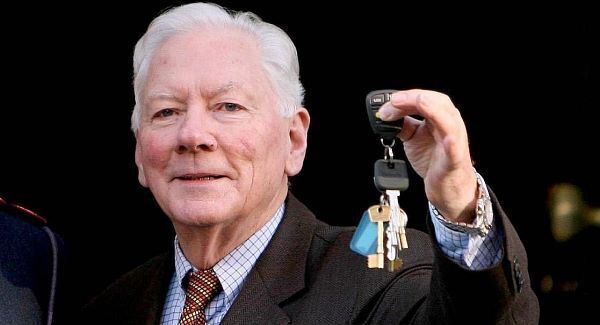
Armed with a decent budget, the RSA under its chairman, Gay Byrne and chief executive Noel Brett, have wisely steered the promotion of road safety, including some radical and politically difficult measures, to becoming a priority for various governments.

In general and in fairness to politicians, they have generally responded positively to changes recommended by the RSA with credit due particularly to former transport minister, Noel Dempsey, who also drove road safety policy in the face of some strong political opposition, especially from within his own Fianna Fáil party.

Another crucial element was Irish motorists, who have overwhelmingly, despite occasional protests by groups representing publicans and the drinks industry, bought into the changes through modifying their own driving behaviour.

A new road safety strategy, launched with great fanfare in Dublin Castle by Transport Minister Leo Varadkar yesterday and which runs up to 2020, aims to build on the success of its predecessor.

Having achieved so much over recent years, the focus had rightly changed to the reduction of serious injuries and measures to address the growing problem of drug driving.

Gay Byrne accurately stated yesterday that media focus was always on road fatalities without similar attention being given to the large number of people who are seriously injured from road collisions. It is widely accepted that for every death on Irish roads, 10 people suffer serious injuries and another 40 receive slight injuries.

However, the latest strategy is strong on aspiration and somewhat short on clear measures. The new document states that many initiatives such as the fitting of alcolocks; driving awareness courses for repeat offenders; and measures to combat car clocking; are all “under consideration”, but the legislation required to underpin them could take years to bring about.

Many of the 144 measures are already in place and merely reflect ongoing practice by various state agencies.

The success of the new strategy remains unpredictable as motoring experts have observed that the improved road safety record achieved in the recent past resulted from the introduction of measures whose absence was glaring. This time round, obtaining similar results will be considerably more difficult as the “low hanging fruit” of road safety improvements are already in place.

In a worrying turn for the worse, the number of road deaths so far in 2013 is 48 — 15 more than in the corresponding period last year.

Officially, gardaí insist “clever policing” through a greater targeting of resources at high-risk periods and locations is allowing the force to maintain consistent enforcement levels, despite reduced manpower.

However, many gardaí will admit privately that cutbacks which has seen the Garda Traffic Corps reduced from a peak of 1,200 officers to its current complement of 850 cannot but impact negatively on policing efforts.

Add in the danger of complacency among the motoring public and there is the potential for the past improvements to be quickly eroded.

Achieving the EU’s target of cutting road deaths by another 50% between 2010 and 2020 will be significantly harder than in the previous decade, especially in an era where road safety might have slipped off the priority list for a Government under pressure on many fronts.

More in this section

Revoiced

Newsletter

Had a busy week? Sign up for some of the best reads from the week gone by. Selected just for you.

Cookie Policy Privacy Policy Brand Safety FAQ Help Contact Us Terms and Conditions

© Examiner Echo Group Limited