Supporting crisis-hit nations is essential
THE sight of Mali’s people celebrating the departure of the brutal armed groups who had terrorised their towns and villages was heartening to all who have followed the unfolding crisis in the West African country.
Last month, the world watched with mounting concern as militants started to sweep down from the north to seize control of the entire country. Their campaign was narrowly averted by the prompt and decisive action of the international community, led by France with the support of neighbouring African countries and in line with UN Security Council efforts.
Sadly, the conflict in Mali came on top of a devastating drought and hunger crisis in the wider Sahel region of Africa, which has threatened more than 10m people across Chad, Niger, Mali, and Burkina Faso. This crisis was already stretching governments and humanitarian agencies to their limits.
So while we welcomed the swift routing of rebel forces, we did so, like the Malians, in the knowledge this was just the first step on a long road to recovery.
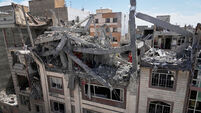
The conflict forced 500,000 Malian people to flee their homes, more than 160,000 of whom went to refugee camps in neighbouring countries. Behind these bare statistics are the stories of families uprooted: Fathers who cannot provide shelter or clean water for their families; mothers with no access to healthcare for their sick children; farmers who have lost their cattle and crops; and boys and girls who have no school to go to.
The question of how Europe can best support Mali on its path to peace, democracy, and development is one that I will discuss in detail at the meeting of EU development ministers in Dublin Castle which I am hosting today and tomorrow as part of Ireland’s presidency of the EU. We will be joined by Kristalina Georgieva, the EU commissioner with responsibility for humanitarian aid, who has just returned from Mali, and commissioner for development Andris Piebalgs.
Since the conflict began, Ireland has worked closely with our EU partners. Together, we have provided EU funding for the African-led military force in Mali; set up an EU training mission to support the Malian authorities to re-establish security; and worked to support a political solution to the tensions which beset the country.
Crucially, the EU has provided €116m in life-saving emergency assistance to families and communities in need.
Last week, as part of the presidency, I attended a meeting of an international support group on Mali in Brussels along with our partners in the EU, the African Union, the UN, and ministers from the Malian government and neighbouring countries. We agreed to co-ordinate our response to the crisis and to support preparations for free and fair elections to be held before the end of July.
While good progress has been made in stabilising the security situation, it is vitally important that the provision of emergency aid to those in need keeps pace, as does the political process. A key challenge is to ensure that aid agencies are granted safe access to those who need their help, especially in northern Mali, where the fighting has been particularly fierce.
As part of the EU presidency, Ireland will urge all parties to comply with their obligations under international human-itarian law and to guarantee the protection of civilians affected by the fighting.
We will call on our EU partners to increase their own assistance efforts, building on the €116m in humanitarian relief allocated by the EU to Mali since the beginning of last year. The Government has provided over €9m in emergency support to agencies operating across the Sahel since 2012, more than €1.3m of which was specifically for Mali.
We must attend to the Malian people’s most urgent need for food, shelter, and security, but we also recognise that Mali will need longer-term support so that its people can build a sustainable future.
Over the coming years, we must help refugees return home, help schools re-open, and help small businesses and farmers markets to trade once more. Our meeting will also provide the opportunity for important discussions on how the EU can help the people of Mali to rebuild over the longer term.
Meanwhile, over the next two days, we will also focus on other pressing questions in the fight to end global poverty and hunger. Fittingly, given our discussion on Mali, we will examine ways in which the EU can best support vulnerable communities in building up their resilience to shocks such as drought or disaster. Preparing for and preventing disasters not only save lives and avert suffering but are much more cost-effective than responding after the event.
This agenda is increasingly important as the number and intensity of emergencies increase. Large-scale emergencies have occurred every year over the past decade, from the Darfur conflict which started in 2003 to the Horn of Africa food crisis in 2011. As the number of such crises increases, the need to plan for them as part of our overall development assistance becomes more critical.
Thirdly, this meeting affords us the opportunity to discuss the development of a new set of goals and targets for human development once the deadline for the achievement of the millennium development goals passes in 2015.
While we have made great progress on our ambitious goals to halve the number of people living in poverty and hunger, dramatically increase the number of children at primary school, and improve gender equality, we are lagging in critical areas, including on our target to reduce the number of women who die giving birth.
During our presidency, Ireland will work to galvanise our EU partners to make progress on the outstanding targets in the two years which remain.
However, we will also focus on shaping a new international framework to drive our development efforts after 2015.
Over the past 40 years, Ireland has won a reputation for running efficient and impartial presidencies, for focusing on results and on the wider interest. At our meeting today and tomorrow, and throughout our presidency, we will seek to build on that reputation.
*Joe Costello is minister for trade and development
CONNECT WITH US TODAY



Be the first to know the latest news and updates