Our prison system remains in crisis
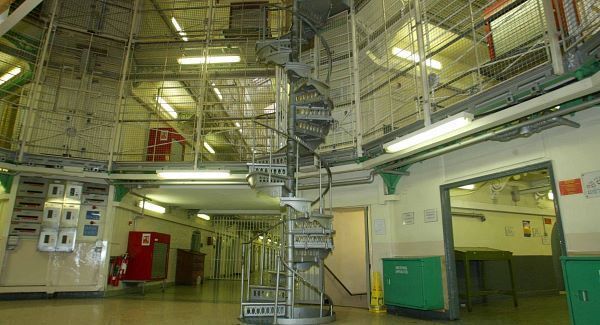
LAST week’s capital spending announcements may have finally sounded the death knell for the proposed prison development at Thornton Hall, but where does this leave the prison system? It may be that, in abandoning the prison expansion policies of the Celtic Tiger era, the Government will now be forced to address the underlying problems within Irish penal policy that caused the overcrowding crisis in the first place.
Conceived at the height of the construction craze, the proposed super prison project at Thornton Hall was bedevilled by controversy from the outset, not least regarding the elevated price paid for the site. From a penal policy perspective, the greater scandal was the scale of what it was proposed to build at Kilasallaghan, north Co Dublin. It was a prison far greater than anything seen before in Ireland and among the largest in Europe, with up to 2,200 prisoners to be held in a complex of prison units, housing male, female and possibly even juvenile prisoners, as well as immigration detainees.
When the Irish Penal Reform Trust (IPRT) and others put our objections to the plan before the Oireachtas Justice Committee in June 2008, it was made clear to us that Thornton Hall and Kilworth (the sister prison project in North Cork) were the only plans on the table for prison development. The proposed prison building programme was based on an assumption that the prison population would increase at the rate of 10%-15% per annum. It was based also on the view that resources were going to be available at an almost unlimited level. In essence, there was no consideration of the desirability of detaining more prisoners and no consideration of other options for addressing the problems in the prison system.
Thornton Hall would have modern cells and better education and training facilities than Mountjoy, but with no analysis by Government as to whether the existing system was working, we had little reason to believe that this new larger prison system would be any more successful than that which had preceded it.
Within months of the Oireachtas approval of the planning of the Thornton Hall project, the economic parameters had shifted utterly.
By late 2008, it was clear that the building of a prison at the cost of hundreds of millions was now a political non-starter. Still, an air of unreality continued to hang over official policy on Thornton and preparation works at the site continued, with contracts entered into for roads and walls. In May 2009 the then justice minister Dermot Ahern announced a scaled down version of the prison with all cells doubled-up.
A practice that had been illegal in the prison system up to the 1980s was now to be the norm as ministers who had been part of the government that approved the original plan continued to try to save face and deny that the prison would not go ahead.
Renovation work at Mountjoy to insert in-cell sanitation, which we had previously been told was not possible, quietly began in C-Wing. However, nothing was done to address the appalling physical conditions at Cork and Limerick Prisons, and the only response to increasing prison numbers was the ad hoc addition of wings in Wheatfield, Midlands and Portlaoise.
Inheriting a penal policy that was in shambles, the new Government acted swiftly to set up a Thornton Hall review group to advise on what to do with the site at Thornton. The review group recommended that mechanisms must be put in place for reducing the prison population and, crucially, called for the Government to put in place an overall penal policy to inform future prison planning. While the committee was advocating going ahead with construction before exhausting all methods to bring the population down, there was at least here an acceptance of the need to get prison numbers under control for the first time.
Now we know that the building element of that report has also been abandoned, so what are we left with? The prison system remains in crisis with appalling physical conditions in some of the older prisons and overcrowding frustrating all attempts to improve regimes for prisoners.
The positive recommendations in the Thornton Hall review group report such as the proposals for mechanisms to release low-risk prisoners in a structured manner, and for increased use of open centres, are now more urgent than ever. Of equal importance are the efforts being taken by Government to ensure greater diversion of minor offenders through better use of fines and community service, and the commitment to review sentencing policies in areas such as drug crime.
By ring-fencing funds for ongoing refurbishment work at Mountjoy, the Government is signalling that it has shifted its thinking from expanding the system to trying to bring conditions of detention up to basic human rights standards. This is essentially what IPRT and others have been advocating from the outset. If, and only if, prisoner numbers are brought under control, the prison service can concentrate on improving prison conditions, especially at Cork and Limerick, and gradually improving regimes from within its resources.
This approach could deliver real improvements, even at a time of scarce resources. In trying to create a well-planned and effective modern prison system, nobody would start from where we are at, but in recognising that excessive prisoner numbers at the core of the problems in the system, we may finally be moving in the right direction.