‘Prophet. Wildman. Herbsman. Mysticman — Legend’ (Bono)
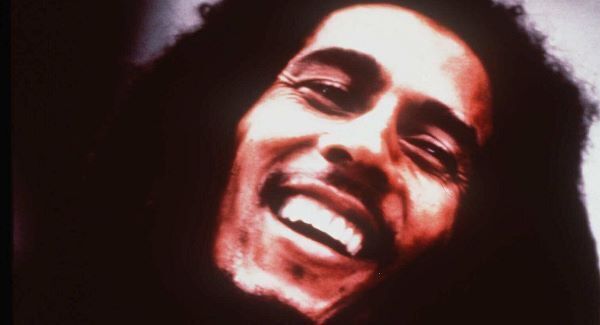
ON a slightly overcast July evening in 1980, Jamaica’s most famous son took to the stage in front of 10,000 people in Dublin’s Dalymount Park.
According to contemporary reports it took Bob Marley and his band The Wailers a little bit of time to get into the groove but by the end of the two-hour set they had played their hearts out and had sent the crowd home smiling.
“I was 20 at the time,” recalls Peter Sheekey. “I came down from Cabra, there was a load of us and we all hung around outside listening. People were actually dancing around outside on the streets. We were just happy to be outside. The sound system was really good, you could hear it really clearly.”
Sheekey, an English language teacher, remembers that at a certain point during the concert he and his friends were benefactors of Marley’s legendary generosity.
“At a certain point during the concert, about halfway through, the doors were suddenly flung open,” he says. “I don’t know if he announced it or anything but there was a big cheer. I don’t know how the paying customers felt about it. But as the day went on it filtered through the crowd that he had ordered the doors to be opened or that’s what we understood. He really was at the peak of his powers then. He had sculpted a live sound that I really haven’t heard since.”
Unbeknown to most in the crowd, Marley was sick. Exactly three years earlier he had had cancer cells removed from one of his right toes, following an apparently innocuous accident during a game of football. By the time of his famous gig in Dalymount Park the cancer was spreading to the rest of his body and less than a year after the concert he was dead.
Amateur photographer Eddie Malin spent most of the ‘70s and ‘80s going to concerts around the capital and snapping the stars mid-performance. Unlike Sheekey, he had to pay the £7 entrance fee but has invaluable memories and photos (see right).
“Initially there was chaos outside as the main support act had been cancelled,” recalls Malin. “The I-Three’s, Marley’s vocal backing group, did a warm up before Marley came on, they were magic, Marley’s wife was part of that group. Marley himself was great, so full of energy. I think some of the images show that. Hard to believe he died a few months later.”
Marley was only 36 when he passed away in Miami on May 11, 1981. It sounds hyperbolic but nothing like him has been seen since, certainly in the world of reggae music.
Born Nesta Robert Marley on the February 6, 1945, in the rural town of St Ann’s, Jamaica, he was the son of a 50-year-old white Jamaican navy officer and his 18-year-old black Jamaican wife. Although Marley’s father supported the family financially, he was rarely home and by the time he died of a heart attack when Marley was 10, his son had had little contact with him.
Marley and his mother moved to Kingston to find work and settled in the infamous slum of Trenchtown where Marley met and started to explore music with Bunny Livingston. Marley quit school at 14 to focus on music but he also worked as a welder to keep money coming in. Eventually, the pair met Peter Tosh and together with three other local musicians they formed what would later become Bob Marley and The Wailers.
Local success was quick and the band had a number of hits in Jamaica. It wasn’t enough to sustain the band however, and on at least two occasions after his marriage to singer Rita Anderson in 1966 Marley was forced to go to the US where he worked in car factories. At this stage, Marley was heavily involved in Rastafarianism, a religion which held the belief that Haile Selassie, Emperor of Ethiopia was Jah or God.
Within that context much of The Wailers’ lyrics became more religious and righteous in tone. By 1973 Marley had come to the attention of Island Records’ Chris Blackwell, a maverick label owner who specialised in new music. The Wailers’ first album with Island, Catch a Fire, was a success and lead to a tour of Britain. Burnin’ followed in the same year and when Eric Clapton covered his song I Shot the Sheriff in 1974 it seemed Marley was set for the mainstream.
There was, however, strife and both Tosh and Bunny left the group, leaving Marley the star of the band. With the 1975 release of No Woman, No Cry, Marley had his first hit in Britain.
His notoriety at home sometimes caused him trouble however, and in 1976 he narrowly escaped an attempt on his life. Not that it stopped him getting involved in politics. In April 1978 he famously brought the leaders of two warring Jamaican political parties on stage; something that was later copied by Bono.
With the release of his 1980 album Uprising which includes the much-loved Redemption Song, Marley seemed to reach his zenith. But shortly after his concert in Dalymount Park he collapsed in America. He was taken to Germany for specialist treatment but he couldn’t be saved.

CONNECT WITH US TODAY



Be the first to know the latest news and updates