Elaine Loughlin: What's truly shocking about Anne O'Connor's sacking is dismissals in public service are such a rarity
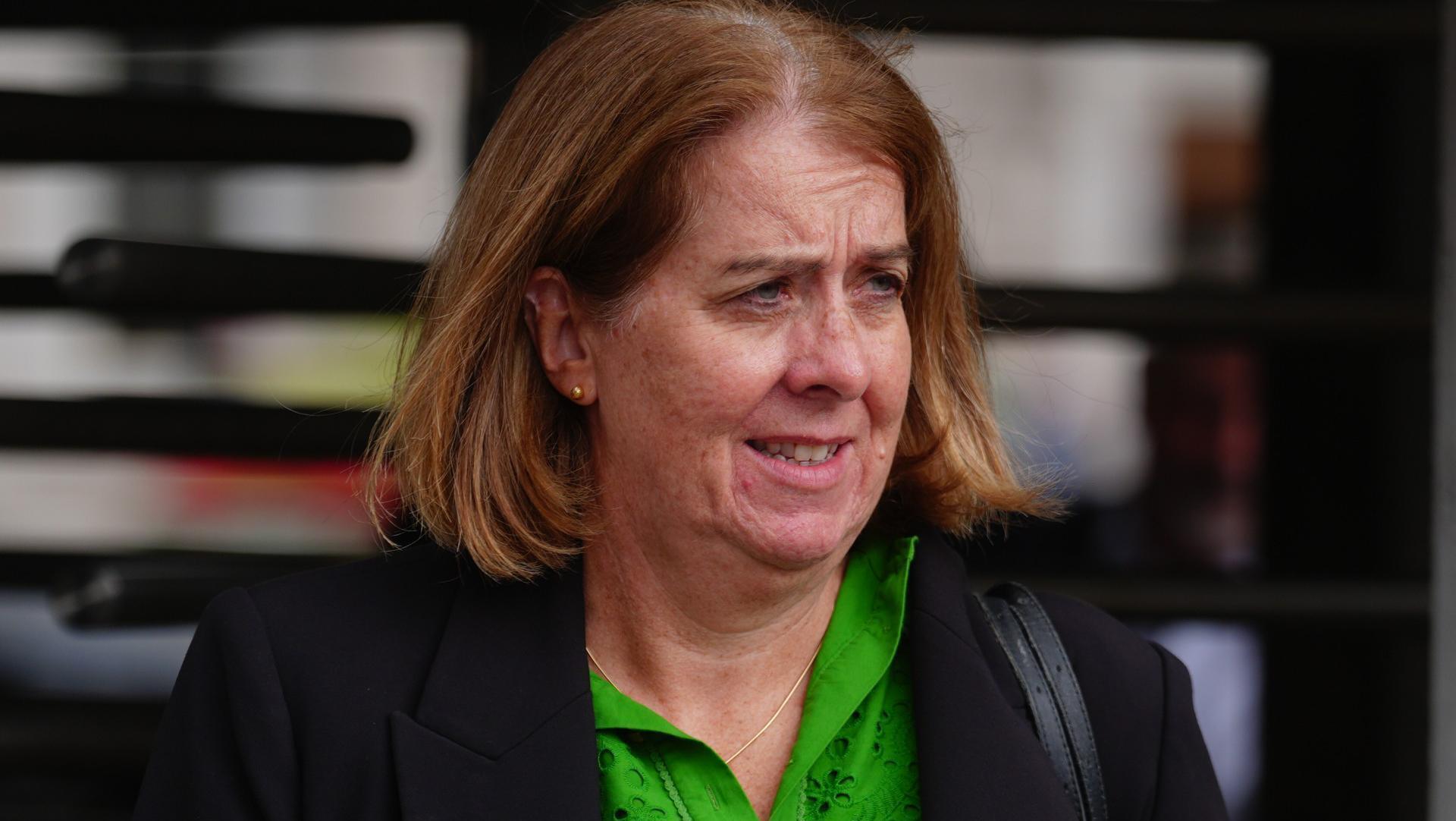
Former HSE chief executive Anne O'Connor: Her departure has sparked chaos across the political system and has consumed the Dáil for days on end. Picture: Brian Lawless/Press Association

That the head of the HSE could be fired should not come as an overwhelming surprise — instead, it is shocking dismissals are such a rarity.
Ireland collected almost €33bn in corporation taxes last year, and yet we have a housing crisis that has left more than 18,000 people in emergency accommodation; a public transport system that people can't rely on; an assessment of needs process that parents have zero faith in; and one million people on hospital waiting lists.
There is a growing public acceptance our broken systems will never be addressed, which is based around the belief there are no consequences attached to failures.
So it made the rapid dismissal of Anne O'Connor last Saturday even more extraordinary.
Her departure has sparked chaos across the political system and has consumed the Dáil for days on end. Members of the opposition who have previously demanded accountability are now seeking answers as to how this could have happened.
"It's a big deal to give the CEO of the HSE the bullet," was how one minister summarised it this week.
Read More
Such a big deal, that you must go back to November 30, 1936, when the then secretary general of the department of local government, Edward McCarron, was summarily dismissed amid a controversy over the filling of a position at Portrane Hospital.
A post in the public or civil service has traditionally been deemed a job for life. People are hired but not fired, at least up until this week.
In the decade between 2007 and 2017, just 55 civil servants out of a workforce that at the time amounted to over 37,000 were dismissed from their posts for what was described as a range of reasons, including performance-related issues and misconduct.
Of the 55 dismissed during that period, 30 resigned before they were told they were being let go.
Over the years, efforts have been made to address the perceived lack of accountability across the public and civil service.
In 2014, then secretary-general of the department of public expenditure, Robert Watt, acknowledged the process "under which we can exit people is too burdensome, there's too many steps".
In January 2017, as minister for health, Simon Harris vowed to change the system and ordered a performance review of all top managers in the HSE.
Harris asked that four metrics — financial, patient access to services, quality of services, and safety of patients — be used in assessing all managers in the health system, and ordered that the head of the HSE report back to ensure these standards were being met.
A month later, as it was revealed tens of thousands of patients were not being counted as part of already lengthy waiting lists, Mr Harris told a meeting of Fine Gael TDs and senators he was intent on looking "under the bonnet" of the HSE. He promised backbenchers if managers did not measure up, they would be removed from their role.
Almost 10 years on, the most senior manager in the HSE, the chief executive, has lost her job.
But over that decade, the HSE has been plagued by controversy, poor performance issues, overspending, and patient failures.
Speaking in the Dáil on Thursday, Labour TD Marie Sherlock put it succinctly when she said: "When we look back over the history of the HSE, we think of the Grace scandal, the CervicalCheck crisis, the scoliosis debacle — the Tánaiste was the minister for some of these — all situations where people lost their lives or were badly damaged because of misaction by the HSE.
"All of these happened when Ciarán Devane was chair of the HSE and not a single senior head rolled. Not a single HSE CEO lost their job."
In perhaps a telling indication of how the system has worked up until now, the Tánaiste moved to clarify the clinical director of CervicalCheck had resigned in the wake of the smear test result scandal.
Dr Gráinne Flannelly was not fired, she stood down at a time when the CervicalCheck system was in crisis, citing the need to allow the programme to continue its important work.
If the axe is to be wielded, it must be done cleanly. When a decision of such magnitude is taken, all of the proper procedures leading up to that dismissal must be followed.
Yet, this week, a torrent of contradictions have emerged through statements issued by the board of the HSE and Ms O'Connor.
Serious questions remain around the timing and timeline of events between March of this year, when Ms O'Connor took over as head of the HSE on a salary of just over €400,000, and last Saturday when she was dismissed after being called into a virtual meeting.
The HSE board this week issued a lengthy statement claiming the sacking of Ms O'Connor was related to a "set of performance objectives" agreed with the CEO following her appointment.
It was outlined that in September, the HSE had escalated to a "probationary performance process" regarding Ms O’Connor.
But early on Wednesday, as the health minister was before the health committee answering questions on her knowledge and role in the dismissal, Ms O'Connor issued a bombshell statement in response to the HSE board.
Her statement directly contradicted the account provided by the board of the HSE, with Ms O'Connor claiming that disciplinary or probation policy was “never mentioned to me during my employment”.
Ms O’Connor accused the HSE of “wrongly” giving the impression she was aware of such a process.
As the questions and contradictions mounted, so too did the theories behind the sacking.
Among the whisperings in Leinster House, many were raising one element they claimed cannot be overlooked.
In the Dáil, Ms Sherlock said aloud what many people were quietly pointing towards as a factor.
"A woman CEO, the first in the history of the HSE, a woman who has given a lifetime of service to the HSE and showed enormous leadership through the hardest years of our health service, a woman who worked day and night lost her job in brutal and ruthless circumstances at 7.30am last Saturday morning over a Teams call, and five days on, we still have no idea why."
Others questioned if her male predecessors were held to the same set of performance parameters.
The controversy will rumble on for at least another week when members of the HSE board appear before the health committee and the health minister makes a statement in the Dáil.
CONNECT WITH US TODAY



Be the first to know the latest news and updates