David O'Mahony: Children really are amazing creatures... even if they're  like hobbits
You can learn all there is to know about their ways in a month, and yet after a hundred years they can still surprise you at a pinch, writes David O'Mahony
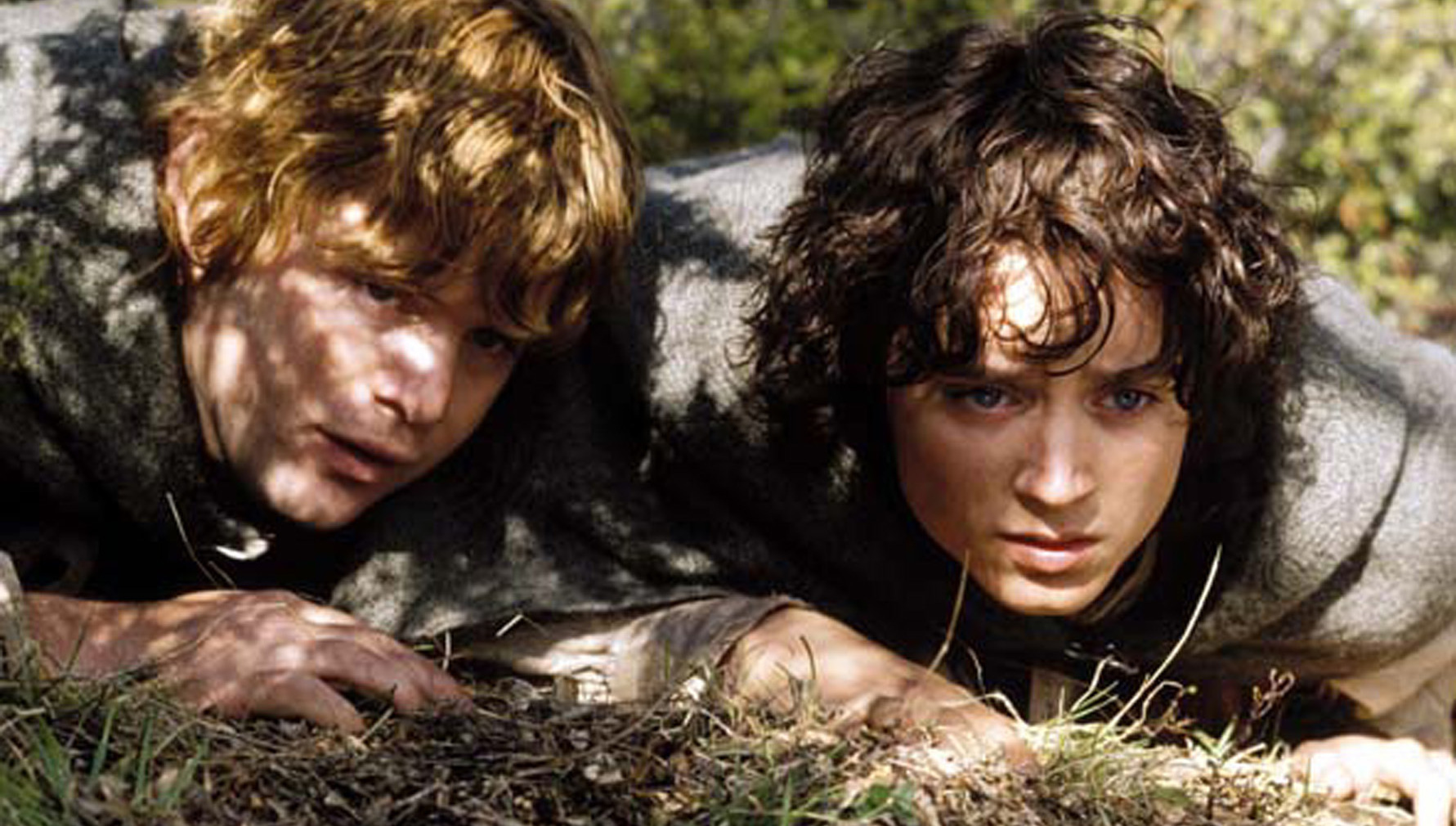
There would be no Lord of the Rings without Tolkien’s dogged and stellar work in Old English. Picture: Pierre Vinet/New Line Cinema

There would be no Lord of the Rings without Tolkien’s dogged and stellar work in Old English. Picture: Pierre Vinet/New Line Cinema

Children are like hobbits. Yes, I mean they’re kind of small (apart from my son’s friend, who appears to be heading for 6ft at 13).

No, I don’t mean they have feet so huge and durable they don’t need shoes.

And, well, you do have a point — they do tend to accumulate shiny objects that become, shall we say, precious to them, but that’s not what I meant.

What’s that? Well, yes, you’re right again, they do eat at a prodigious rate. Cthulhu save us, in our house no sooner have we finished one meal than one of our three is looking for another, or a snack, or a drink of milk, or a hot chocolate, or a… well, I digress.

Rather, I’m attempting to channel the spirit of Gandalf, even if I am not so grey a pilgrim as he: Children really are amazing creatures, as I have said before. You can learn all there is to know about their ways in a month, and yet after a hundred years they can still surprise you at a pinch.

Parents of the world, you know some days feel like a hundred years. Search your feelings, you know it to be true.

The surprise, in my case, was my seven-year-old daughter. If you’ve read any entries in this column before, you’ll have sort of met her already. She is unpredictable in a life-affirming way.

And so it was, on a dreary, rain-soaked evening before taekwondo class, that she turned to me and asked if she could “start learning things they learn in sixth class”.

Me: Sure, like what?

Her: Like the early days of the English language.

Me: What?

Her: The history of the English language.

Me: …what?

Her: And how much it’s changed.

Me …what…?

Also me, recovering from the feeling I’ve slipped into a slightly adjacent reality by remembering I used to read encyclopedias at her age: We can actually help with that.

For her parents, Dear Reader, are both graduates of English literature and history, and still have some books of Old and Middle English on shelves in the home office. It’s almost as if … they were waiting for their time to shine again.

There would be no Lord of the Rings without Tolkien’s dogged and stellar work in Old English, to be fair. Indeed, there would be no Hobbit at all, given it is heavily inspired by the poem Beowulf. And, given the roundabout way Tolkien inspired authors who went on to inspire yours truly, maybe I wouldn’t be a writer at all.

Even following that train of thought, without the likes of Beowulf, we wouldn’t have Joyce’s Ulysses (though many would not miss it). Old English begat, after much begetting, modern English after all, and while it was imposed on us by a colonial administration, Joycean English, along with that of Samuel Beckett and probably Flannery O’Connor, is a deliberate deconstruction of the language and its rules — a mental decolonisation, I’ve seen it called.

Of course, colonisation at the point of a sword or musket is a lot different from cultural and linguistic exchange. It’s just a reminder that history, much like language, unfurls in unexpected ways — Daughter has been reading some history books about different cultures too, by the way, and informs me she’d like to smack Henry VIII for preventing non-nobles from playing games like skittles.

And do you know what? She’d probably do it, too.

Quite what she’ll make of the pronunciation of Middle English is another thing entirely — sometimes it’s very French, other times it’s vaguely Swedish (and all of it is a best guess anyway).

As it is, Daughter has been reading children’s versions of Shakespeare (as in the language is simplified, the plots and story beats remain exactly the same). So maybe she could try it in the original — the closest pronunciation of that is what you get in places such as Bristol now, by the way — and work her way back.

Or maybe, stubborn little tyro that she is, she’ll start with Old English and in the not-too-distant future we’ll have the walls thundering with the sounds of Beowulf. “Hwaet!” I do still love that Seamus Heaney translated that into the very Irish “so” as a way of starting the poem. It’s a reminder storytelling — regardless of the language — is universal.

Her brother, with a somewhat battle-bruised air, suggested she could try long division, though given he’s started learning Latin on Duolingo since visiting the Rock of Cashel, he can’t really judge much. 

Anyway, I think it was along the lines of that she could have all of the long division, presumably so he wouldn’t have to deal with it anymore — but let’s put off that crude intrusion into the ambitions of learning for a while yet.

For there are books to be read, and old tales to be retold.

Whether they go for The Hobbit or stretch back to the source material, it’s evidently a sign everybody in the house is ready to level up.

So off we go, on an adventure across the literary worlds of yore as well as today. The road goes ever on and on — though maybe don’t tell Daughter just yet. 

She only has little hobbit legs at the moment; now is not the time for discouragement. But if Bilbo and Frodo could write histories, why not her? Maybe she can pick the language she writes it in, too.

  • David O’Mahony is Irish Examiner assistant editor, a writer, and a historian

More in this section

Revoiced

Newsletter

Had a busy week? Sign up for some of the best reads from the week gone by. Selected just for you.

Cookie Policy Privacy Policy Brand Safety FAQ Help Contact Us Terms and Conditions

© Examiner Echo Group Limited