Jennifer Horgan: If we want children to read, we must model it as Dolly Parton did
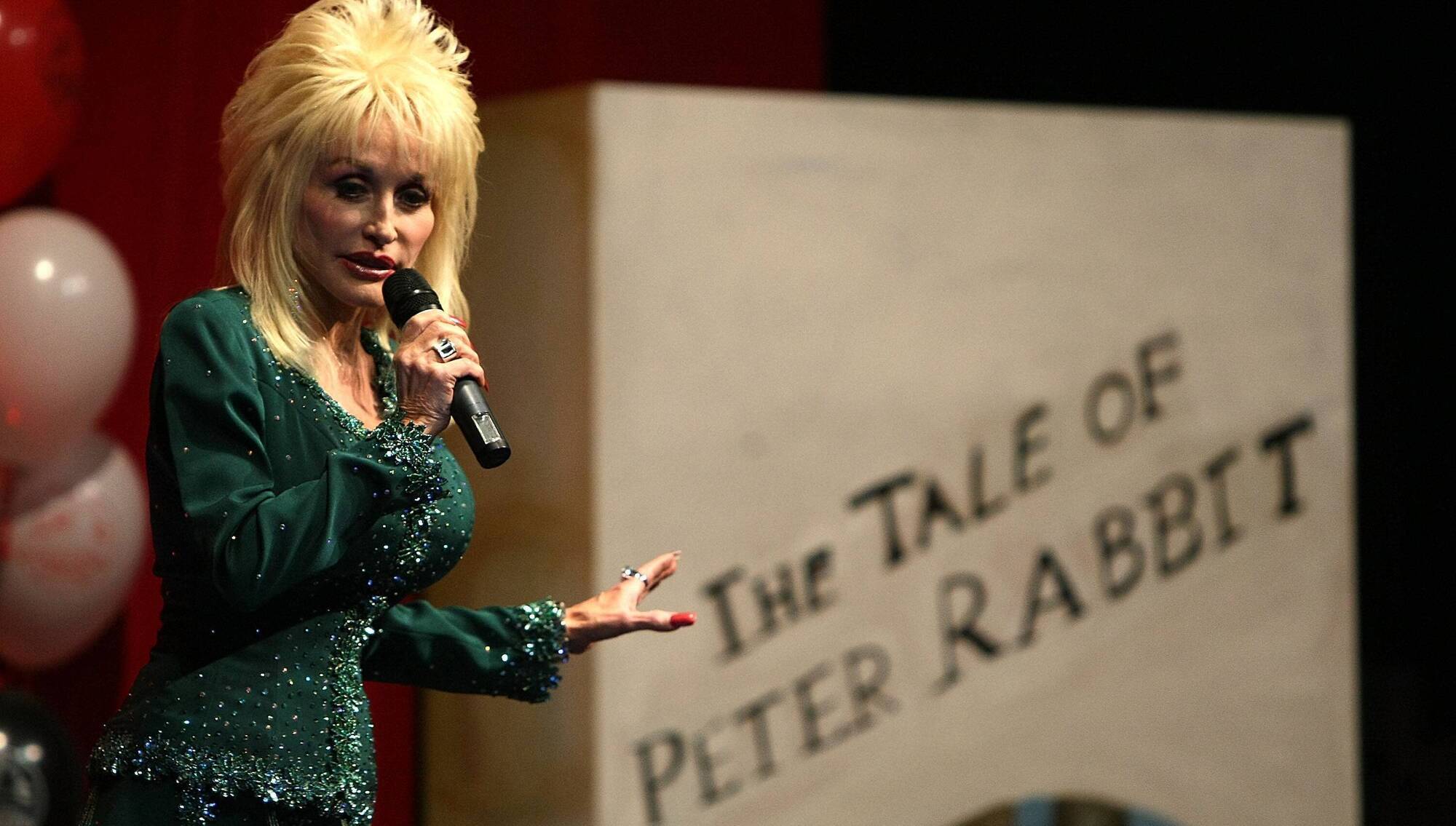
Dolly Parton at an event in England in 2007 where the town of Rotherham became the first European location to participate in her 'Imagination Library' literacy scheme. File photo: Christopher Furlong/Getty Images

The death of the great Dolly Parton was announced this week, a truly remarkable artist by any stretch of the imagination, and a woman with whom the word imagination will be forever linked.
In 1995, inspired by her father, she launched Dolly Parton’s Imagination Library so all children could Dream More, Learn More, Care More, and Be More.
It is now the world’s leading early childhood book-gifting programme and has gifted more than 300 million free books to children across the United States, Canada, the United Kingdom, Australia, and the Republic of Ireland.
The Tennessee native took imagination seriously, and she linked her own, her artistic brilliance, to reading as a child. Her father was not so fortunate. Growing up in poverty, Robert Lee Parton had to support his family early in life and so remained illiterate.
She told Oprah in 2020: “Daddy was a very smart man… but he was ashamed that he couldn’t read or write. That bothered him. He felt like he couldn’t learn after he was grown. I remember thinking, I need to do something.”
Read More
Dolly fought for children by fighting to protect reading. It needs protecting. I think it’s fair to say that readers are now members of a subculture in society. Most people don’t read books anymore and they rarely read newspapers.
Every opportunity is taken to degrade the ‘media’, as if all editors, journalists and papers are the same. Call me a cynic but it strikes me as a nifty way to avoid longform reading.
Echoing comments made by Marshall McLuhan in 1962, journalist Rose Horowitch describes civilisation now as moving into a post-literate era. Like many Americans, she conflates ‘civilisation’ and ‘America,’ but the research she cites is startling, including that only 16% of 236,000 Americans reported reading for pleasure in 2023.
Most of us, like Dolly, still feel passionate about children reading, however.
Sadly, although Dolly’s programme was introduced here in early 2019, reading is still in trouble. Not that the programme hasn’t been successful. Research shows that children from 0-5 years old who are in the programme here are five times more likely to demonstrate alphabet knowledge compared to children not in the programme.
However, more general research shows that only 23% of children in Ireland read for fun on a daily basis. That’s a pretty low percentage considering the incredible work carried out by people like Dolly Parton, schools, libraries and community groups.
Adults losing interest in reading is having an impact. Children lack reading role models in their day-to-day lives and although we like to advertise ourselves as a literary bunch, the 9% of Irish people with high literacy is three points below the OECD average.
On a week when many of us are heading back to school, I’m also thinking of children on the furthest end of the spectrum, those who struggle to read at all, children like Dolly Parton’s father.
What’s of increasing concern to me is how often young learners with difficulties in reading, with dyslexia perhaps, are allowed to fall through the net.
Ours is a paradoxical society. We no longer value reading but we also assume literacy simply happens.
I see it as a teacher at post-primary. When a child finishes primary with literacy difficulties, they arrive into secondary school with mountains to climb. The mainstream post-primary curriculum assumes they can read.
Teachers are under pressure to deliver this curriculum, and with multiple needs in crowded classrooms, individuals with literacy issues can go unaided.
Some students qualify for an Irish exemption, but that doesn’t guarantee tailored support.
Students receive three hours of learning support on their timetable but they may be with other students during this time, all with different needs. They may be with a teacher who has no training and no resources to help with dyslexia.
There are other complications. Dyslexia Ireland clearly states that certain programmes do not help many dyslexic children, including Reading Recovery and SNIP, and yet they continue to be rolled out in schools.
As it stands, parents are the only answer. Parents need to read to model reading to their children. They also need to read with a child who can’t read because our current education system will often fail them.
Mary Moran, the creator of DCode, a programme endorsed by Dyslexia Ireland, understands this too, and has set up a parent group with approximately 430 members (almost exclusively mothers).
She explains that in Ireland children still don’t have a legislative right to read and so schools aren’t equipped, and aren’t even legally required, to solve the problem; it must be parents.
“The group I set up has turned into a support network — there are a couple of walking encyclopedias in there and it’s a wonderful resource for parents taking on this challenge, because it is a challenge and it requires a lot of hard work.”
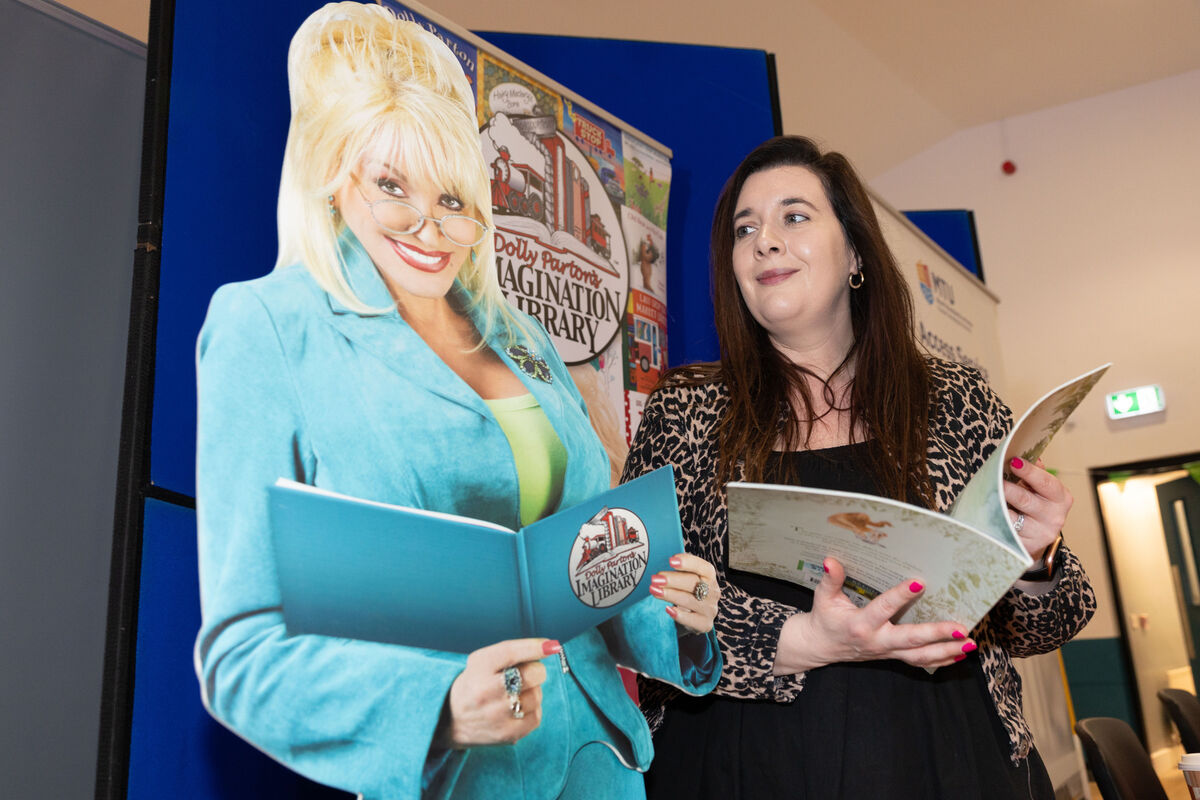
She has learned the hard way that parent power is key. It takes 15 minutes a day, every day — a frequency that can’t happen in a secondary school timetable.
“I know the parents doing the 15 minutes a day because they turn their children’s lives around. Then there are the parents with excuses: the child has lots of activities; they are working long hours; the babysitter does the homework; we did the first three books and he was doing so well we stopped.”
There are also parents with genuine challenges. For these, she has set up a tutor group connecting children with tutors.
She is excited about the work being done by two Dublin mothers, Kim and Tara, founders of Crack the Code and passionate advocates for dyslexia awareness. They started by supporting their own children and are now helping people in the community and pushing for legislative action from the government.
Mary Moran is clear: a child with reading difficulties needs more support than schools, particularly secondary schools, can give them.
“Meeting an older child, I start by saying I’m sorry this has happened to you in our education system. Teachers are not only dealing with reading difficulties, they’re dealing with mental health difficulties, because an older child has been left to struggle for too long.
It’s the system and it’s our reading culture. We don’t value reading anymore and yet we take the ability to read for granted.
I’d like to see legislation on a child’s right to read and better resourcing in schools. Children still struggling to read need to see the same person for 15 minutes a day in secondary school.
And enough with the moralising about the ‘media’. Pick up a newspaper or a book instead of venting on Instagram. Not every newspaper or book is worth reading, but reading is worth modelling.
It is a skill to be prized, celebrated, and protected. At least some of the time, the ‘media’ is on the right side of that fight, and Dolly Parton certainly was. What a woman. What a life and legacy.
May you rest in peace, Dolly. We will always love you.
- Athlone Education Centre is hosting a four-night, face-to-face event on Dcode/Ncode with Mary Moran for second-level teachers. More information at dcodedyslexia.com
CONNECT WITH US TODAY



Be the first to know the latest news and updates