Dolly Parton, legendary country star, actor and philanthropist, dies aged 80
Songwriter of 'I Will Always Love You', 'Jolene' and '9 to 5' also invested millions in child literacy, covid-19 vaccine development and other causes
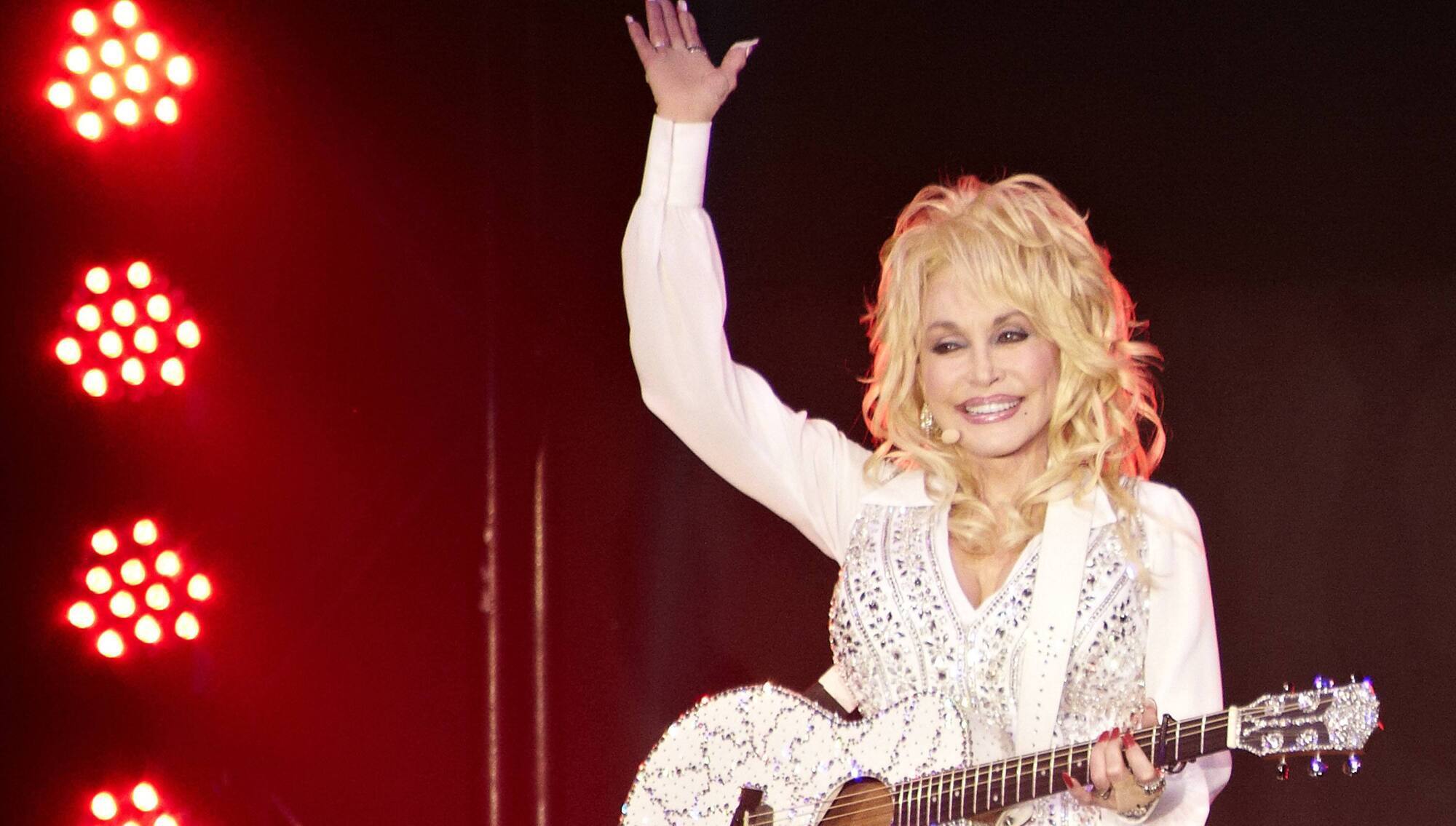
Dolly Parton on the stage at Live at the Marquee Cork. /Picture: File Picture: Miki Barlok

Dolly Parton on the stage at Live at the Marquee Cork. /Picture: File Picture: Miki Barlok

Dolly Parton, one of the greatest singer-songwriters in country music who was also much cherished for her philanthropy, has died aged 80.

Her death was announced by nephew Brian Seaver on Instagram. “I have imagined the heaviness of this moment but haven’t truly felt it until now,” he said. “It is an honour, an honour that is mixed with absolute pride and great sadness.” 

So gifted that she wrote two of the 20th century’s greatest songs —  Jolene and I Will Always Love You — in a single day, Parton’s songwriting was characterised by its vivid storytelling, emotional acuity and melodic strength, all sung with strident clarity. From an eventual catalogue of hundreds of songs, she scored a record 25 US country No 1 singles and 47 albums in the country Top 10.

She crossed over into the pop charts with 9 to 5, a US No 1 in 1980; balanced her music career with acclaimed acting, twice earning Golden Globe nominations for her roles; and her Imagination Library literacy scheme donated more than 150m books to children.

This was all done with considerable panache, rhinestoned glamour and towering hairdos, with her immortal assertion regarding her appearance — “it takes a lot of money to look this cheap” — the most quoted example of Parton’s ready wit.

Parton was born in poverty in a one-room cabin in Tennessee, the fourth child to a mother who would have 12 children by the age of 35, and a father who was a farmer and construction worker. One of her best-loved songs, Coat of Many Colours, was about her mother creating patchwork clothes; Parton’s first guitar was cobbled together from a mandolin with bass guitar strings. Her first proper guitar was given to her aged eight by her uncle, and she went from singing in church, to appearing on local television aged 10, to cutting her first record aged 13. 

Dolly Parton speaks onstage at Dolly Parton's Threads: My Songs In Symphony World Premiere at Schermerhorn Symphony Center on March 20, 2025 in Nashville, Tennessee. File Picture: Jason Kempin/Getty

That year she appeared at the Grand Ole Opry, the concert hall in Nashville at the centre of country music, and her performance was introduced by Johnny Cash. “I’ve always believed things would go well, and I dreamed that they would even before I was in high school,” she later said. “I always wanted to be a star. It just seemed natural to me.” 

After graduating high school in 1964 she moved to Nashville and started out as a songwriter rather than performer. The following year she was signed as an artist and initially moulded as a pop singer, without success; after she was allowed to switch to country, she scored back-to-back hits and released her debut album Hello, I’m Dolly. In 1966 she married Carl Dean — their marriage endured until her death, with the couple renewing their vows in 2016 to mark 50 years together.

Beginning in 1967, a duet partnership with country singer and TV personality Porter Wagoner helped her star continue to ascend, and she had her first country No 1 in 1971 with the song Joshua.

Jolene, her unforgettably raw and desperate plea to a rival lover, was released in 1973 and became her first UK success, reaching No 7. I Will Always Love You, written to Wagoner as a farewell after their creative partnership, was a country No 1 in 1974 and again via a re-recorded version in 1982, and would go on to be a huge pop success when revived by Whitney Houston. It is still the bestselling single of all time by a woman, with an estimated 20m sales.

In the mid 1970s Parton broadened her sound, embracing pop-rock arrangements on songs such as 1977’s Light of a Clear Blue Morning — its accompanying album New Harvest … First Gathering was her first entry in the pop album chart. Later that year its follow-up Here You Come Again reached the Top 20 and was her first million-selling LP, powered in part by its hit title track, which also won Parton the first of her 10 Grammy awards.

1980 was a peak in her success, with three back-to-back country No 1s, including 9 to 5, taken from the film of the same name which Parton starred in alongside Jane Fonda and Lily Tomlin, earning her an Oscar nomination for best original song. Parton would later write songs for a stage musical version of 9 to 5, in 2008.

Dolly Parton performing on the stage at Live at the Marquee Cork in 2008. /Pic: Miki Barlok

Another classic single came in 1983: Islands in the Stream, a duet with Kenny Rogers, which topped the US pop charts, and a Christmas album with Rogers in 1984 went two times platinum. There were more notable film roles in the 1980s, too, opposite Burt Reynolds in the The Best Little Whorehouse in Texas, Sylvester Stallone in Rhinestone, and an all-star female ensemble in Steel Magnolias.

A landmark Parton album came in 1987 with Trio, an exquisitely harmonised, springwater-clear collaboration with Emmylou Harris and Linda Ronstadt, earning Parton her only nomination for album of the year at the Grammys. Another all-star trio recording came in 1993, with Tammy Wynette and Loretta Lynn on the album Honky-Tonk Angels, followed by a reunion with Harris and Ronstadt from Trio II in 1999, featuring a Grammy-winning cover of Neil Young’s After the Gold Rush.

Parton received the Carnegie Medal of Philanthropy in 2022 for the work of her Dollywood Foundation, which famously invested in what would become the Moderna COVID-19 vaccine, as well as programs reducing poverty and increasing childhood education. Picture: Courtesy of the Carnegie Medal of Philanthropy via AP

Alongside her music and acting, Parton was an astute businesswoman and philanthropist. She founded the film and TV production company Sandollar, with former manager Sandy Gallin, which went on to produce hits such as Buffy the Vampire Slayer and the Father of the Bride film series. In 1986, she took a stake in the Silver Dollar City theme park in Tennessee and renamed it Dollywood, doubling its size over the next two decades, and a Dollywood-branded spa, cabin complex, theatre-restaurant concept and waterpark have since been opened.

The Dollywood Foundation, funded through these business ventures and creative projects, was created in 1988, initially awarding college scholarships and running a scheme to help children complete high school in her native Sevier County, Tennessee. In 1995 Parton began her Imagination Library project, which sent an age-appropriate book to every child in the county every month until they were five. 

“My father could not read and write, and I saw how crippling that could be,” she explained. It expanded nationwide in 2000, internationally in 2006, and nearly 25m books are now distributed each year across the US, Canada, Australia, the UK and Ireland.

In 2022, Jeff Bezos donated $100m to the foundation. That year, Parton explained that as well as improving child literacy, “it’s the fact they get recognised. They get this little book with their little name on it in the mail, and they feel special. They start taking pride in themselves, and they know that somebody out there is thinking of [them].”

Parton has also set up a reserve in 2003 to help preserve the bald eagle; contributed $500,000 to the opening of a Sevier county hospital in 2006; coordinated relief efforts for those affected by the Smoky mountain wildfires of 2016; and contributed to an HIV/Aids charity album. 

She supported Black Lives Matter and transgender rights, opposing a North Carolina “bathroom bill” that restricted transgender people’s access to toilets (Parton was also nominated for an Oscar for her song in trans drama Transamerica, entitled Travelin’ Thru).

She made a number of donations to Vanderbilt University Medical Center in Nashville, Tennessee, where her niece was treated for leukaemia. The most high profile of these was in 2020, when she donated $1m for research into covid-19, which formed the basis for the eventual Moderna vaccine.

- The Guardian

x

More in this section

Lifestyle

Newsletter

Eat better, live well and stay inspired with the Irish Examiner’s food, health, entertainment, travel and lifestyle coverage. Delivered to your inbox every Friday morning.

Cookie Policy Privacy Policy Brand Safety FAQ Help Contact Us Terms and Conditions

© Examiner Echo Group Limited