David O'Mahony: Every part of Cork City is a reminder of where I come from
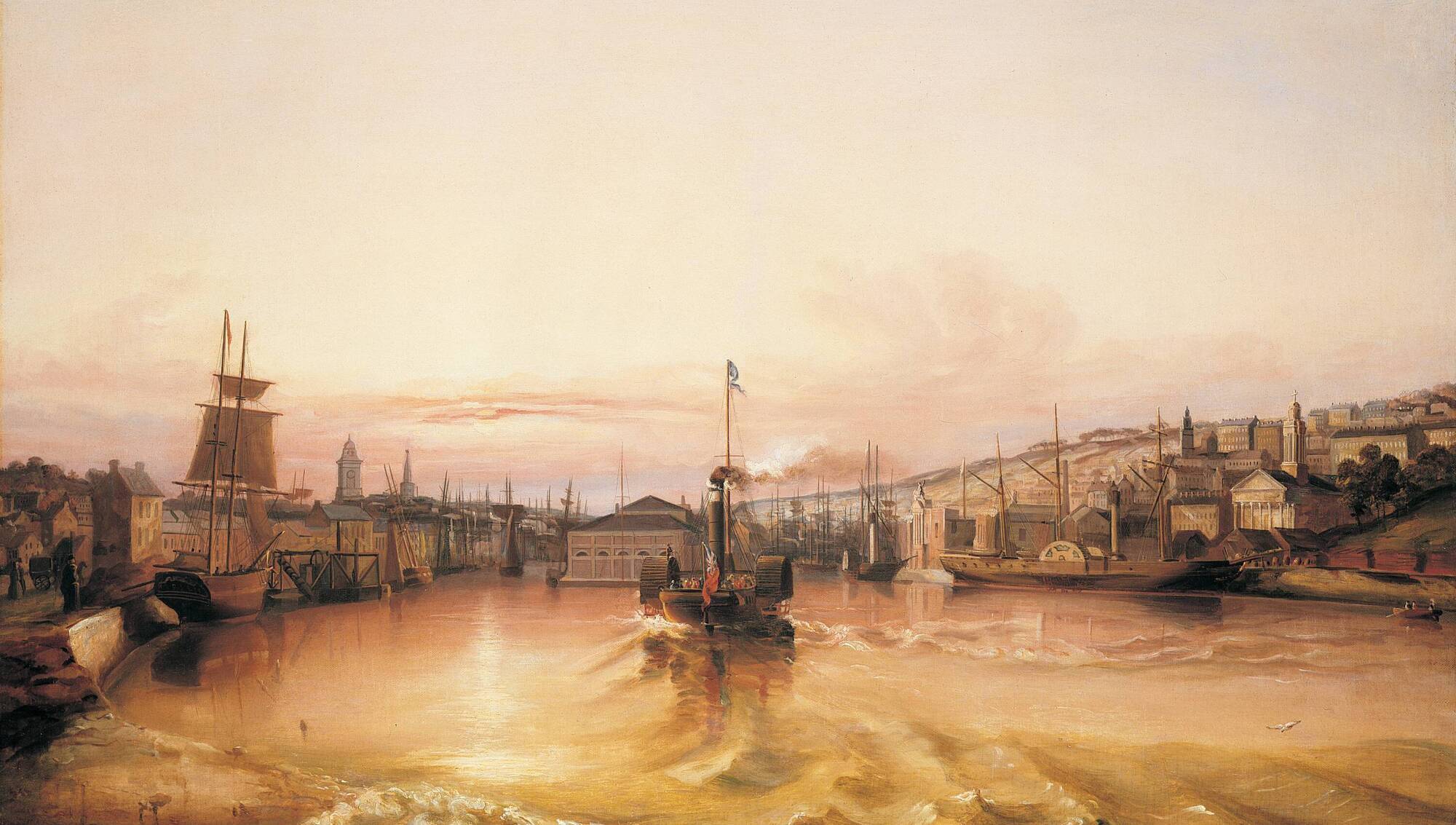
The painting visible on Penrose Quay, Cork: George Mounsey Wheatley Wheatley Atkinson, Paddle Steamer Entering the Port of Cork, 1842. Collection Crawford Art Gallery, Cork

I can scarcely visit the city without some reminder of where I come from, and it’s easy to tumble down the rabbit holes of connections.
I guess I’m feeling reflective. Maybe it’s the jarringly high amount of snow compared to red in my beard, or maybe it’s because my fiction has started leaning toward tales involving the sea, and so many of my ancestors on both parents’ sides were involved with the ocean, from naval warfare to the merchant marine, to ship building.
Maybe it’s because after last week’s column, Dad asked me if I’d consider turning some of it into a novel. I tried once, by the way, and it ended up a ghost story. Now look at me, with horror stories being read in 12 countries at the last count. That might be more places than my ancestors sailed to out of Cork, but then again Finland and Crimea aren’t just down the road when it comes time to fight the Russians.
But then again, given more than one male relative had more than one family on the go at the same time, perhaps we’re in more places around the world than I realise.
Even my daughter running in the city sports this week pushed me down that reflective path.
(As an aside, Daughter’s team won a shield, yes I’m very proud of her, let’s not dwell on the fact that due to traffic and trouble parking I, unbeknownst to myself, arrived at the field a few minutes after her race, and maybe don’t mention that she says she noticed I wasn’t there.)
The races were in MTU, Bishopstown, and the day before I’d driven through the area for something else and had to swing back towards Turner’s Cross — passing not far from the turn off for the cemetery I wrote about last week (go and read that, I’ll wait) but also along Magazine Road, near where my great great grandmother Mary Regan, aka Maria O’Regan, was living when she died.
I wasn’t far from Windmill Rd and Tonyville, where my great grandparents Charles and Minnie lived at various times.
The house on Windmill Rd, by the way, seems to have originally been owned by Minnie’s mother Mary Verling, whose husband Michael was one of those male relatives with more than one family on the go (you will have met him in last week’s column, if not earlier; Cthulhu knows enough people in Britain and Ireland did throughout the mid-1800s).
Read More
If you’re driving into the city centre from Dunkettle, down the Lower Glanmire Road and along Penrose Quay, on your left across from the gleaming newer towers is an image of a steam ferry arriving in the city. It’s a detail of a painting that’s housed in the Crawford Art Gallery, and the boat is much like the ones Michael Verling would have worked on, either bringing cargo between Cork and England or ferrying passengers up and down the harbour.
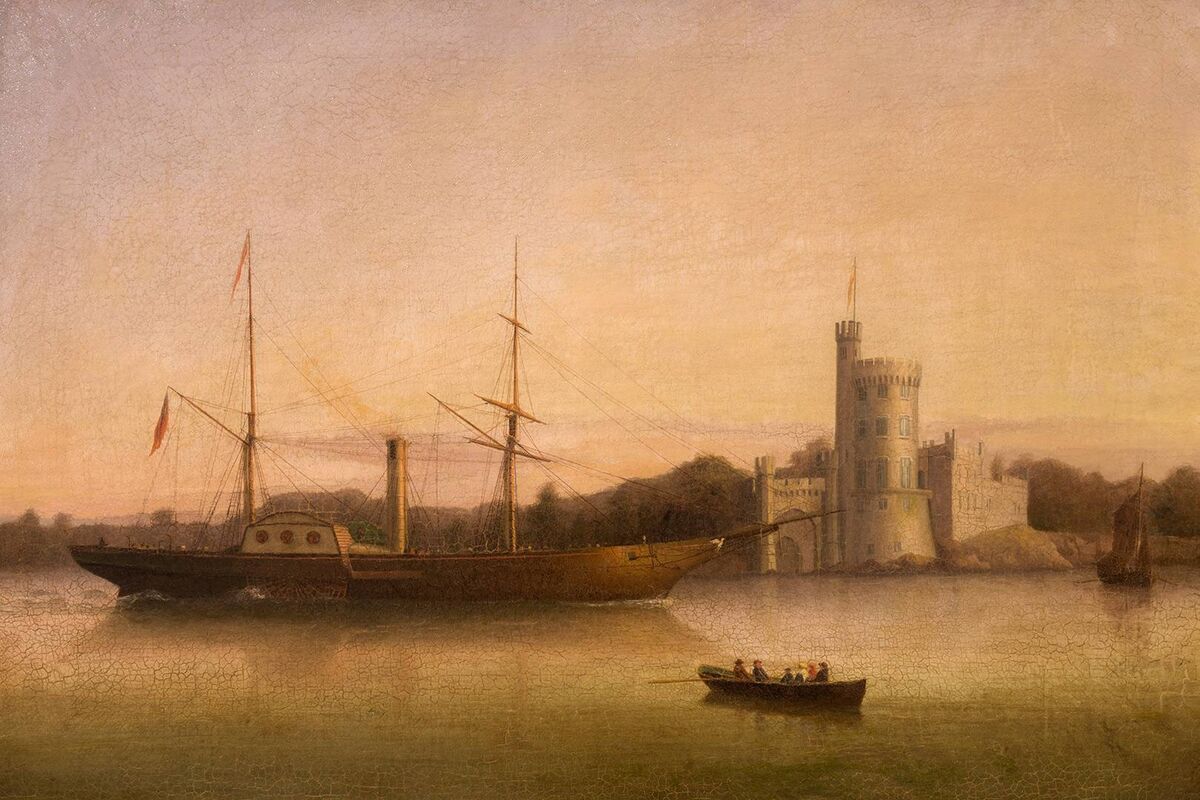
Actually, the Crawford holds a painting of a ship he actually worked on, the very heavy metal named Preussicher Adler, though Michael’s record doesn’t strike me as one of the cultured type. But maybe I’m wrong, and you’re a Verling relative who knows for sure.
Queenstown, Turner’s Cross, Cornmarket St, what’s now Montenotte, Barrack St: the man got around. At the time of his death in 1886 — when he was swept overboard off the coast of England by a wave so strong, the reported “it was impossible to rescue the man from his doom” — he was living at 1 Half Moon St, where Boots is now. He probably would have liked living across from a pub, probably too much if I’m honest. I wonder what he would have made of Nando’s.
And given how many of my mum’s family lived out in the harbour — Mahonys (unrelated to dad’s), Leonards, Sullivans, and others — they probably crossed paths. That sound you hear is me slamming on the brakes a little too hard before I spend the rest of the evening tracking them down in later files (the Leonards are gone entirely by the 1926 census — I couldn’t resist checking at least one).
In a strange sort of way, that image on Penrose Quay sometimes makes me think I’m entering ancestral territory, despite never having lived in the city. And more recent too; I used to work in Lapp’s Quay, back from when the had its offices there. Incidentally, when our owner, the moved to its offices in Tara St, it was moving into an old family neighbourhood.
My great great grandfather Frederick Quinn lived with his family (including my dad’s grandfather, Laurence) at George’s Quay, a few metres north. I think the building itself has been torn down, but bragging rights are bragging rights.
And with legions of Dublin ancestors on dad’s side — Quinns, Dunnes, Lynhams, the army of Killians that left en masse for Australia — if I give myself half a chance I might be able to do a proper job of a Dublin version of this column.
And given how Michael Verling’s death report said he had been survived by “a wife and several children”, and I haven’t tracked all the children down, he might even have some descendants up there too.
- David O’Mahony is assistant editor, a short story writer, historian, and novelist


CONNECT WITH US TODAY



Be the first to know the latest news and updates