David O'Mahony: Genealogy research can be as rewarding as it is frustrating
Delving into Census 1926 could be profoundly rewarding for all of us
David O'Mahony: Genealogy research can be as rewarding as it is frustrating

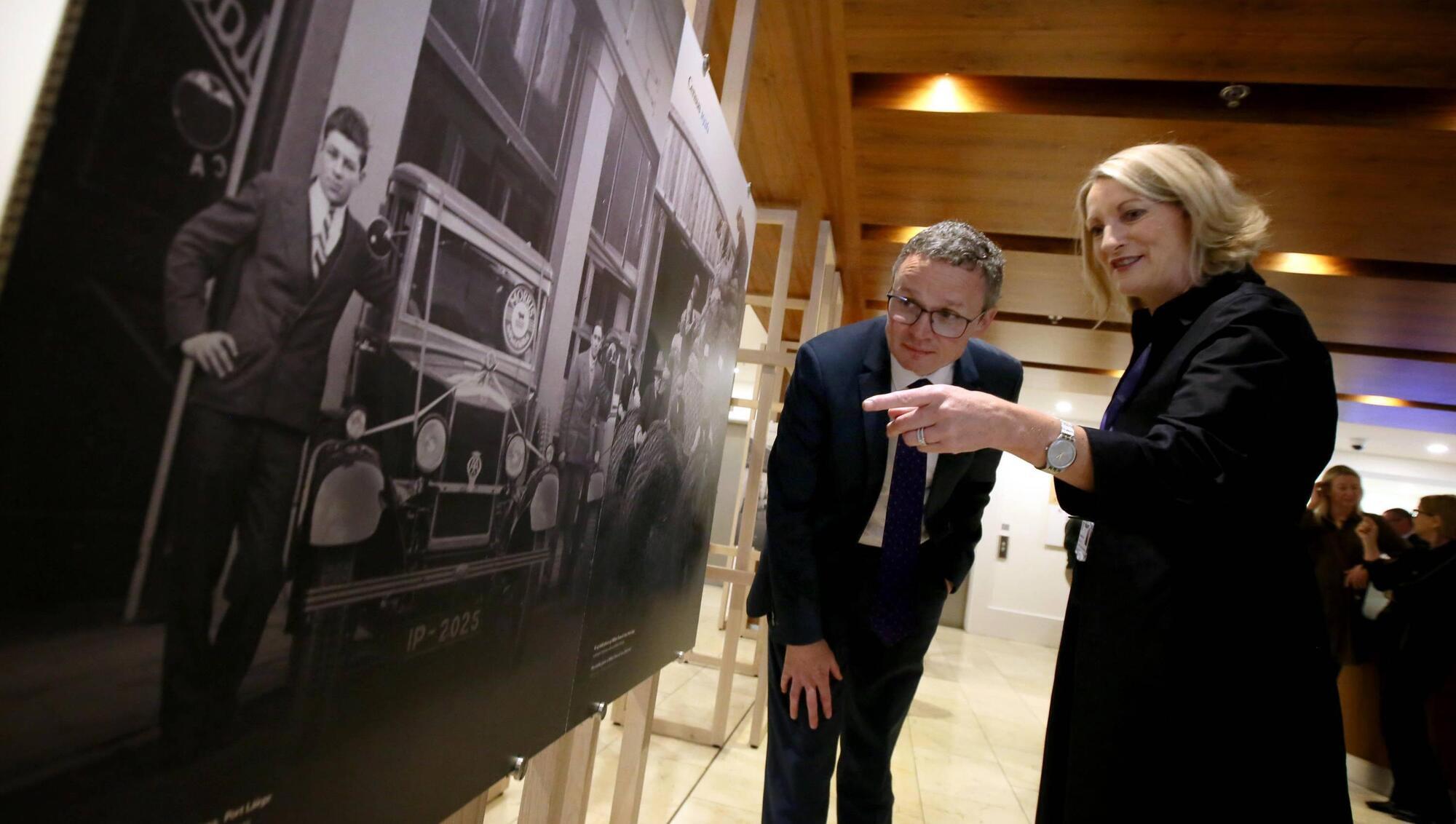
Minister for culture communications and sport Patrick O’Donovan and National Archives director Orlaith McBride at the launch of a comprehensive public programme of events ahead of the centenary release of data from the 1926 Census. Picture: Mark Stedman

By the time you read this — unless you’re one of those eager folks who checks the website from 1am, I see you — I will be poking through the treasure trove that is Census 1926.

With some 2.9m people recorded in it, surely I’ll find another skeleton in the family closet, right? 

Over the years, while trudging through assorted digital archives, I’ve had several leap out at me.

Some of them, admittedly, on what must have been a delayed timer as distant relatives overseas popped up in my inbox after DNA matches. What larks!

The 1926 census is said to show Ireland to be slightly less mono-cultural than usually thought. That’s not to say it was a hotbed of cosmopolitanism. 

HISTORY HUB

If you are interested in this article then no doubt you will enjoy exploring the various history collections and content in our history hub. Check it out HERE and happy reading

We all know how staunchly a very conservative Catholic upbringing was embedded into society as a whole. 

But with an endlessly vocal cohort looking to turn us inward again — skeptics on immigration, civil rights unless you’re their exact model of human being — it does us good to remember how wide our individual connections actually are, especially as they stretch back through time. 

We may be more than the sum of our parts, but quite where our parts come from is another question entirely.

Genealogy research can be as rewarding as it is frustrating.

Irish records can be spotty, and it’s very difficult to go further back than the late 19th century without heavy lifting and trawling through parish records. 

Some of these have been digitised, but not necessarily made machine readable. 

Some of the scans are so poor they’re barely human readable. 

While the censuses are extremely valuable, birth, death, and marriage records are just as important.

What a time to discover that the people you’re related to aren’t where you thought they were, or even that there were more of them than you realised. 

As it is, 19th century birth and death records show that my great great grandfather Michael Verling had children with women on opposites of the street — Cornmarket St in Cork, to be exact, and the buildings literally face each other — and registered the more illicit birth (seeing as he was still married) in a neighbouring parish, with the form noting that he was married to the child’s mother, my great great grandmother Mary Madden.

Except he didn’t marry Mary for real until some years later, after the death of his first wife, Martha, at her clothing stall in what was Peter’s Market. 

I suspect that Michael, with a drinking problem and at one point a steam ferry captain put on trial for crashing said ferry (he wasn’t the pilot), had been kicked out of the family home by then. 

His descendants in Kansas have nothing good to say about him, though he seems to have reformed a bit in later life here in Ireland, before drowning at sea.

And given how many children he fathered, I’m not entirely convinced there isn’t another wild streak of Verling descendants out there related to me by blood. 

Maybe I’ll find them in the 1926 records.

Still, for every positive there is likely a negative, when it comes to archive searches. 

Finding relatives in industrial schools, asylums, or prisons is a cause for pause. 

When I sifted through the 1911 census, I found a Daniel O’Mahony, age one, who hadn’t been previously known to living relatives. 

Regrettably, doing further checks on birth, death, and marriage records showed that was because he’d died at the age of three from “hydrocephalus (brain swelling) and exhaustion”. 

He’d died at home, in the company of his mother. Jesus Christ.

While it’s often possible to find members of the same family in the same places in the 1901 and 1911 censuses, the War of Independence and Civil War left a 15-year rather than 10-year gap, and given how much growing a child can do in one year, let alone a decade and a half, it won’t be surprising to discover that some family members will have grown up, moved out, and moved on, perhaps never to be traced again.

One person I do hope to track is a great granduncle who reputedly lived in the Imperial hotel at one stage — I think I found him in the 1911 census, but can’t be certain. 

And what if he’s changed his name or had it butchered in transcription?

As it is, the 1901 and 1911 censuses will show the same relatives of mine listed as Mahoney, Mahony, O’Mahony or O’ Mahony. 

And it’s not just a change between the two censuses, either; sometimes siblings living in different homes have adopted slightly different spellings. 

Given that a publisher recently released one of my short stories under the name O’Mohony, there’s probably still room for more variations.

What’s likely to be quite interesting is that the census takers — gardaí, as it happens — annotated their entries with local information.

One example that’s been circulated so far is a note that one person listed on the census as an elderly woman’s daughter was in fact her granddaughter (so presumably the mother was unmarried).

That sort of local knowledge, while valuable to us looking back, is a double-edged sword.

When I was trawling through parish registers looking for the baptismal record for one of my ancestors, I found that somebody had come along and marked “bastard” next to some of the births. 

Quite a few, actually. 

This had to have been done at a much later time (the register covered several years) because it was all in the same handwriting.

Quite why somebody would want to be so cruel, given that these were from the 19th century and Ireland was hardly enlightened when it came to such things, is beyond me. People are as awful as they are mysterious.

Examining the census will be a marathon rather than a sprint, but could be profoundly rewarding in the long run — for all of us.

  • David O’Mahony is Irish Examiner assistant editor, a short story writer, and a novelist

More in this section

Revoiced

Newsletter

Sign up to the best reads of the week from irishexaminer.com selected just for you.

Cookie Policy Privacy Policy Brand Safety FAQ Help Contact Us Terms and Conditions

© Examiner Echo Group Limited