Colin Sheridan: US military may well overwhelm Iran but any victory will be Pyrrhic as history has shown us
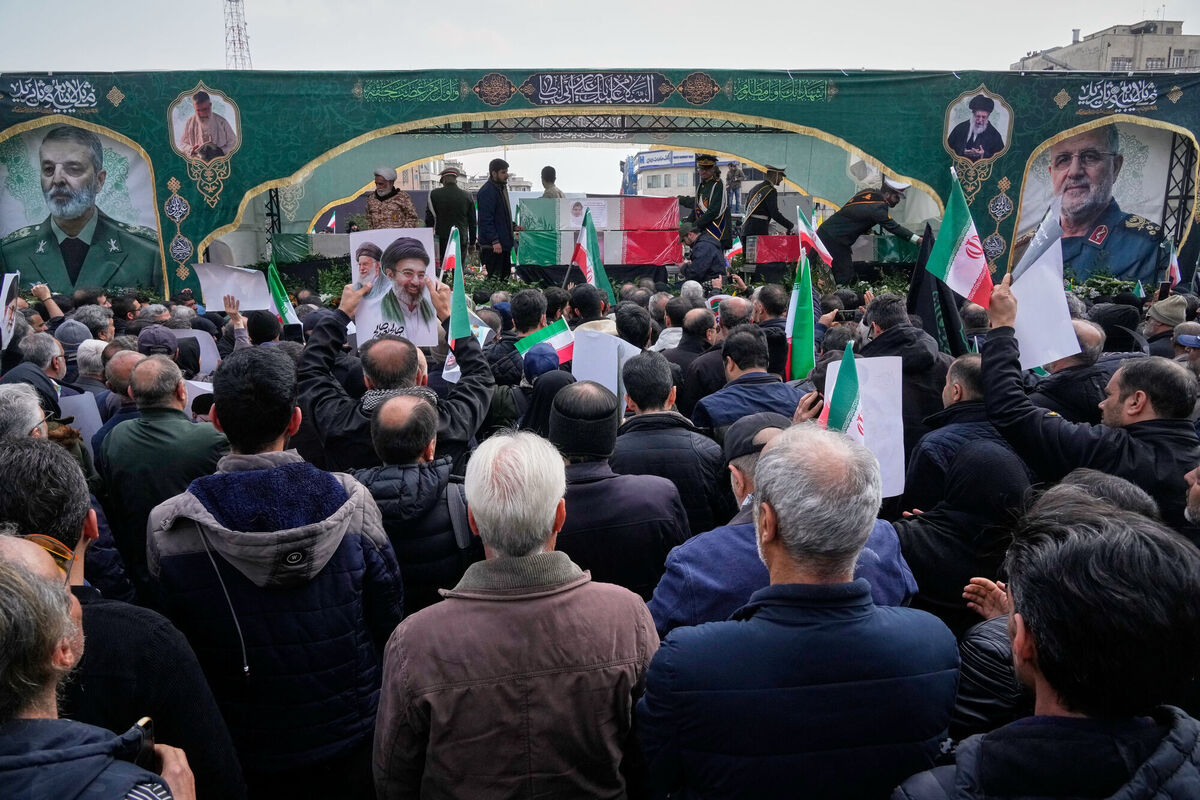
Mourners attend the funeral procession for senior Iranian military officials and some civilians killed during the US-Israel campaign, in Tehran, Iran. PictureAP Photo/Vahid Salemi

There is a story, older than the Republic and more enduring than most empires, about a king who won himself into ruin. Pyrrhus of Epirus, campaigning against Rome in the third century before Christ, defeated the legions at Asculum and Heraclea. Victories, both. Tactical, undeniable, written in the language of the sword and the shield. But they cost him dearly — so dearly that, surveying the carnage, he is said to have remarked that one more such victory would undo him entirely.
It is from this lament we inherit the phrase “Pyrrhic victory,” a term often misused to describe any hollow win, any bittersweet triumph. But Pyrrhus was not speaking of bitterness. He was speaking of arithmetic. Of exchange, and of a ledger so grotesquely unbalanced that victory itself became indistinguishable from defeat.
It is a story that ought to trouble the powerful, yet, it rarely does.
Because there are mistakes, and then there are going-to-war mistakes. The former we pay for in inconvenience — forgotten parking tickets, late fees, small humiliations. The latter are paid in blood, and yet the bill is rarely delivered to those who sign it. World leaders dispatch thousands with the flick of a pen and sleep soundly, while the rest of us tally the cost in amputees, in orphans, in the quiet collapse of things we once thought permanent.
And so we arrive, again, at a familiar precipice. An American administration, buoyed by certainty and insulated from consequence, preparing to demonstrate — once more — that it can win a war. It probably can.
HISTORY HUB
If you are interested in this article then no doubt you will enjoy exploring the various history collections and content in our history hub. Check it out HERE and happy reading
That is not the miscalculation. The great miscalculation — the one that echoes across deserts and decades — is this: That force alone can defeat belief.
What Donald Trump, and even Benjamin Netanyahu, appear to misunderstand is that the men they face-however dangerous and indefensible — believe in something. The Ayatollah believes. Hezbollah believe. Hamas believe. The Houthis believe. Even Yahya Sinwar, fighting hand-to-hand to his death, believed.
You do not have to admire the belief to recognise its power.
Indeed, what separates these figures from the likes of Saddam Hussein or Bashar al-Assad is not brutality-there is no shortage of that — but incorruptibility of a particular kind. Saddam could be bought. Assad, when the walls closed in, fled to Moscow like a frightened heir protecting his inheritance. Muammar Gaddafi, for all his late-life theatrics, courted wealth and legitimacy, made deals with devils, and died having believed, fatally, that the game was still transactional.
Iran, for all its many sins, has not played that game. Nor, in truth, did the Taliban.
It is worth remembering that in late 2001, with the full might of the American war machine bearing down, the Taliban offered to surrender. They were, by any rational measure, beaten. And yet that surrender was waved away — dismissed with the casual arrogance of a power that confuses capability with wisdom. There were wars to wage, after all. Contracts to sign. Narratives to shape.
Twenty years later, after something in the region of three trillion dollars — three million millions — and upwards of 120,000 lives, the Taliban walked back into Kabul.
Victory, again, of a kind.
But what Pyrrhus understood, and what Washington so often forgets, is that not all victories are created equal. Some contain, within their very structure, the seeds of reversal.
Because belief does not behave like territory. It cannot be occupied, cannot be sanctioned into submission, cannot be negotiated away at a conference table in Geneva or Doha. It persists and it adapts and it burrows into the next generation and waits.
Trump, for his part, believes in very little beyond the architecture of his own reflection. Power, to him, is not a means but an aesthetic. He does not want a successor as president so much as he wants a contrast — someone dull enough that history might remember him as singular. “Nobody did it better” is not a boast; it is a thesis he intends to defend at any cost, including the future of his own party.
And because he believes in nothing, he cannot comprehend defiance rooted in something. Iranian resistance is not, to him, ideological or historical or spiritual — it is personal. An affront. It is disgusting. A refusal to bend to the sheer force of his will.
But you cannot bomb a people into agreeing with you. You can only bomb them into hating you.
Read More
My own time in Beirut was brief, but it offered a glimpse into the kind of influence that belief can wield. Hassan Nasrallah — rarely seen, perpetually hidden — was nevertheless everywhere. His broadcasts, typically delivered in the early evening, bent the rhythm of the country around them. Shops paused. Conversations stalled. Screens flickered to life.
I understood none of what he said in real time. My Arabic never advanced beyond pleasantries and apologies. But understanding the words was beside the point. To watch those watching him was to witness something closer to ritual than politics. Not unanimity — he was loathed as much as he was revered — but attention. Total, unavoidable attention.
That is power of a different order.
And for all the rhetoric of America as “the Great Satan”— Al-Shaytan Al-Akbar — there was, at least then, no ambient hatred of Americans themselves. Not in Beirut. Not in the north or the south. Quite the opposite. The hostility was directed upward, at policy, at power. It was not yet personal.
Wars have a way of making things personal.
When Israel killed Nasrallah in September 2024, the reaction was immediate and visceral. Even at a distance, it felt seismic. He had seemed, absurdly, untouchable — a permanent fixture in an impermanent region. And yet he was gone, reportedly betrayed, his location compromised, his life ended by Israel amid the flattening of entire neighbourhoods. Hundreds of civilians died in the process. Children among them.
The operation was hailed in some quarters as ingenious. Surgical, even. But surgery, one suspects, is meant to preserve life, not extinguish it wholesale.
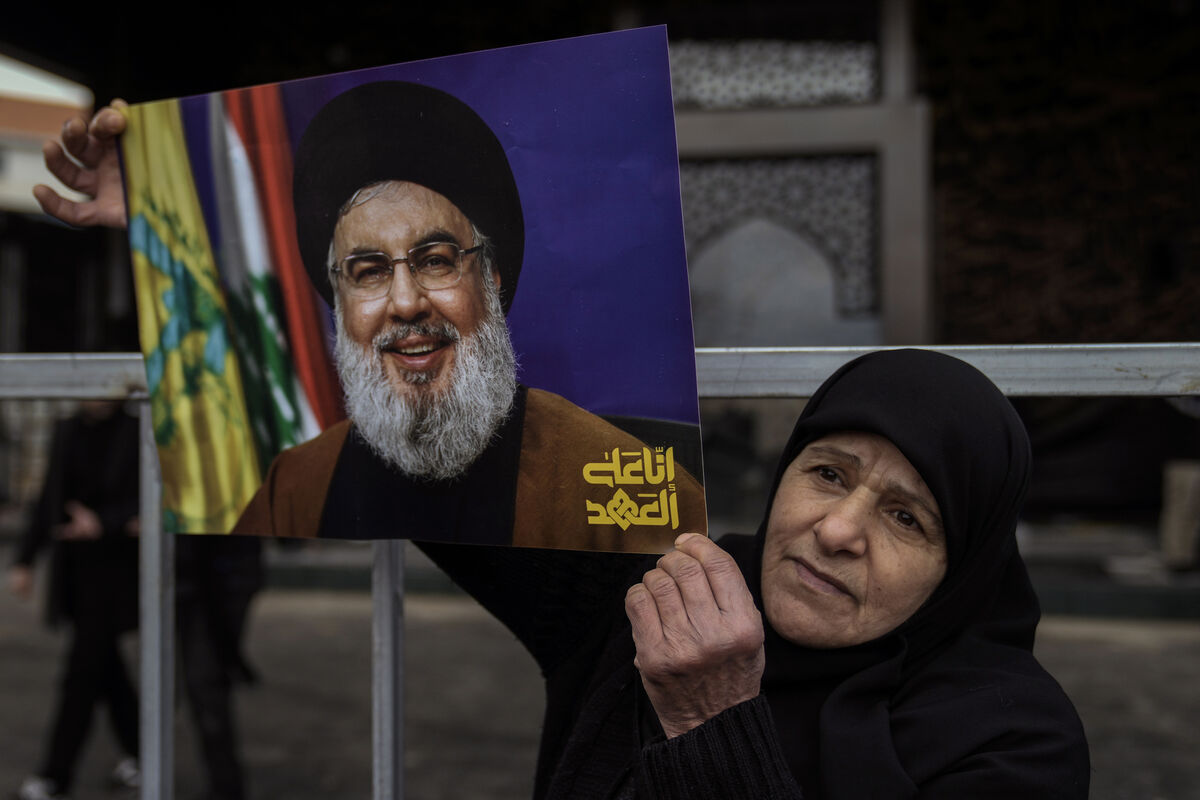
Nasrallah is dead. So too is Sinwar. Others will follow. They always do. And yet, eighteen months on, Hezbollah remains — diminished, disfigured, but present. Active. Persistent. Israel continues to strike, often against civilians, in pursuit of leaders it has already declared dead a dozen times over.
This is not strategy. It is repetition, and doing the same thing over and over again and expecting different results is considered by some to be a sign of insanity.
Yet, watch as it gets repeated in Iran. Leaders will be targeted, killed, replaced. Each death will be framed as decisive. Each replacement will prove it was not. Because the figures at the centre of these movements are, crucially, prepared to die. Some may even welcome it. Martyrdom is not a failure within their worldview; it is, in many cases, its fulfilment.
This may not make them noble, but it does make them difficult to defeat. Especially if you are unwilling to die for anything yourself.
Which brings us, inevitably, back to Pyrrhus.
What made his victories ruinous was not simply the scale of his losses, but his failure to understand the nature of his opponent. Rome, like the movements America now faces, could absorb punishment. It could replenish, regroup, return. It was not reliant on a single leader or a single moment. It was, in its own way, an idea.
You cannot outlast an idea by killing its adherents.
America will, in all likelihood, win the coming war in the way it wins most wars: With overwhelming force, technological supremacy, and a narrative of inevitability. But the cost-moral, political, cultural — will accrue quietly, like interest.
All the while, somewhere beneath the rubble, belief will endure. Waiting.
For the next victory.


CONNECT WITH US TODAY



Be the first to know the latest news and updates