An Iranian woman’s diary: ‘It feels as if we are trapped in a massive, lethal video game’
An Irishwoman’s Diary is dedicating this week’s column to ‘M’, who is offering unflinching testimony of the reality of war at a human level, starting today with some extracts, which show the fear, stress, and anxiety being experienced by one woman, on the situation and life near Tehran.
An Iranian woman’s diary: ‘It feels as if we are trapped in a massive, lethal video game’

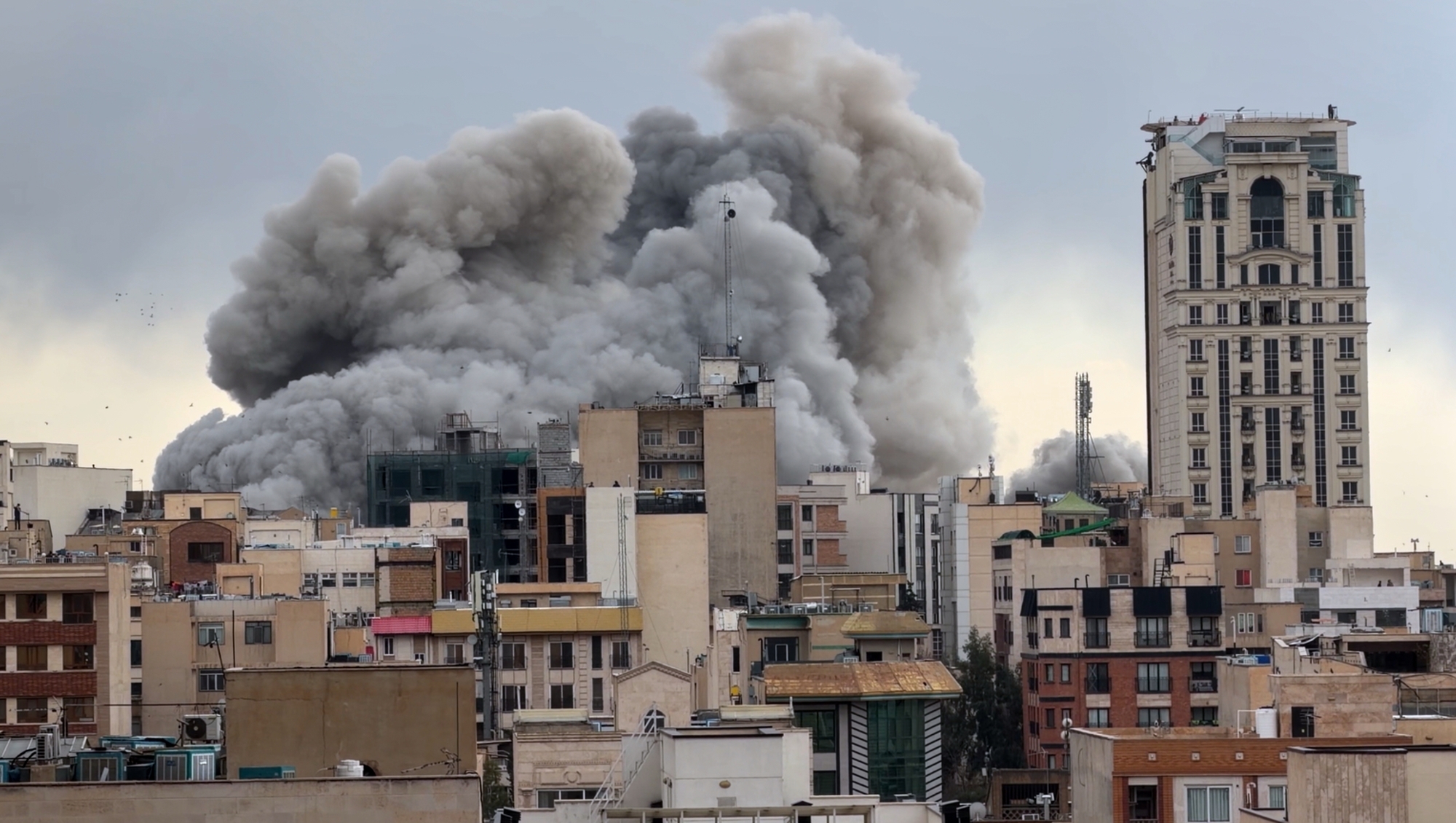
FILE - A plume of smoke rises after a strike in Tehran, Iran, Monday, March 2, 2026. Picture: AP Photo/Mohsen Ganji

They say that truth is the first casualty of war — and it is — but there is another overlooked feature of modern conflict that is worse: the obscene mismatch between the language of the aggressors and the impact of their military machismo on the civilians caught in the onslaught.

Recall the “collateral damage” of the US-led invasion of Iraq in 2003, an odious term used to distract from the human cost of war.


In this escalating conflict in the Middle East, the use of dehumanising language to minimise the killing and maiming of innocent citizens has reached unconscionable new lows. Witness US war secretary Pete Hegseth’s remark: “Iran is ‘toast’, and the US and Israel will rain down ‘death and destruction.”

Or this: “We are punching them when they’re down, which is exactly how it should be.”

Little wonder that ‘M’, a young Iranian woman living in Karaj near Tehran, says she feels as if the Iranian people “are trapped in a massive, lethal video game”.

HISTORY HUB

If you are interested in this article then no doubt you will enjoy exploring the various history collections and content in our history hub. Check it out HERE and happy reading

An Irishwoman’s Diary is dedicating this week’s column to ‘M’ whose unflinching testimony of the reality of war has made it through the ether despite intermittent Wi-Fi and the regime’s attempt to shut down the internet.

Let us call it an Iranian Woman’s Diary. Its powerful, poignant and verified content will run as a series in the Irish Examiner next week, but here are some extracts which bring home the intense anxiety, exhaustion and desperation felt by those living in a country consumed by war.

People clean debris from their apartment damaged when a nearby police station was hit Friday in a US-Israeli strike in Tehran, Iran. Picture: AP Photo/Vahid Salemi)

First days of war

On the first day of the war, February 28, ‘M’’s brother heard fighter jets heading towards Tehran. They hit several places and soon the explosions began in their hometown of Karaj too.

“The internet was still connected, and people – from their frantic rush to reach their children's schools – had written that a crowd was cheering and dancing, while others like me carried mountains upon mountains of grief on their backs.”

The internet was later cut off and an afternoon of deathly silence prevailed; except for a few scattered targets, no news or sound came through. Then, near 11.30pm, ‘M’ heard the sound of celebrations coming from the street:

“I went to my room, and suddenly, as if it were a wedding party and the guests had been asked to liven up the gathering, the alleys and streets became a commotion. We all woke up and listened intently in the hall; yes, it was the sound of laughter, joy, clapping, screaming, whistling, and ululation. No words were needed; we all knew what those sounds meant: they had hit the ‘Big Brother’, the great Khamenei.

“I went to the roof to see exactly what was happening. I think I will never forget that apocalyptic scene: in the heart of the night’s darkness, the lights of the houses were on, and the sound of joy came from every window. People were shouting, ‘He’s dead, he’s dead, they killed him; they killed Khamenei.’ I stood there shocked, staring at the houses… they were busy celebrating and drowned in joy, while I was silent and detached from the crowd.

Khamenei gone... but

“That moment was monumental. So monumental that I cannot even describe it. I stood there, void of any emotion, absolutely; not happy, not sad, not afraid — nothing. I was just an empty shell…

“I didn’t even understand my own state. I had waited days and years for this news; I had imagined myself passing out sweets and being happy. Now, however, it was as if I had been emptied from within. His becoming a ‘martyr’  — especially at the hands of Israel and America — was not what I and those like me were looking for.

 Posters featuring the portraits of Iranian leader Ali Khamenei are displayed across the streets of the Iranian capital Tehran following his death in US-Israeli airstrikes. Picture: Fatemeh Bahrami/Anadolu via Getty Images
 Posters featuring the portraits of Iranian leader Ali Khamenei are displayed across the streets of the Iranian capital Tehran following his death in US-Israeli airstrikes. Picture: Fatemeh Bahrami/Anadolu via Getty Images

“We wanted his humiliation, his disgrace, his trial, seeing him eye-to-eye with the people whose blood he had squeezed into a bottle for years, whom he had left grieving and mourning. I wanted justice, not martyrdom and becoming a legend for his supporters.

“I fell asleep at eight in the morning until 10. Now that I am writing, it is the end of the second day; but it feels as if a hundred years have passed. I have aged 10 years. I no longer remember what happened hour by hour.

“I remember it was near noon, because Mom was making lunch. We hadn’t heard the approach of a fighter jet; perhaps there was no jet and it was a missile. The sound of the explosions was terrifying and horrific — the first, the second, the third, the fourth. Dad shouted, ‘Let's go under the doorframe of the hall hallway’. We pulled Mom away from the kitchen window.

“I don’t remember exactly what happened next; I only remember myself involuntarily sitting on my legs. My heart was beating fast like a sparrow’s; I wasn’t afraid — I was sure it wasn’t fear; it was misery; it was desperation.

​“When the sounds subsided, I went to the roof; massive columns of smoke were rising to the sky before our eyes. I reflexively slapped my face and said, ‘O Abba al-Fadl, woe is me!’
[a common invocation of Abbas ibn Ali, a figure in Shia Islam symbolizing courage and protection, often called upon in moments of sudden fear or distress].

Horror

“What I saw before my eyes was horrific. War, unretouched and face-to-face, stood twenty minutes away from my house. No enemy soldier was there, but the destruction and the smell of gunpowder and the fear permeating the air were. This was war — the damn war. There was no escaping it anymore.”

That heavy feeling of being trapped is ever-present throughout ‘M’’s diary: On day 7, she wrote: “It has been one week since the gates of hell swung open; yet on our calendars, every day has felt like years. Last night, I dreamed that a large portion of my hair had turned white, and I blamed the war. The reality is that after the protests and the killings of late December, the number of white hairs on my head multiplied. I don’t know how scientifically accurate the Iranian belief is — that white hair comes from grief and pressure —  but it is our reality.”

And a little more than a week later, she wrote this: “It has now been half a month since the war began. There are still moments during the day when I cannot believe such a calamity has befallen us, and the reality of war hits me like a sledgehammer.”

Rescue workers search for survivors in the rubble after a strike in southern Tehran, Iran, Friday, March 13, 2026. Picture: AP Photo/Sajjad Safari

In theory she can understand what is happening… “but humanly and emotionally, I cannot empathize for a single moment, and this has largely broken me.

“I don’t want to draw a clear line between myself (and perhaps those who think like me) and them [other Iranians in or outside the country who support the war, believing it will lead to liberation]; I don’t want to create an ‘us versus them’ divide. But it feels as though I am being pushed in that direction by force.

“On the other hand, I see the boundless kindness of other Iranians, and my heart grows warm again. There is ‘M’ who bought an expensive VPN and won’t take money from me for it; she disconnects herself at night so I can use it.

“When I mentioned that a friend of mine had an interview and couldn’t connect, she unhesitatingly said to give the friend the info and tell her whenever the interview starts so she can disconnect for him to get online.

“There is ‘H’, who is currently in a quiet city but messages every day to ask if we are okay. All these beautiful people keep the light of hope alive in my heart amidst this clamor of darkness and hate.

“These days, there are many voices that go unheard and much suffering that goes unseen...”

  • In an attempt to make that unseen suffering visible, the Irish Examiner will feature M’s Iranian diary in a series of articles next week. The identify of the writer has been fully verified, but it will run under a single initial to protect her.

More in this section

Revoiced

Newsletter

Sign up to the best reads of the week from irishexaminer.com selected just for you.

Cookie Policy Privacy Policy Brand Safety FAQ Help Contact Us Terms and Conditions

© Examiner Echo Group Limited