Paul Hosford: Ireland’s homelessness crisis didn’t just grow — our reaction to it quietly changed
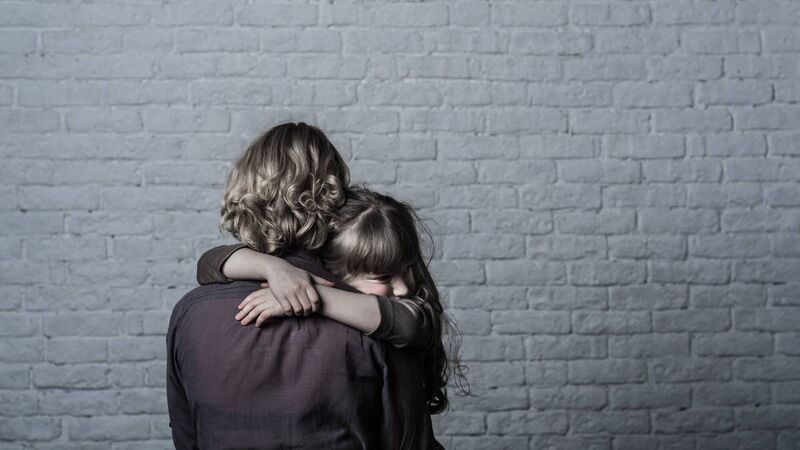
Homelessness in Ireland has quadrupled in a decade — but public outrage has quietly faded as the crisis drags on
Paul Hosford: Ireland’s homelessness crisis didn’t just grow — our reaction to it quietly changed

Since 2015, homelessness in Ireland has not only increased in numbers, it has also been accompanied by a noticeable shift in public attitudes.

There was a time when homelessness, or even people living in emergency accommodation, shocked us as a nation. It wasn’t that long ago either.

In 2018, as the once-unthinkable Rubicon of 10,000 homeless was crossed, Sinn Féin housing spokesman Eoin Ó Broin said housing minister Eoghan Murphy should “do the decent thing and resign”.

For his part, the minister said it was “very disappointing to see more children in emergency accommodation as we enter into Christmas week”.

While numbers had been released by local authorities up to December 2015, figures released in the first departmental report in that month showed that more than 5,200 people, including 1,600 children, were in emergency accommodation.

At the time, Niamh Randall of the Simon Communities said the government had to “cut through the red tape and respond quickly to this urgent need”.

“Until we do that, more people will suffer, more people will end up homeless, and more people will be trapped in emergency accommodation,” she said.

Each new milestone — 5,000, 10,000, 15,000 last August — has been met with less opprobrium and anger than the one before.

When figures last week blew past 17,000, barely an eyelid was batted. Ministerial comments no longer form part of the press release which drops on the last Friday of the month, and the focus on the reports is short and sharp.

The truth is that, since 2015, homelessness in Ireland has not only increased in numbers, it has also been accompanied by a noticeable shift in public attitudes.

A national scandal

While homelessness once generated widespread shock and urgency, over time it has become a more familiar and, in some ways, a normalised feature of Irish society.

Having been a journalist at the time, I can tell you that 2015’s rise in homelessness was widely seen as more than an emergency. It was about who we were as a people.

Media coverage often focused on families forced into hotel rooms or individuals sleeping rough on the streets of Dublin, in their cars, or in garda stations. 

Public concern was strong, and homelessness was regularly described as a national scandal.

At the time, the number of people officially recorded as homeless was under 4,000. Despite being four times lower than today, it was a constant source of debate on the airwaves and in the Oireachtas.

However, as the crisis dragged on, the shock that once accompanied rising figures began to fade.

Each new record level of homelessness still attracted headlines, but the public reaction was often less intense than it had been in earlier years. 

The repetition of similar statistics month after month contributed to a sense of fatigue and resignation, where homelessness came to be viewed by some as an unfortunate, but inevitable, part of urban life. 

'Compassion fatigue'

Besides, when every other aspect of the housing crisis feels so acute, what’s one more?

Sociologists sometimes describe this as “compassion fatigue”, where constant awareness of a social problem leads people to emotionally disengage as a way of coping.

In a world where information is everywhere, the ability to claim ignorance is just not there any more. 

Disengaging feels healthier for many people.

On the political side, governments since 2015 have introduced a range of strategies and housing plans aimed at reducing homelessness. 

However, the slow pace of improvement has led to frustration or even apathy among the public.

These repeated policy announcements that come without tangible and rapid results have made some people sceptical about whether meaningful change is even possible.

This scepticism can evolve into apathy, where individuals feel the crisis is too complex or entrenched to solve.

Despite this growing sense of normalisation, homelessness remains a deeply serious social problem in Ireland.

Thousands of adults and children continue to live in temporary accommodation, and many more experience hidden homelessness while staying with friends or relatives.

One facet of the monthly reporting of numbers shows that January’s report, which tracks December’s numbers, is often slightly down as people in emergency accommodation find beds or places to stay with family over Christmas.

Since 2015, Ireland’s homelessness crisis has worsened not only in scale but also in how society — and the media is included in this — responds to it.

As the numbers have increased year after year, public attitudes in some cases have shifted from shock and outrage toward fatigue and apathy. 

This change in perception risks making the crisis harder to address, because meaningful solutions often depend on sustained public pressure and political urgency.

Apollo House

In late 2016, I was working a newsroom shift two days after Christmas when the phone rang. It was the organisers of the Apollo House occupation.

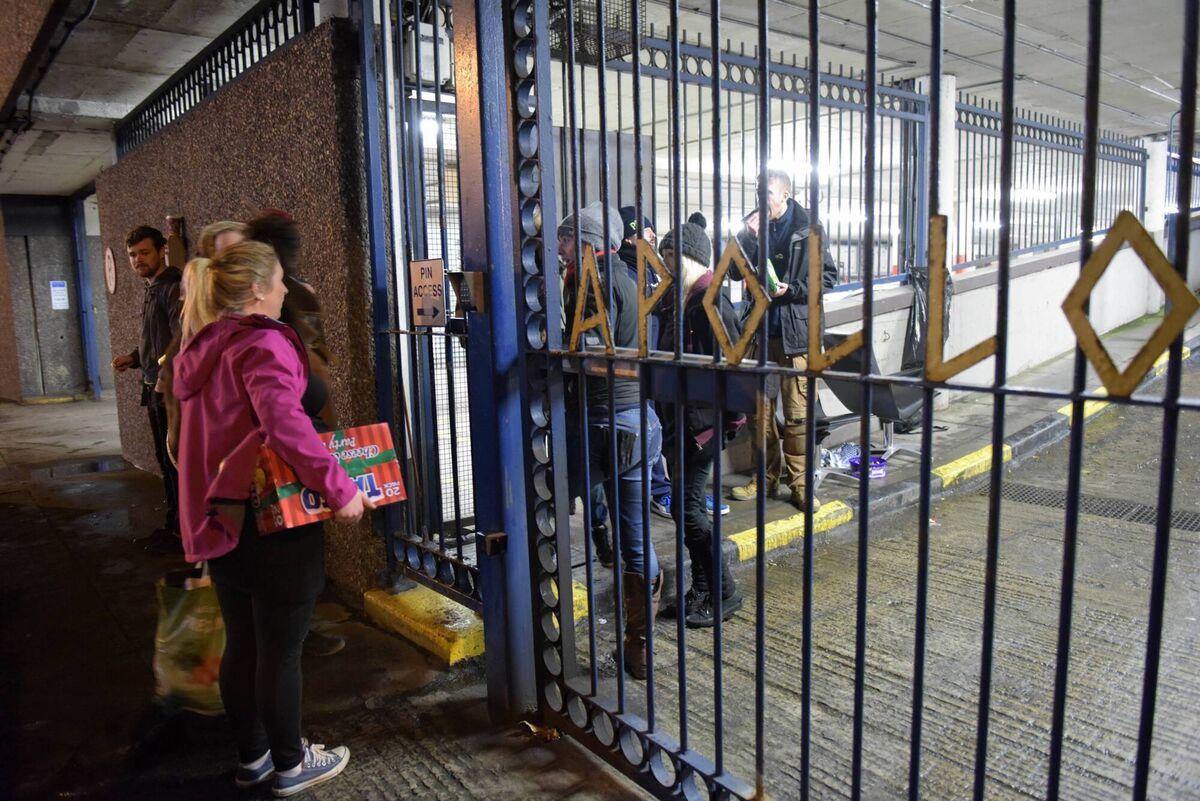
If your memory is fuzzy, in December 2016, members of the Home Sweet Home campaign — a broad coalition of housing activists, artists, and trade union members — took over Apollo House in Dublin, repurposing it as accommodation for the homeless.

In that time, the campaign garnered huge public support, brought government ministers to the table, and was hugely critical of the situation facing homeless people in Ireland. 

A donation being given by the public to the Home Sweet Home protesters. The campaign at Apollo House felt radical, like a moment in time that would be referenced in years to come. File picture: Bryan Meade

It felt radical, like a moment in time that would be referenced in years to come.

Inside the doors of the building, I found a loose community of volunteers giving medical and social help, and stockpiles of supplies donated by the public to a team working blind.

The methodology was rough and ready, but the point was admirable. When the activists were forced to leave by a court order a couple of weeks after Christmas, they pledged that the movement had just begun.

Since then, Apollo House has been demolished and replaced with Dublin’s tallest building — a 21-storey punctuation mark on a decade of lost momentum on housing.

New rental regulations

This week, when new rental rules kicked in, we learned that 36 households in one estate in Wexford have been told they are to be evicted.

The housing minister has referred the case to the Residential Tenancies Board to see if anything illegal has happened, but denied that his new rules were to blame. 

He said any suggestion to the contrary was “misinformation”.

On the face of it, James Browne is correct; the new rules shouldn’t affect existing tenancies.

But a video which came to light on Thursday shows an agent of the landlord telling a resident that it was the company’s view “that they’re very unfavourable to the landlord, so we think it’s better just to sell up and get out”.

That video is likely to attract much comment. It may even make people annoyed as it flies around WhatsApp groups over the weekend.

But the question must be asked: If 17,000 living in emergency accommodation doesn’t spark real anger, what will?


x

More in this section

Revoiced

Newsletter

Sign up to the best reads of the week from irishexaminer.com selected just for you.

Cookie Policy Privacy Policy Brand Safety FAQ Help Contact Us Terms and Conditions

© Examiner Echo Group Limited