Clodagh Finn: The forgotten miracles of St Brigid — healer, abbess, and charioteer
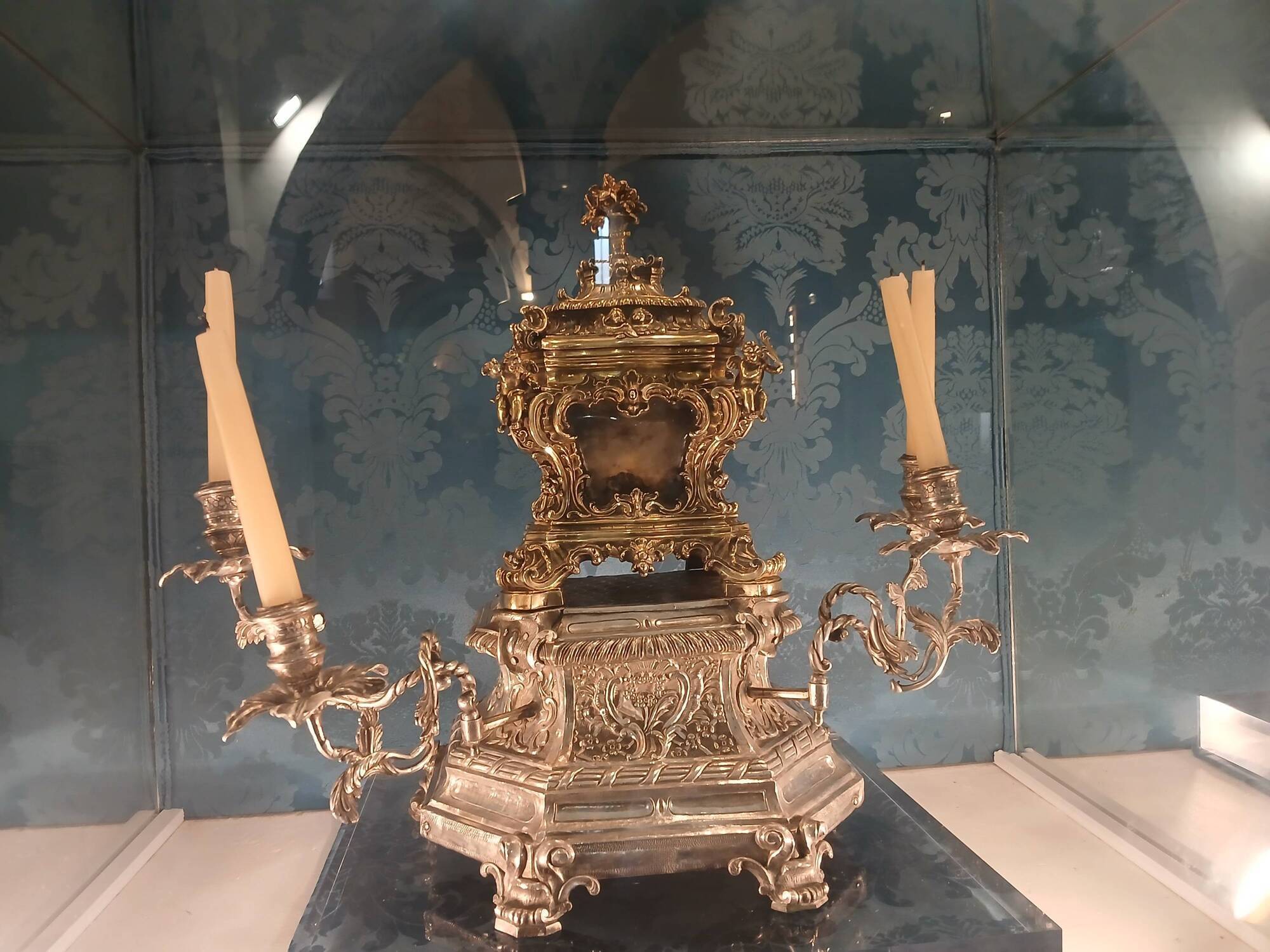
The reliquary which contains a fragment of St Brigid's skull purportedly taken there by Irish knights in the 13th century. Photo: Orla Riordan.

Mention the miracles of St Brigid and the story of her nimble land-grab at the expense of the king of Leinster is the one that most readily comes to mind.
As children, we were told how she persuaded the king to grant her as much land as her cloak would cover. When he agreed, four of her faithful each picked up a corner of her mantle and ran — I always picture them in a high-stepped gallop — in all directions until the garment covered a vast area in the plains of Kildare.
That was the foundation story of a convent which grew so rapidly it was referred to as a monastic city with “countless wonders” in the account of St Brigid’s life written down by one of her faithful, Cogitosus, in the 7th-century.
I’ve been reading it again this week.
The translation by Sean Connolly and Jean-Michel Picard, available on JSTOR, the digital library of academic journals, is absolutely engrossing. Not only does it describe 32 of Brigid’s miracles — a mere drop in the ocean of her powers, we’re told — but it gives us an unrivalled insight into an early Irish church which had a woman at the head of one of its most powerful ecclesiastical centres.
HISTORY HUB
If you are interested in this article then no doubt you will enjoy exploring the various history collections and content in our history hub. Check it out HERE and happy reading
You can’t help but wonder where it all went wrong.
The paints a picture of a deeply compassionate and affable woman who preached to the multitudes “with mellifluous eloquence”, and led by example. On one occasion, she gave her bishop’s vestments to a beggar whom, she believed, was a manifestation of Christ.
There are several examples of her communing with the natural world. Ducks flocked to her in great numbers on command. She tamed a lone, savage wild boar and summoned wolves to round up and deliver a drove of pigs to her monastery.
In others, she travelled around the country on her two-horsed chariot and interceded when needed.
In recent years, there has been renewed interest in miracle number 9: “Of the Pregnant Woman Blessed and Spared Birth-Pangs”. It explains how Brigid made a pregnancy disappear after a woman’s vow of virginity “lapsed through weakness into youthful sexual desire, and as a result her womb swelled with child”.
If it is an anachronistic stretch to see that as some sort of proto-feminist act, it is not at all unreasonable to see it as a compassionate and forgiving one.
In the ethos of the time, this woman had made a grave mistake by breaking her vows due to, well, earthly lust. (The word used is ‘concupiscence’ which has its own Wikipedia entry if you fancy a distraction).
What stands out, at this remove though, is that this wayward member of the faithful wasn’t cast out, or shamed. Rather, she was forgiven and “restored to health and to penitence without childbirth or pain”.
I do wonder what ‘penitence’ meant during Brigid’s lifetime (c 451 to 525). I imagine it involved a rigorous daily routine with lots of prayer, fasting and good works, all of it informed by chaste living.
The importance of the latter is crystal clear in Cogitosus’s biography which makes several references to Brigit’s (he spells her name with a ‘t’) virginity as a central tenet of her faith. She is described as “the chief abbess of the virgins”, “the virgin radiant with good virtues” and as a maiden who was “by character totally self-restrained and chaste”.
As Connolly and Picard point out in the introduction to their translation, virginity was highly prized as a Christian value.
Her power came from her purity and also her deep faith. We see both at work in one of my favourite miracles, Of the Silver Brooch Thrown into the Sea where Brigid gets the upper-hand on a man guilty of what we might call coercive control today.
Let me begin the story in Cogitosus’s words: “A layman who was at once high-born and deceitful in character was burning [with] lust for a certain woman and, cunningly contemplating how he might indulge in intercourse with her, entrusted his precious silver brooch to her for safe keeping.”
Then, unknown to her, he stole the brooch back and flung it into the sea. According to his twisted, calculated reasoning, if she was unable to return the brooch, she might — and I quote — “become his slave-girl and he might subsequently use her sexually as he pleased”.
There is the makings of a dark and multi-layered series right there.
In any event, the chaste woman fled to Brigid in “the safest city of refuge”, as her monastery was described, and while the saint was contemplating how she might resolve the matter a fisherman presented her with a fish.
What a story and one that is little known. There are many other miracles that pass under the radar, such as the time Brigid turned water into ale, or the time she cured a man of blindness and gave a young girl, who had not spoken since birth, the gift of speech.
I was taken, too, by the descriptions of life in early medieval Ireland and, in particular, by the veneration of Brigid and her archbishop Conleth after their death.
Their tombs, on the right and left of the ornate altar in her church in Kildare, were elaborately “adorned with a refined profusion of gold and silver chandeliers hanging from above, and different images presenting a variety of carvings and colours”.
It doesn’t quite seem right for a woman who, during her lifetime, gave the vestments of that same archbishop to a poor man.
Other accounts tell us that Brigid was buried with St Patrick and St Colmcille at Downpatrick Co Down. In the 12th century, the exact location of the burial site was pinpointed by a heavenly light-beam in answer to a bishop’s prayer.
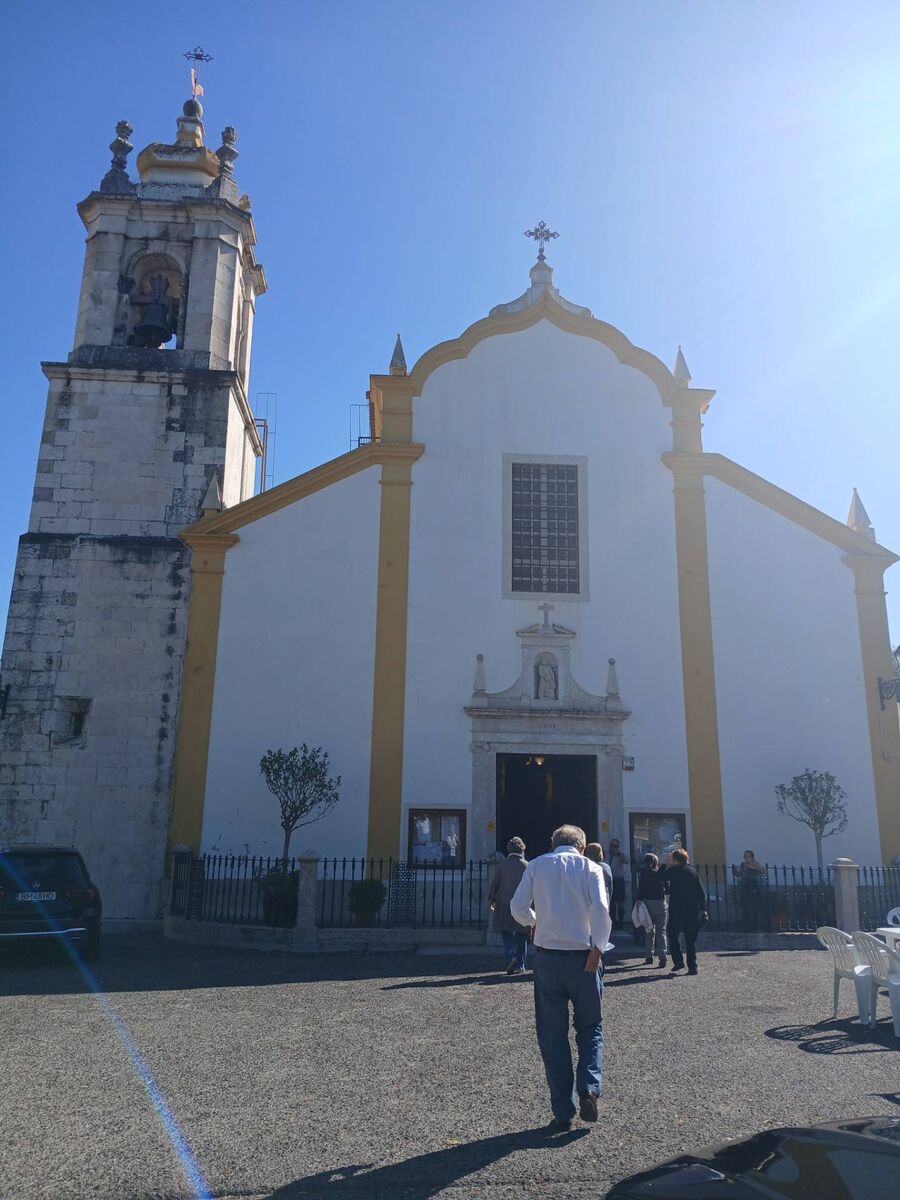
A century after that again, a fragment of the saint’s skull ended up in a church called St John the Baptist (Igreja de São João Baptista) in the parish of Lumiar just outside Lisbon in Portugal.
The story of how that came about is told in ‘The Bones of Brigid’, a documentary made by independent radio and TV producer Orla Riordan to be aired on Kfm radio on Monday.
It is one of several Brigid-themed celebrations taking place all over the country this weekend and a beautiful example of how contemporary women — and men — are reclaiming our matron saint.
And not just here, but in Portugal. As Orla Riordan, owner of Capel Island Productions Ltd., explains: “I was fascinated to learn that many of the women of the parish of Lumiar were called Brigid, or versions of this.
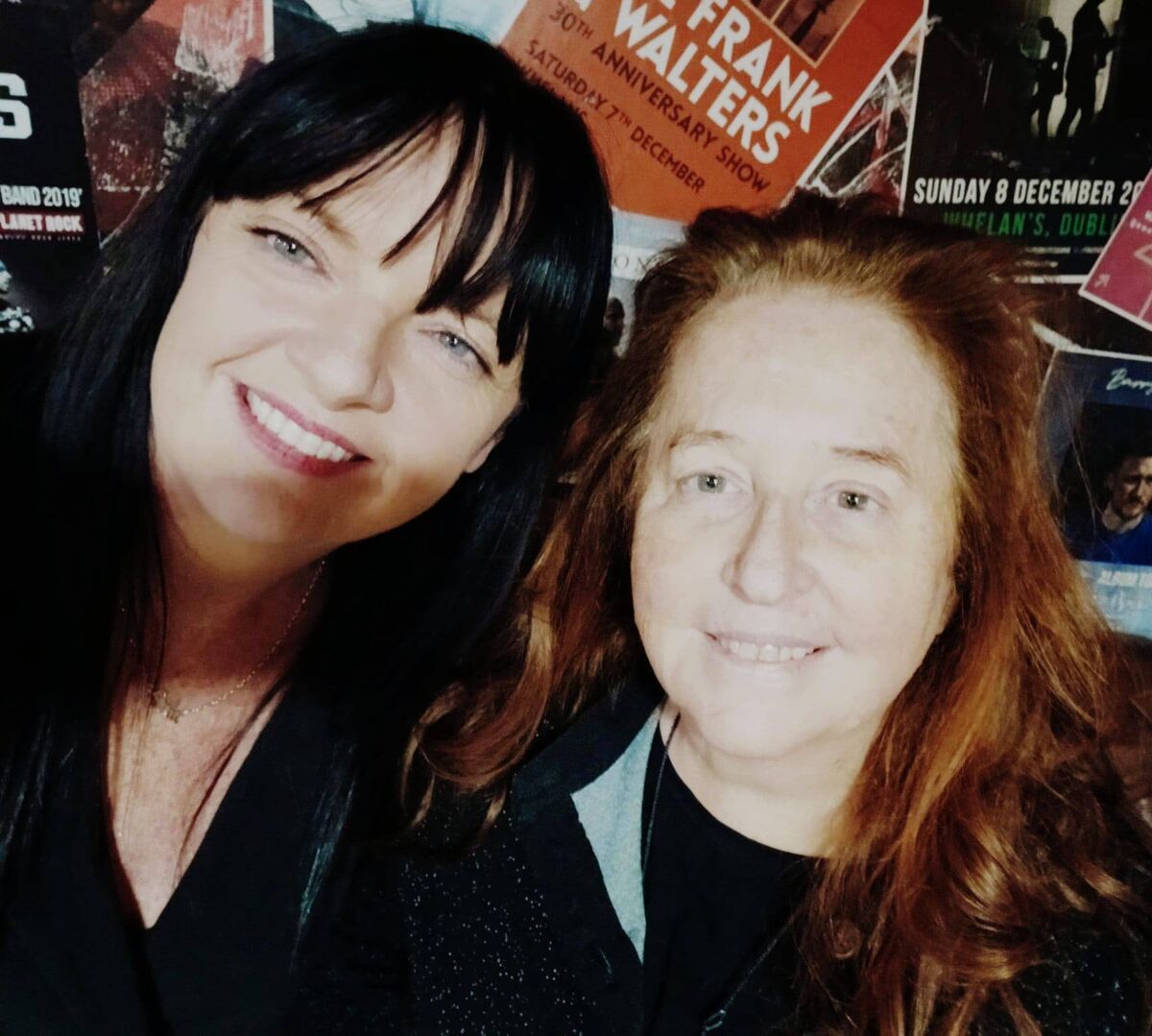
“When I left Lisbon, I was filled with a deeper understanding of why St Brigid’s message has reached so many people outside of Ireland. It is one of kindness and compassion to others — the parishioners of Lumiar welcomed me in like a long lost friend.
“The more I learned about her, the more I realised that she was a trailblazer who fought for the rights of the poor and who resolved conflict peacefully — all done in the 6th century when cattle were valued more than women.”
Thousands will flock to her home county this weekend for the Brigid, Spirit of Kildare festival. Thousands more will celebrate her in the capital as part of Brigit: Dublin City Celebrating Women, the festival founded by Alison Gilliland when she was Lord Mayor of Dublin in 2022.
Whatever you are doing, I think it safe to say that the whole country will rejoice in the Brigidine bank holiday, introduced in 2023.
Let me leave you with one last celebratory miracle which resonates in these storm-lashed days. One day, while grazing her sheep, Brigid was drenched in a heavy downpour. When she got home, she hung her rain-soaked cloak on a sunbeam to dry.
How cool is that? If only we could find a sunbeam.
CONNECT WITH US TODAY



Be the first to know the latest news and updates