Sarah Harte: Too many parents are failing to teach their children basic respect
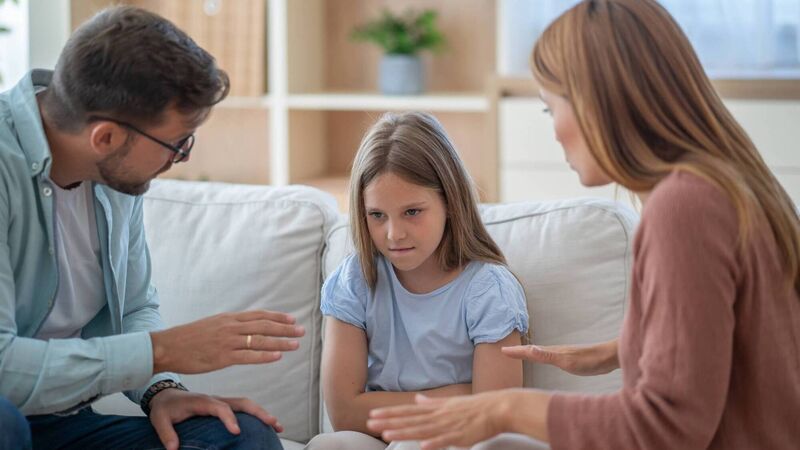
Parents today do listen to their children. However, mothers and fathers must also be able to say 'no', and help them develop respect for others, including teachers. Picture: iStock

It's easy to critique other parents when out of the parenting trenches and off the frontline of the teenage years, which can be hairy. Senior citizens tend to look back with rose-tinted glasses.
Comments along the lines of “in my day, people showed a level of basic respect” can be irritating, given that there was a time in Ireland when young people showed respect out of fear.
Parents of someone of my age were brought up in an authoritarian style when there was a casual culture of violence. One boomer related that in mid-20th century Ireland, it was entirely normal for old people to gleefully ask him, on the way home from school, how many slaps he got.
Capricious brutality was normal. Violence was in schools, in institutions, and often in the home, hidden away in the bosom of the holy family.
Gen X (my gang) got a watered-down version of that authoritarian style. We had a lot of personal freedom because helicopter parents were thin on the ground. We were allowed to make mistakes and learn the consequences.
Corporal punishment in schools was banned in 1982. I remember being in detention late one night when an enraged teacher (my resting face was often irritating to authority) clearly longing to smack me asked me if I’d ever been smacked. I replied no, to which her response with burning eyes was “more’s the pity”.
It was not all bunnies and roses.
Open communication was not big. The emotional piece was often overlooked, and squads of my generation are now in therapy, realising that quiet resilience doesn’t necessarily get you over the line.
Parenting is dynamic and ever-changing. So here we are supposedly, with a more evolved understanding of not just mental health but children’s rights in a more civilised society.
And yet Big Tech has come for our children with a different kind of online violence. Social media, porn, and perverts are invading our children’s bedrooms. Parents live with stressors and challenges that would have been inconceivable to previous generations of parents.
We live in an unimaginable world where we debate how to “engage” with obscenely wealthy tech titans, about an AI tool Grok built into X, used to create and circulate sexualised imagery of children, as well as deepfake images of adults using “nudification”.
The mind boggles.
The PSNI is currently investigating claims that deepfake sexualised images of schoolgirls in a grammar school in Armagh were created using AI and shared among pupils. It remains to be seen who made those images, but it is traumatic for those girls.
It’s entirely legitimate, in fact urgent, to point the finger at Big Tech, but might we also, as parents, have to look in the mirror?
Two other news items in the last fortnight have made me wonder what impact parenting styles might have on teachers — the unsung heroes of society — and the implications for wider humanity.
The teaching profession is undergoing a rapid transformation when teachers must meet multiplying responsibilities and evolving challenges, including those posed by new technologies, online porn, and the misogyny it pushes.
The first was a column by my colleague Jennifer Horgan. She wrote about what it felt like to be a female teacher on the frontline dealing with misogynistic young males.
Always a very balanced columnist, her righteous anger was palpable.
She spoke about the disdain some male pupils showed toward middle-aged female teachers:
It’s a sad indictment of culture, which may or may not include parenting.
The second item was last Friday’s report that a Co Antrim school suspended a group of 19 male teenage pupils for “disruptive and disrespectful behaviour”.
Some substitute teachers refused to teach, and female teachers went home in distress. The female principal was encircled by a ring of boys and spoken over at assembly.
One detail from the reports stood out: Despite their children’s behaviour, some parents questioned their children’s suspensions. However, parents have a right to get to the bottom of what did or didn’t go on.
We live in a time when we listen to children’s voices, and that is a good thing. When boomers were growing up, their parents always took the school’s side. That approach was similar when I was growing up, too, though not quite so absolutist.
One of my best friends has recently retired from teaching. She has spoken about how, over the course of her long teaching career, the pendulum swung wildly from parents automatically backing the school towards a situation where a teacher sends ‘a note home’, and parents immediately assume the teacher is wrong.
Validation of children and shielding them from critique outweighs their necessary correction.
Traditional authority is eroded to the point that the child’s subjective viewpoint is prized over external standards.
My guess is that some parents in Antrim may reflexively have taken their children’s side because a certain type of modern parent believes their child is always right.
I haven’t yet read a unifying explanation for the phenomenon of the parent with a near-pathological belief that their child can do no wrong.
But one theory is that harsh treatment spawned a generation of parents who, in reaction to authoritarian parenting, would rather die than say ‘no’ or ‘cop yourself on’ to their darlings.
Also, we have seen the rise of individualism with a “my child is special” belief.
One psychologist I read argued that when young people struggle, they should not be viewed as bad kids doing bad things, but rather as good kids having a hard time. Half of that sentence is true: Kids aren’t bad when they do bad things, but they need to be clearly told what they have done is bad and why.
Another view posited about so-called ‘gentle parenting’ is that “children are whole human beings, not future adults in training but people worthy of respect right now”.
Yes, they are worthy of respect, but they are also in training to be future adults.
Once, we ignored children’s rights. Are we now ignoring children’s responsibilities to teachers, the community, and society?
Surely, children must be taught hierarchies. How you treat your teacher, or how you interact with a garda for that matter.
We are not talking about the blind, cowering obedience beaten into earlier generations. We are not talking about shutting down a child’s voice. We are talking about a balance between rights and responsibilities and teaching young people to navigate the world with a basic level of respect for their fellow human beings.
I would have thought insisting on respect for your teachers is a core component of the parenting job.
Sometimes, as parents, that means saying to offspring unequivocally, “I love you very much, but understand me when I say your behaviour is entirely unacceptable. There will be real world consequences for this behaviour.”
Franklin D Roosevelt said: “We cannot always build the future for your youth, but we can build our youth for the future.”
That task must start at home.
Read More
CONNECT WITH US TODAY



Be the first to know the latest news and updates