Clodagh Finn: Radio days — The friendship forged near ‘Jacob’s Ladder’
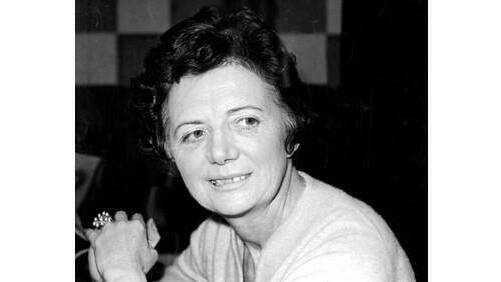
Bríd Mahon was an author, a BBC scriptwriter, a theatre critic and a vital member of the Irish Folklore Commission, which assembled one of the biggest collections of folklore in Europe during its 35-year history.

As RTÉ returns to the GPO to mark the centenary of Irish radio, it seems like the perfect moment to recall a friendship between two creative powerhouses — one well-remembered, the other less so – that began in the station’s corridors, near ‘Jacob’s Ladder’.
Bríd Mahon, the folklorist who, among many other adventures, once ate fish and chips with JRR Tolkien, had just arrived in the station when she bumped into Maura Laverty, playwright, novelist and broadcaster.
The entrance to the radio station, then on the top floor of the GPO, was on Henry Street and, as Bríd tells us, the lift “creaked and groaned and got stuck between floors so often that it was nicknamed Jacob’s Ladder” [the stairway to heaven in Biblical Jacob's dream].
It was 1942. Bríd had recently started (poorly paid) work as a typist in the Irish Folklore Commission and, to earn some extra cash, she submitted a 40-minute historical drama to Radio Éireann, or 2RN as it was then.
Quite by chance, she encountered Maura Laverty, who was already an established journalist, writer — and banned author. They became the best of friends.
HISTORY HUB
If you are interested in this article then no doubt you will enjoy exploring the various history collections and content in our history hub. Check it out HERE and happy reading
As Bríd recalls in her wonderful memoir (Mercier Press): “She was older, sophisticated, travelled and suspect. Her books, like the works of Frank O’Connor, Kate O’Brien, Seán Ó Faoláin and indeed almost every worthwhile author, had been banned by the Irish censor.”
Although she didn’t know it then, Bríd Mahon herself would go on to become a successful author (one of her children’s books was optioned by the Walt Disney company), a BBC scriptwriter, a theatre critic and a vital member of the Irish Folklore Commission, which assembled one of the biggest collections of folklore in Europe during its 35-year history.
As a twentysomething in 1942, though, she was a bit bemused when the national broadcaster booked her for a six-month series called . In doing so, it also cast her into the centre of the capital’s cultural life.
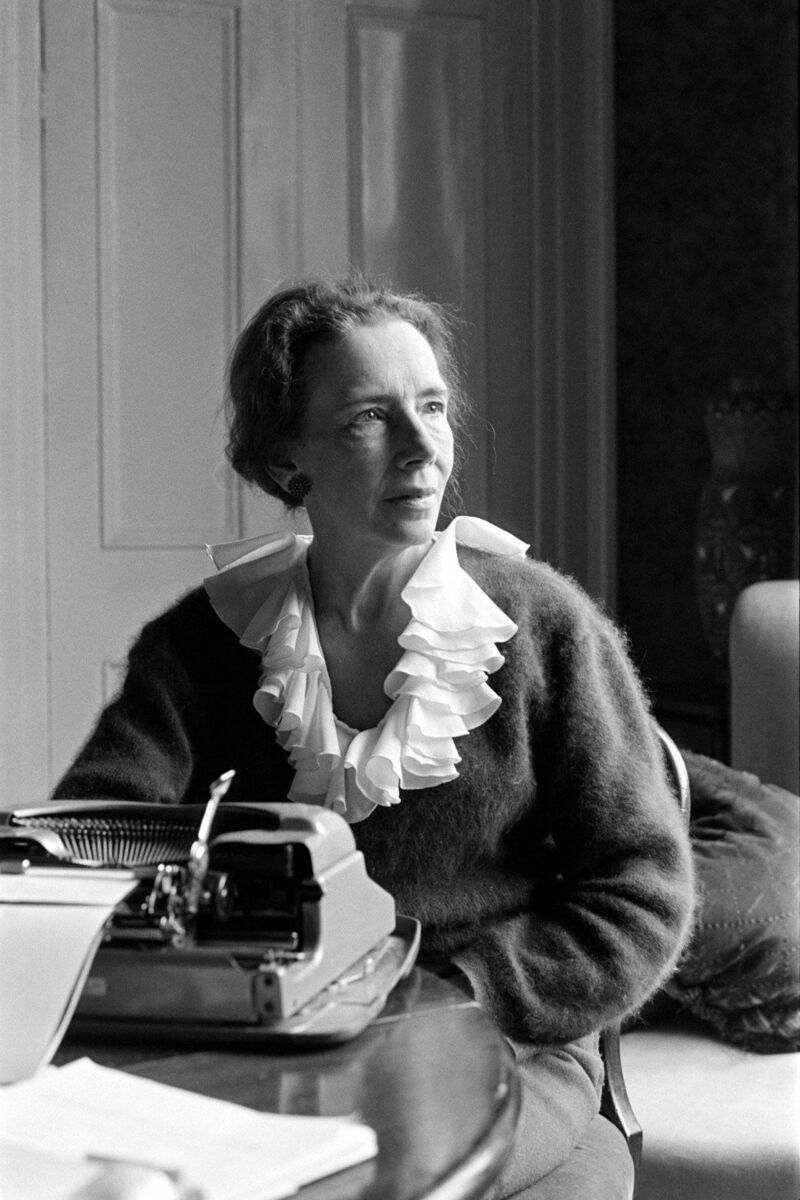
Over the next decade, she got to know many of the actors who featured in her work. Her memories of that time are fascinating. Her favourite actress, she writes, “was Siobhán McKenna, with her fund of stage gossip and wicked wit”.
There are many other insightful, funny and gossipy snippets about the early days of radio, but it is Bríd Mahon’s account of her friendship with Maura Laverty that is most affecting.
The two women shared a deep interest in folklore — and food.
Maura’s interest in the latter, and in particular, cooking, was absolutely infectious as Bríd recounts in the most delicious detail. One night, Maura invited her to dinner but it was ruined when she had to work late at the commission.
When she eventually arrived, an understanding Maura whipped up a Spanish omelette, something she had learned to make while working as a governess in Spain in the 1920s.
The dish ignited an interest in cooking in her guest, and Maura lent her a sheaf of recipes that would later became (1960), the book that was once in every Irish kitchen.
Maura is probably best remembered as a cookery expert, but she was a woman of many talents. For instance, she scripted RTE’s very first TV soap opera , which was based on her play of the same name.
The friends’ discussions on food prompted Bríd to delve into the commission’s archives to find early Irish literary references to food and drink. Her research was later published in her 1991 book, .
“I only regretted that Maura [who died in 1966] was not around so that I could dedicate the work to her with love and gratitude,” she later wrote.
The mutual inspiration in their rich friendship is evident but so too is the wild craic they had together. Or that’s how it seems to me after reading the account of Maura Laverty’s time as a governess in Spain through her friend’s eyes.
I can imagine the squeals of laughter as Maura recounted how the Spanish elite learned to speak English with a thick Irish brogue thanks to their Irish governesses.
“‘It was funny,’ [Maura] said, ‘to hear… the six-year-old heir to a dukedom complaining to his Antrim governess, “Miss, thon boy’s after taken me wee ball”, or the eight-year-old Marquess de Rio Tente giving his sweater to Miss Barry of Cork with the complaint: “Will oo keep an eye on dis, I’m dead out wid de heat”.’”
The two friends must have also laughed heartily when Maura confessed she had been instantly sacked for wearing a scarlet swimsuit to play beachball with a couple of male admirers. It might not have been quite so funny at the time.
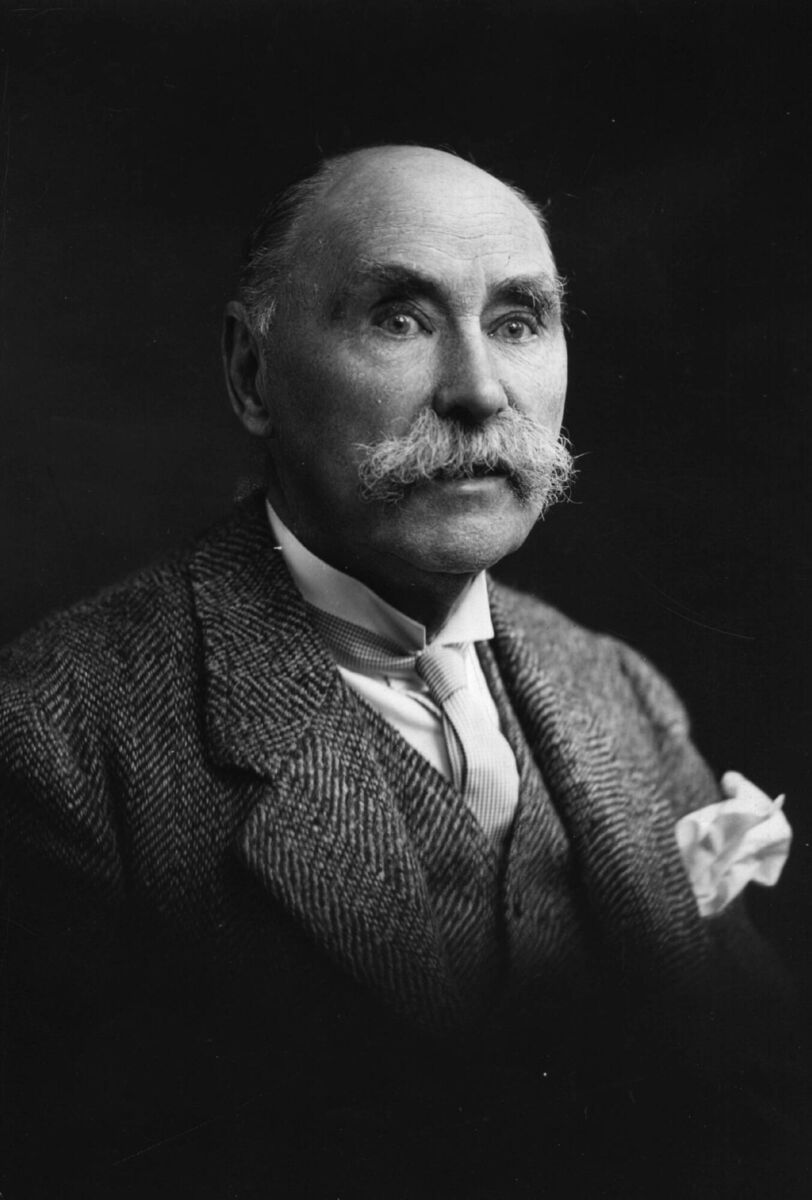
There’s a reminder in Mahon’s memoir too of the importance of a kind word. Maura once showed her friend the letter from Brendan Behan which she kept in her purse for many years.
“Brendan at the time of writing [1944] was a political prisoner and wrote from Cell 26, Arbour Hill Military Prison, thanking her for the great enjoyment she had given them with [her first novel published in 1942].
“Some of the inmates of the Hill,” he wrote, “had clubbed together to buy the book and had taken it in turns to read it. And God help me, altho’ I was last I had it longest.” He urged Maura to keep up the good work.
Speaking of good work, Bríd Mahon always wanted to meet JRR Tolkien, author of . When she finally met him, she asked if he had modelled Bilbo Baggins, the central character in , on Mr Badger from Kenneth Grahame’s . This is what he said:
“Without batting an eyelid, he told me that he had come across Bilbo Baggins’s memoirs by chance in a densely written and obscure manuscript in the Bodleian Library in Oxford.”
The conversation turned to ancient Irish food and Tolkien’s admiration for Seán Ó Faoláin’s work. In an attempt to bring both together, Bríd said she would cook corned beef — which gets favourable mention in medieval manuscripts — and invite Seán Ó Faoláin along so the famous British author could meet him.
The supper party was a disaster, in Bríd’s eyes anyway. The turf fire wouldn’t light, Seán arrived late and wasn’t chatty and the corned beef was so tough it was fit only for Smaug, Bilbo’s dragon.
All was not lost, however, as she met Tolkien again at a more successful gathering. On the way home with another friend, Tom Dunning, they stopped to have fish and chips. Tolkien insisted they were wrapped in newspaper because he believed the printer’s ink gave them a distinctive flavour.
The trio later strolled along the banks of the Grand Canal, eating ray and chips, before retiring to an all-night ‘greasy spoon’ on Baggot Street to discuss the survival of ancient pilgrimages.
I would like to have been a fly on the wall when Bríd Mahon told her friend Maura Laverty about that night.
On a final note, as we’ve been reminded this week, Douglas Hyde, first president of Ireland, officially opened 2RN on January 1, 1926. But as Bríd reminds us in the introduction to her book, Hyde was also a man with a deep interest in folklore.
He was appointed first professor of modern Irish when the National University of Ireland was set up in 1908. His passion inspired one of his students, Séamus Ó Duilearga, to follow a path that led him to become director of the Irish Folklore Commission. And Bríd Mahon’s boss.
It’s not really that Ireland is such a small place, more that we are still rediscovering the joy of unexpected connections and so, so many stories. Here’s to retelling them in this centenary year of Irish radio. And here’s to the friendships forged along the way.
CONNECT WITH US TODAY



Be the first to know the latest news and updates