Paul Hosford: Why no younger candidates are stepping up for the presidency in 2025
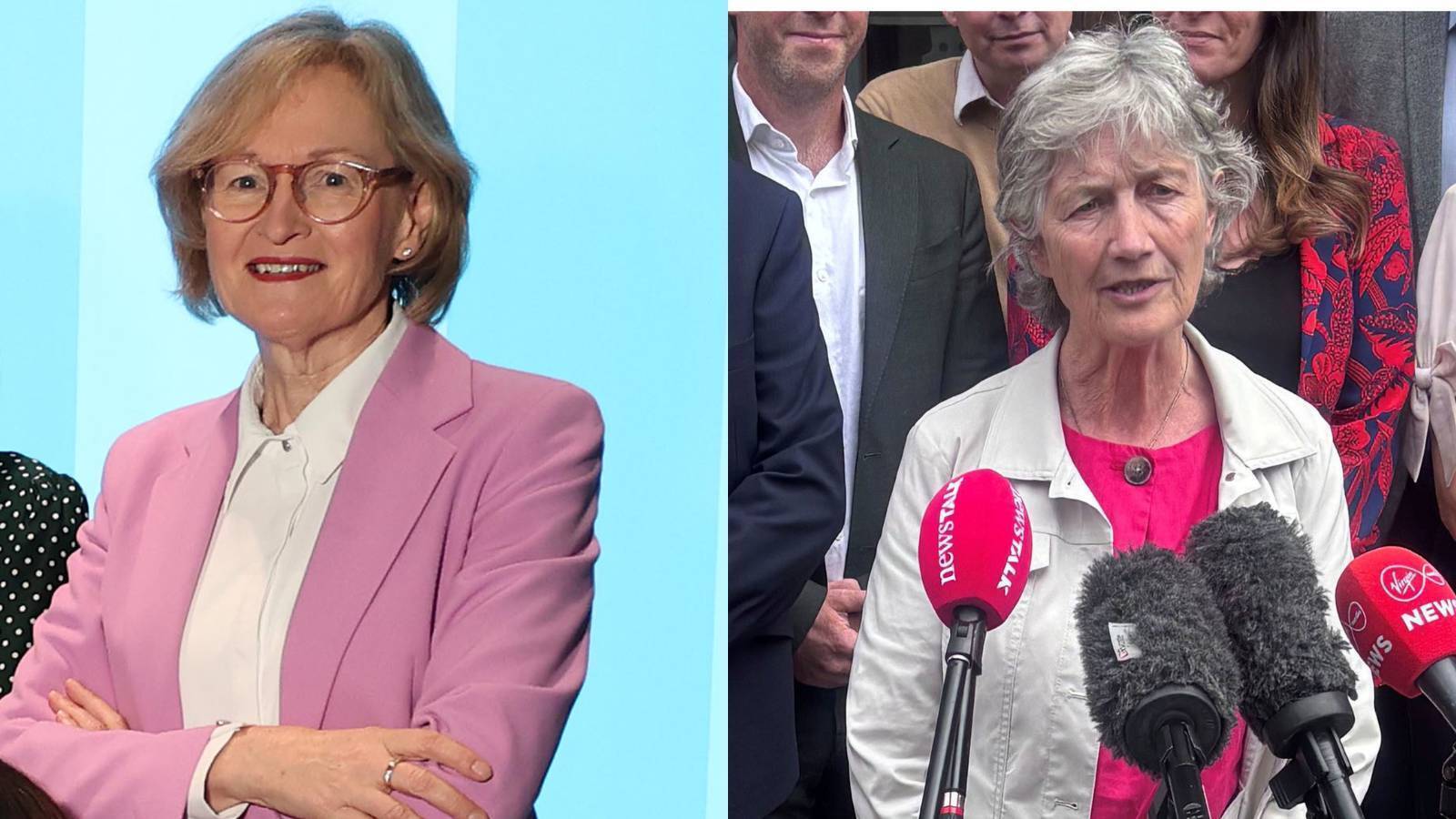
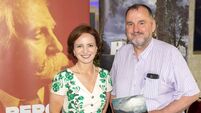
Mairead McGuinness and Catherine Connolly: The two confirmed candidates for the presidential election in 2025 so far.

One of the stranger and lesser noted moments in recent Irish political history came a little over a decade ago.
As Ireland became the first country in the world to legalise same sex marriage by popular vote, we affirmed that all love is equal. It sparked joyous scenes across the country and was a message that Ireland was a more inclusive space, one which valued everyone equally.
However, on the same day as that referendum passed, one which enshrined in the Constitution the belief that everyone in Ireland was entitled to the same treatment, the public massively rejected the idea that a 34-year-old could be President.
A second referendum that day on lowering the age of any prospective President to 21 was trounced by 73.1% to 26.9%.
In truth, the running of that referendum was either a mistake or a conscious effort to give the public the chance to kick a government which had enacted austerity measures without risking the marriage equality vote, possibly both, and it played out in a campaign that was more non-existent than lacklustre.
Indeed, possibly the only argument which cut through in any real way was a warning that should the referendum pass, we could be looking at President Jedward.
The defeat of that referendum was very much a secondary concern to most that day, as marriage equality set the stage for the push for a repeal of the Eighth Amendment and civic groups led a coalition and energised a generation into the kind of action that only comes from the ground up, but can shake establishments.
The repeal campaign came just months before the 2018 presidential election and with Michael D Higgins both hugely popular and a long-time proponent of abortion rights, there was never any question of an insurgent campaign to unseat him.
But seven years later, it seems strange that nobody who led those campaigns, or came to the fore in them, is being mentioned as a possible candidate for the Áras.
While recent campaigns have seen figures from civic society - Adi Roche, Joan Freeman, Derek Nally - and from the world of business - Sean Gallagher, Peter Casey, Gavan Duffy - launch campaigns of varying degrees of success, with just months to go in this year's election, those wishing to see themselves on the ballot have been few and far between.
Obviously, a part of that comes down to one of the factors in why the age-based referendum was held at all. The vote on lowering the age actually had its origins in the same place the same-sex marriage vote did: the Constitutional Convention.
Running from 2012 to 2014, it was a forum comprising 100 members; 29 members of the Oireachtas; four representatives of Northern Irish political parties; and 66 citizens along with a chair. It was tasked with a number of deliberations around what is the Constitution and options for changing it.
In the end, it recommended three changes in relation to the President:
- 94% were in favour of giving citizens a say in the nomination process
- 78% agreed that citizens resident outside the state, including in Northern Ireland, should have the right to vote in presidential elections
- And 50% said to reduce the age of candidacy for presidential elections
While the third option was run and the second continues to come and go on the political agenda, the first, which was nearly unanimous, has never really gone anywhere. Under the current rules, remember, anyone wishing to run must receive the support of at least 20 members of the Oireachtas or the backing of at least four local authorities — city or county councils.
The system, by design, stops insurgent campaigns. Whereas civil society can form coalitions around social issues or policy priorities, without the backing of existing politicians, you or I have no chance of being President. Indeed, without the backing of their parliamentary party colleagues, many who would like to be President have been forced to accept it will not happen.
If you've been a member of a civic group on an issue, chances are you've clashed with political parties who hold opposing views and, even if you haven't, without a clear and overwhelming consensus coming from the public, your chances of finding 20 Oireachtas members who are free to vote for you are pretty slim.
This is a feature of the system, rather than a bug in its operation. The narrow route to a nomination is supposed to, in theory at least, act as something of a quality control mechanism. If someone who wants to be nominated has to first survive the body politic, the logic is that they are generally considered to be worthy of at least the public's consideration.
That failsafe has proven itself in the eyes of its proponents this year, warding off at least one potential candidate's entry onto the ballot. Of course, then, there is the local authorities.
While these are controlled up and down the country by coalition parties and opposition parties in different configurations, they are free to make their own minds up.
In 2011, 25 councils gave nominations to candidates who made it to the ballot, while in 2018 it was 17 councils with Laois giving journalist Gemma O'Doherty her lone nomination. Convincing councillors to break with party nominees is possible, but takes work and a platform.
But the narrow path to the Phoenix Park doesn't in and of itself explain the lack of civic and social figures being touted this time around, even speculatively. In part, it can be also attributed to a lack of major social movements since Repeal, particularly post covid.
While Repeal itself was hailed as a transformational moment in Irish history - and it was and remains felt particularly by those women who have availed of abortion healthcare in their own country and not in some far-off place - one wonders if its promise has been fulfilled, if its energy has been harnessed by the generation most associated with it, most galvanised by it.
At present, the presidential field is former European Commissioner Mairead McGuinness in the Fine Gael corner and current TD Catherine Connolly with the the support of the Social Democrats, People Before Profit and assorted independents.
Both are extremely capable, worthy candidates. But it is worth asking why, if the presidency is meant to reflect our society back to us, why is nobody younger at least trying? Ms McGuinness is 66, Ms Connolly 68.
We have had two millennial Taoisigh, but at this point it will likely be 2039 by the time someone of my generation leads the state. In 1997 when she was elected, Mary McAleese was 46. In 2011, Mr Higgins was 70.
There is, of course, the argument that the head of state needs a track record. That they need to have shown the Irish people that they can lead. That is a fair argument, but surely a conversation about the role can be had?
Is it a reward for a life of service or a statement of who we are? Can it be both?
There is a chance that one of the existing candidates or one unforeseen captures the imagination and electrifies supporters into a positive and energetic campaign. I hope that they do, because the alternative will be an election where even fewer than the 44% who voted last time will turn out.
The conservation of energy is an absolute law, but it is worth asking where the energy created in the last decade has gone and whether anyone can harness it to run for the Áras?

CONNECT WITH US TODAY



Be the first to know the latest news and updates