Paul Hosford: Is Jim O’Callaghan quietly winning the Fianna Fáil succession race?
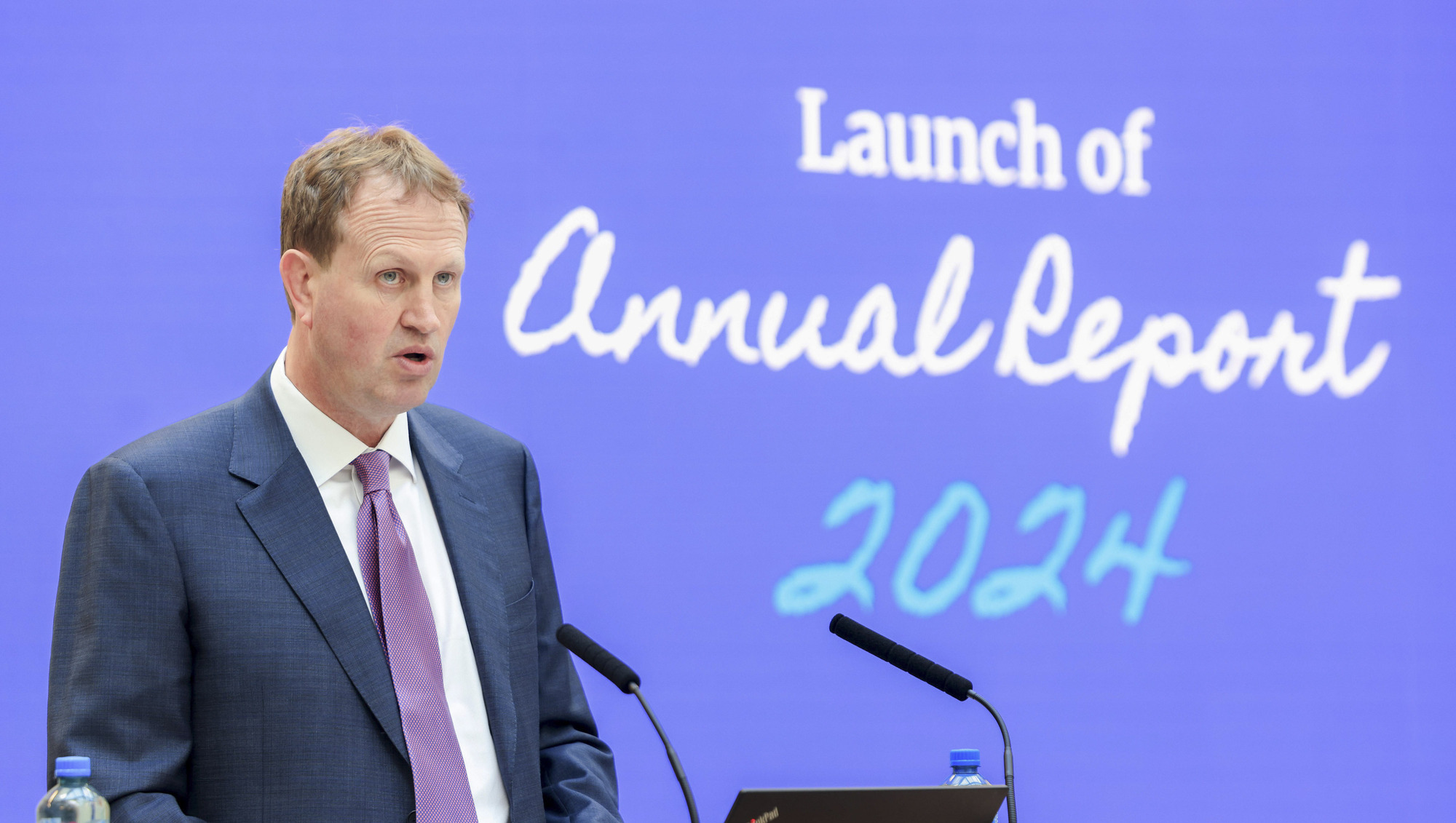
Once overlooked, Jim O’Callaghan has re-emerged as a key political figure — and a serious contender for Fianna Fáil leadership
Paul Hosford: Is Jim O’Callaghan quietly winning the Fianna Fáil succession race?

Since his appointment as minister for justice, Jim O’Callaghan has worked quickly to establish a public narrative that he is on top of his brief — particularly in the area of migration. Picture: Andres Poveda

If a week is a long time in politics, five years is equivalent to a geological era.

Go back a little over five years, and Jim O’Callaghan was the forgotten man of Fianna Fáil.

Overlooked for a Cabinet position — ostensibly in favour of a party interloper in Stephen Donnelly — O’Callaghan rejected Taoiseach Micheál Martin’s offer of a junior role, saying he would focus of strengthening the Fianna Fáil party.

“At a time when many of our party’s senior members will be pre-occupied with their ministerial duties, I want to devote more time to strengthening our great party by making it a more attractive option for young voters,” he said at the time.

“I also believe Fianna Fáil needs strong voices outside government who can ensure that our party’s identity can be protected during the term of this coalition government.”

The pitch was clear as O’Callaghan set off on a covid-era road trip around the country, meeting party members and trying to position himself as their voice.

The man inside the tent willing to shout out

However, somewhere between covid lockdowns and a lack of spotlight, the assumption that the Dublin Bay South man would emerge as the obvious successor to Micheál Martin burned out without much incident.

For a party which internally argued it needed to be stronger in Dublin, the idea of a Dublin TD with huge name recognition being somewhat sidelined was odd

Micheál Martin’s quiet control of his party and a lack of real openings meant that, for the most part, O’Callaghan was relegated to the backbenches for the last Dáil term.

As the Cabinet reshuffle in 2022 came and went, there he remained — a high-profile TD who was a good media performer, but had to work to find something to perform. Fast forward to the election campaign of 2024, however, and something had shifted.

While in 2020, Micheál Martin was perceived to have effectively ended any leadership aspirations O’Callaghan would have had by publicly offering him a junior role, knowing he would refuse, he was a key player in the 2024 campaign which saw Fianna Fáil come out the largest party in the Dáil.

A large part of this was his utility in justice debates leading up to polling day, even sparking a sexism row with his now Cabinet colleague and predecessor in the role Helen McEntee.

“We need to build on the good proposals that Fianna Fáil came up with before,” he told RTÉ’s Prime Time, effectively dismissing Ms McEntee’s work as being built on his own ideas.

'Far more effective'

When McEntee shot back that she had “turned up” and he had refused the call to the junior ministerial ranks, O’Callaghan was quick to say that he had been “far more effective as a backbench Fianna Fáil TD… than being the minister’s assistant”.

It was combative and hardly collegiate, but many in his party found it energising. Many attributed, unfairly in many cases, much of the coalition’s woes to McEntee’s performance.

But this went further, in that it showed clear water between the two parties in a campaign which forced them to run on a joint record.

Yet, Even his leading role in the campaign did not make him an automatic pick for many who read the cabinet tea leaves, with then junior justice minister James Browne among those who were tipped as potentially pipping him to the justice seat at Cabinet.

At one point, an agreement where O’Callaghan would simultaneously be Attorney General and a TD was floated in the press — though this was never really seen as a runner. Due to his closeness to the justice role — he is a qualified barrister — O’Callaghan was seen by many as only fitting that role in the run-up to the announcement of ministers, which ended up being both delayed by a Dáil row and truncated by the incoming Storm Éowyn, though nobody who got the call to Áras an Úachtaráin that evening seems to have minded the short victory lap.

When O’Callaghan’s name was confirmed as justice minister, it marked an arrival at Cabinet that some felt was delayed. He has set about making up for lost time

Perhaps aware of his predecessor’s last few months under the microscope, since his appointment as justice minister, O’Callaghan has worked quickly to establish a public narrative that he is on top of his brief — particularly in the area of migration.

Within weeks of the Government being formed, he was keen to publicise the fact that Ireland had commenced deportation flights to Georgia. A second flight followed weeks later. While these were an initiative kick-started under McEntee, and led to relatively small numbers of people being deported, they impress upon the public the idea that O’Callaghan is on top of the issue.

Of course, some of this is circumstance — data shows there has been a 43% drop in applications for Ireland’s asylum system here, compared to the same timeframe for last year — and he has been helped by the fact that large scale protests around individual sites for international protection services applicants have not been much of a feature in this year’s discourse.

However, O’Callaghan seems aware of perception as much as reality. To that end, his language is tougher than McEntee’s.

In an early radio interview he said “too many people” are coming to Ireland seeking international protection who are not entitled to it. He upped that ante last month by proposing new laws around international protection that seeks to cut processing times and majorly cuts the usage of oral hearings, as he said the existing asylum laws in Ireland were not fit for purpose.

Law and order

O’Callaghan has leaned into the perception that he is a man of law and order and, to a large extent, it has worked.

He has not fallen out with the garda rank and file members, but an ongoing struggle to fill the Garda Commissioner’s job remains.

Likewise, a pair of high-profile stabbings in Dublin early in his tenure did not become the crises they might have and this week’s extradition of Sean McGovern, a senior figure in the Kinahan group, from Dubai was something put in train months ago — but was good news that happened on his watch.

His decision this week to give a State apology to the family of Shane O’Farrell was the right thing to do, and avoided a subject which O’Callaghan had been vocal on from the backbenches becoming a problem in Government.

All of this has seen O’Callaghan re-emerge as a name mentioned as a Fianna Fáil leader in waiting, whenever  Martin departs

Privately, members of the party believe that O’Callaghan has shown the political instincts that the party leader would need and is considered a better media performer than his most obvious rival: Public expenditure minister Jack Chambers.

Those close to Martin insist he is going nowhere for now — he has over two years left of his second term as Taoiseach — but there is also a recognition that he cannot be the leader forever.

Sources in the party say that O’Callaghan’s challenge is to avoid becoming a lightning rod for the coalition — easier said than done from a beefed-up justice portfolio which once again includes migration.

Along the way, he has to avoid controversies in a department which has derailed potential party leaders on a number of occasions, many through scandals and controversies which nobody could have foreseen.

While many consider him the current leader in the non-existent-but-still-kind-of-happening-but-also-not-happening race to succeed Martin, that is based largely on a good start to his time in justice.

However, as the saying goes, a good start is half the work.

More in this section

Revoiced

Newsletter

Sign up to the best reads of the week from irishexaminer.com selected just for you.

Cookie Policy Privacy Policy Brand Safety FAQ Help Contact Us Terms and Conditions

© Examiner Echo Group Limited