Sarah Harte: Camogie skorts row exposes deep-rooted sexism in Irish sport
Despite growing participation, women in Irish sport still face entrenched inequality, outdated dress codes, and institutional resistance to change
Sarah Harte: Camogie skorts row exposes deep-rooted sexism in Irish sport

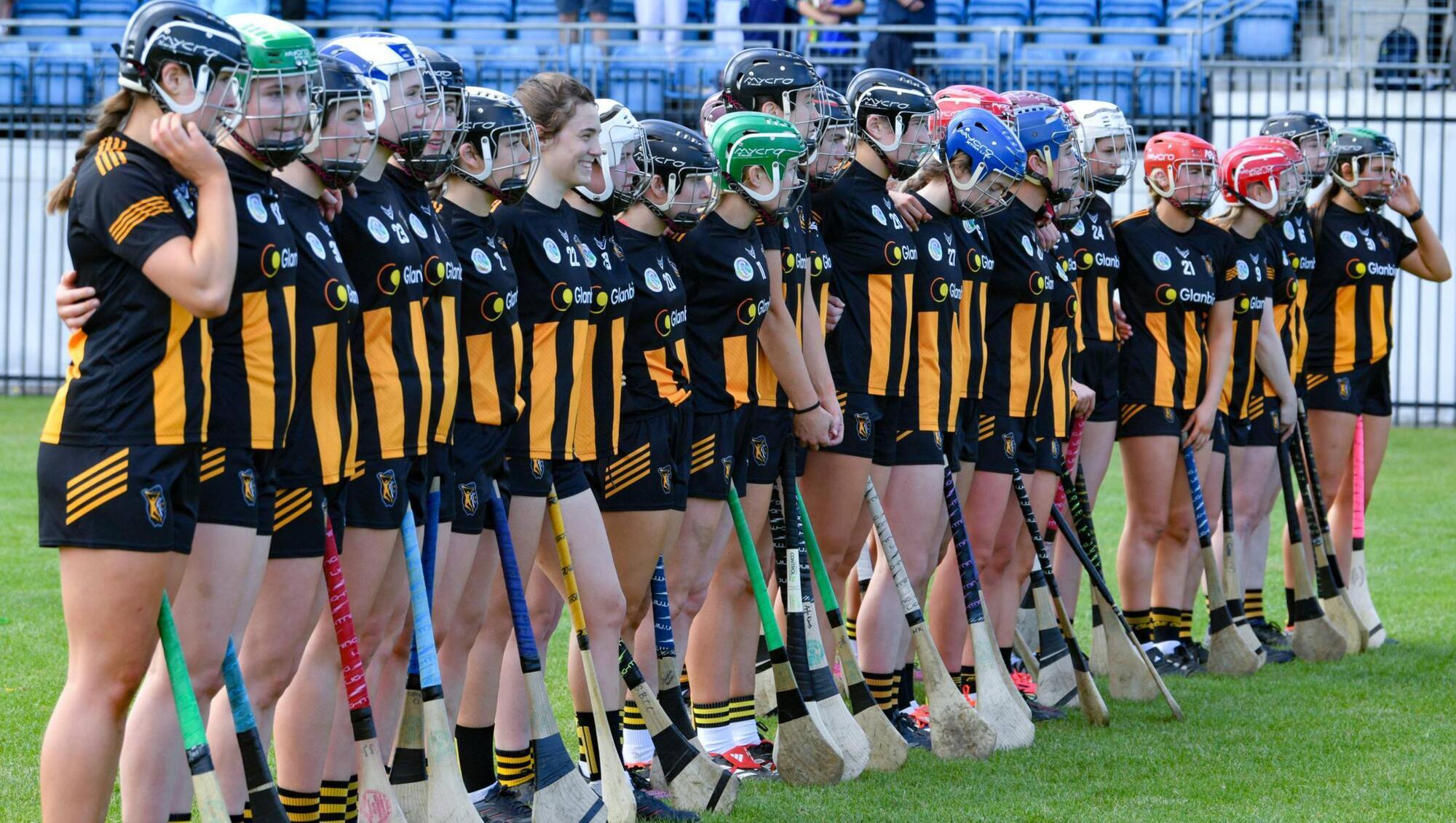
Kilkenny players wear shorts before the Leinster semi-final meeting with Dublin. Picture: Paul Lundy

We’ve come a long way since my primary school days when girls had to sit inside sewing while, through the window, we saw the boys playing football outside in the field. It was a form of torture, particularly during the summer months.

My clear memory is resentfully threading my needle through a grubby square of material, with my fingers slipping with perspiration in a hot classroom. I wanted to hurl my wicker sewing basket through the window and stick pins in my eyes. 

Happily, there has been a massive upsurge in girls and women playing sports. Yet, a persistent undercurrent suggests certain team sports are still primarily a male domain, a space owned by men that women athletes encroach on.

Certainly, those at the top are still ignoring women’s voices. At the weekend, the Leinster senior camogie semi-final was almost called off when 15 Kilkenny and 15 Dublin players wore shorts in protest instead of the required skorts.

Eventually, the rule-breakers were forced to swap their shorts for skorts before the match could begin. Absurdly, they may still face sanctions for wanting to wear shorts. This is not the first protest of its kind. The whole episode was very revelatory.

Skorts, by the way, look like skirts but have built-in shorts. They are impractical and uncomfortable. I remember wearing a pair. On the surface, you may think it’s no big deal whether you wear skorts or shorts, but the skorts debacle is just one manifestation of an enduring conflict involving gender, power and parity.

Does the fact an overwhelming number of female players want to wear shorts not count for anything? A paper published last week by the Gaelic Players Association (GPA) revealed 83% of the 650 inter-county camogie players surveyed said they would prefer to wear shorts, or players should have the option to choose. 

A quote from the GPA paper states: “Player welfare should be prioritised over established norms and traditions in decision-making.” 

As the paper's authors and many female GAA players and officials will know, established norms and traditions are ultra-powerful and hard to root out.

Men have always received preferential treatment in GAA due to a substantial institutional bias favouring them as athletes. 

As Tyrone All-Ireland winner and primary school teacher Conor Meyler said: “Our largest sporting organisation is still run by men and boys for men and boys, then there’s a kind of ripple effect into society.” He has spoken about how "shockingly" women are treated in GAA.

Meyler is currently undertaking a PhD in sport, leadership, and gender, examining the lack of equality for women and girls in GAA and Irish sport in general. He won’t be short of case studies rooted in real life regarding gender inequality.

The Ladies Gaelic Football Association, the GAA and the Camogie Association are separate organisations, although a plan is under way to integrate them by 2027. 

GAA structures are inching towards 40% female representation on their Coiste Bainistíochta, or management committee, because they have no choice. It’s driven not by some desire for equality but because the Government has threatened to reduce funding if the quota isn’t met. 

Amy O'Connor of Cork in action against Abby Walsh of Clare during the Munster Senior Camogie Championship semi-final match last month: You may think it’s no big deal whether you wear skorts or shorts, but the skorts debacle is just one manifestation of an enduring conflict involving gender, power and parity. Picture Brendan Moran/Sportsfile

You can bet while the Government may hold sporting organisations like the GAA to account for their lopsided power structures, it will take far longer for the cultural beliefs and attitudes underpinning this entitlement to change. The archaic attitudes don’t just come from grey-haired dinosaurs on county boards.

Meyler has received abuse from other players for the subject matter of his PhD, including homophobic slurs, and quips he should be playing for the Tyrone Ladies. What stands out is how femininity or being queer is regarded as a way to insult someone. 

These hyper-masculine locker room values start young and go hand in hand with a particular type of sporting mentality that too often remains unchecked and ultimately damages girls and boys.

This ingrained sexism doesn’t just pertain to the GAA. Sports culture generally remains highly gendered, with a powerful male-female binary and ingrained misogyny. To take just one example, The Belfast rugby rape trial exposed troubling views about women both within rugby, sport and in the broader culture.

In 2018, Paddy Jackson and Stuart Olding walked free from Belfast Crown Court after they were acquitted following a trial on charges of rape. However, a series of degrading and deeply offensive WhatsApp messages shared between players and reported as part of the trial proceedings introduced many of us to the term “spit-roast”. 

They also lifted the lid on a sexist and misogynistic outlook in dark corners of rugby school culture that spoke about partying with “Belfast sluts”.

The great irony is that sports is one arena that has enormous potential to encourage a redefinition of strict gender stereotypes by showing men and women engaging in the same sport.

Girls have as much right to the benefits of sports as boys. Apart from physical and mental health, these include a feeling of belonging, resilience, and self-belief that builds confidence in all areas of life.

Laois’ camogie players became the latest team to join the skort protest by lining out in shorts before the throw-in of Monday’s Leinster intermediate camogie semi-final. Picture: Laois Camogie

In reality, various actions must be taken simultaneously to achieve real change for girls and women in sport. Sportsmen like Meyler, a valuable ally with a significant contribution to make, must speak up and champion women’s sport. Gender inequality in sport is not a woman's or girl’s issue. It should concern us all.

The quotas imposed by the Government will help because women's achievement of power at the management level may help correct male bias in sports dominated by men.

However, the media also has a role to play, and male media allies are surely part of any solution.

Despite greater female athletic participation, men’s sports dominate mainstream media. The relative invisibility of girls and women playing sport in the media reinforces the view that sport is not for girls and impacts how audiences view male and female athletes. 

If you show more girls and women playing sport, you normalise it, assign it value, and encourage greater respect for female sport and participation. You have to see it to want to be it.

A report published earlier this year, Gender Equality in Media Representation of Sport in Ireland, written by Dr Anne O’Brien of the Department of Media Studies in Maynooth in collaboration with the Federation of Irish Sport found women in sports media are either not represented at all, stereotyped, or have their achievements downplayed consistently across media platforms. None of this is positive for attracting girls into sport and, crucially, retaining them.

The solutions won’t come from quotas and media representation alone. At a fundamental level, this is a question of societal and cultural change. 

The hard work is engaging early with young girls and boys, teaching them lessons on how to play sports healthily while preventing young boys from developing unhealthy attitudes towards women and the LGBTQ community. 

Male mentors in this area have a huge role in teaching core values of respect, inclusivity and integrity, which should be an integral part of any game as well as teaching ball skills and boosting player process.

In the meantime, the Camogie Association must finally pay players the basic respect of listening to them on the skorts issue. In 2025, it’s not a lot to ask.

More in this section

Revoiced

Newsletter

Sign up to the best reads of the week from irishexaminer.com selected just for you.

Cookie Policy Privacy Policy Brand Safety FAQ Help Contact Us Terms and Conditions

© Examiner Echo Group Limited