Gareth O'Callaghan: Finding purpose and meaning in life is where we must all begin
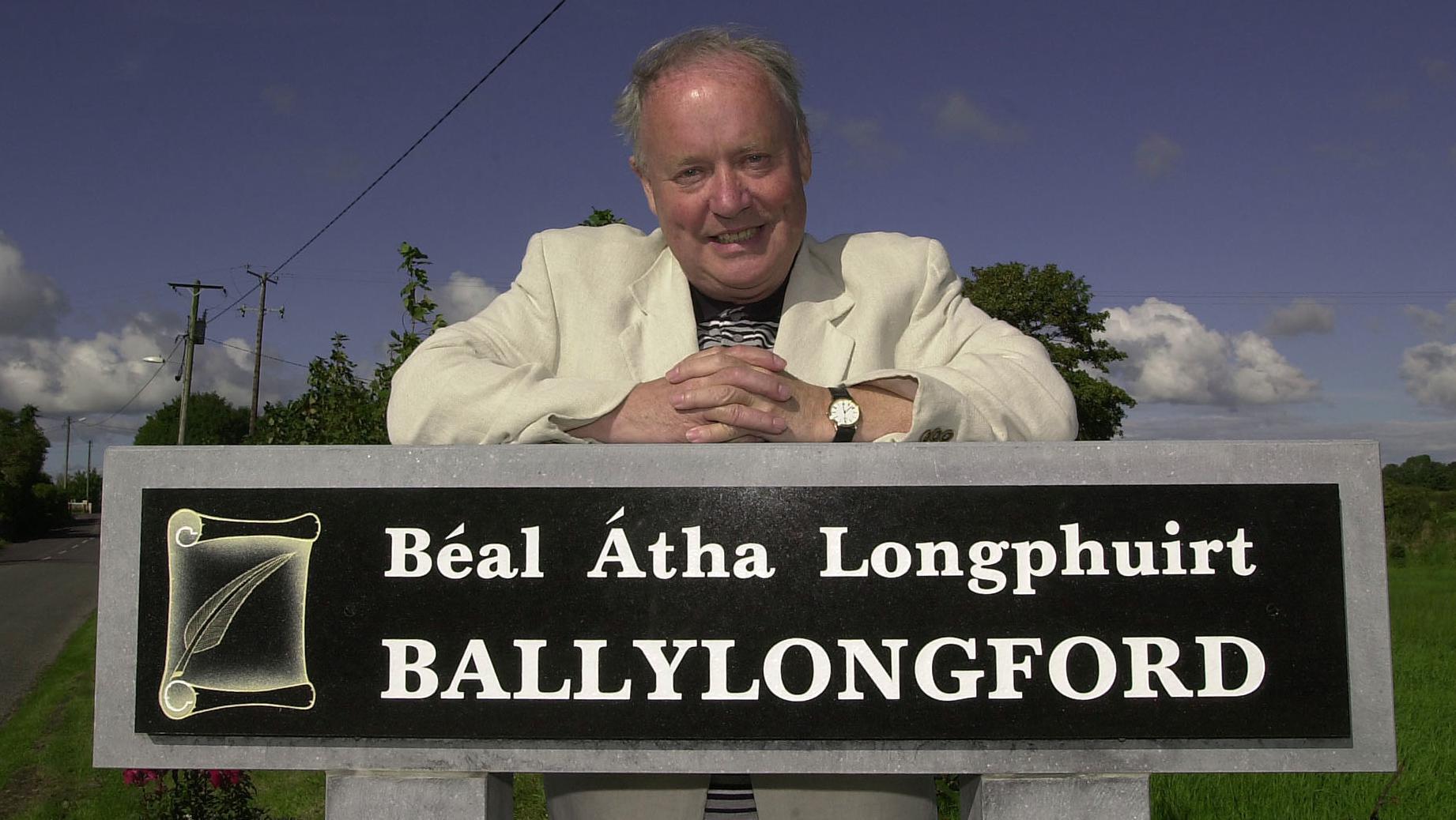
Brendan Kennelly was one of the country’s most popular poets and a former professor of English at Trinity College Dublin.

Some years back, I fell in love with poetry. Books of poems by Seamus Heaney, Mary Oliver, Wendell Berry, and others take up space on my bookshelves, and in my travel bag for my train journeys.
However, my favourite poet over the years has been Brendan Kennelly, the roamer and raconteur. Kennelly hailed from Ballylongford in County Kerry. He was a professor and lecturer in Modern Literature for many years at Trinity College Dublin.
During his time there, he always commanded packed audiences in the largest lecture hall in the building — standing room only. Students and staff from all over the college would flock to his lectures just to hear him read from the great modernists in that hypnotic voice that became his emblem.
If ever there was a poem written by Kennelly with January in mind — or any time of year when loss and loneliness become unbearable — with guidance and determination at its heart, it has to be 'Begin'. It speaks with a gentle command from one lost soul to another: “Though we live in a world that dreams of ending, that always seems about to give in, something that will not acknowledge conclusion insists that we forever begin.”
Despite its best intentions and challenges, January is a dark and depressing month, with unpredictable weather — as we experienced this week; a month of days filled with a desperate effort to do most things that would otherwise be done without a thought or a care on brighter days, and a deep longing to be left alone with the self. As a friend often says at this time of the year, “Come back and talk to me next month.” Another friend likens January to a month of non-stop grieving. If anything, the poem points to a deep vulnerability that we all share, which can often present in a more painful sense than at other times of the year.
Its theme is based around loss and new beginnings — as though those beginnings gently but painfully come to life through the grief of that loss.
Usually at this time, I take down the poem and read it aloud. Begin this new year, feel the sense of purpose in knowing that loss is a big part of life, and then commit to begin, and begin. Its healing is in its commanding voice that all of us need to hear.
As I read it last week, my wife, Paula, reminded me of another time and place when Kennelly’s poem transformed an unexpected moment of raw grief and vulnerability, played out before a nation of television viewers, into a moment of restoration.
It happened on a Friday night in 1997. Kennelly had been chatting on about his writings, and his life experiences that were the underlay of his poetry. He was a regular on the show, much loved by Gay Byrne.

His was the uncanny ability to be as witty as Brendan Grace; then, in a second, to be as eloquently powerful as his friend Seamus Heaney. He was a rare gem, in that he was both gregarious when he chose to be, but also reclusive, as though his own life story had given rise to this haunting poem. Kennelly walked the talk of vulnerability. What happened that night became one of the most memorable moments of live television history. I am reminded of it every time I read his poem. It was both shocking — Gay Byrne called it “grotesque” — and heartwarming in hindsight.
Back in those distant days, the car giveaway was the highlight of the show, with thousands of viewers’ handwritten postcards packed waist-deep into a huge platform trolley that took centre stage in the studio in the final moments of the show each week. Gay would invite one of his guests to select a card, whose sender would then be phoned live to be told they had won the much coveted car. Gay invited Brendan to pick a card from the trolley that night. His first choice wasn’t there when Gay made the phonecall. The woman who answered gushingly explained that her husband had been out playing tennis and hadn’t arrived home yet.
Gay moved quickly onto Kennelly’s next choice of postcard, and that was when the anticipation turned to shock — in a way I’ve never before, nor since then, witnessed on Irish television. I still recall watching it, straining to hold my breath, trying to make sense of what was unfolding, and if it was morally appropriate to allow the call to continue.
In hindsight, it couldn’t have been anything other than what it was, namely shock, vulnerability, and grief born out in the most public way. Gay found himself talking to Rita Hanley, from Togher in Cork city. He was in his usual happy-giddy mood as he introduced himself, when suddenly the enthusiasm died as quickly as a power cut turns to darkness. She told him her daughter Lynda had been knocked down and killed the previous evening while walking to a local bus stop.
Lynda had posted the winning card on behalf of her mother that Gay was now holding. Just at that moment, a camera focused on the shocked studio audience, each one sitting perfectly still, many of them with their heads bowed, their hands closed, some of them crying.
Perhaps it was a testimony to Byrne’s ability to empathise without knowing anything about this woman who had tapped into that deepest of places that we all know but rarely share with the light because of an intense fear that it could consume us. He often did it on his radio show, but this was live television where there was no hope of disguising the shock and disbelief. Here was an audience and its presenter consumed, and there were no words to describe it. Rita Hanley retained a dignity and respect as she spoke gently that perhaps belonged to that generation; but where to from there for the presenter? It was an impossible situation for Byrne to move beyond without sounding flippant or even callous — to simply wish her well and say goodnight.
The final moments in that tragic conversation were given over to Brendan Kennelly — a man not unfamiliar with the depths of sorrow and loss. As he often did, it was a chance for him to find meaning in poetry, which transcends the conscious mind where we look for sense and meaning in dark times but fail to find any. In those final minutes as the show was drawing to its end, the paths of a mother and a poet crossed in a moment of synchronicity: two strangers finding each other in the beauty of a poem that suggests that inspiration for all our new beginnings comes from our need to connect with other people.
He spoke the verses aloud, eloquently, facing into the camera. It was a moment where you could not but believe that a poet who spoke the vulnerable language of loss and renewal was meant to be present that night to assure a mother whose daughter had just died that time — however long — would wait for her to begin again:“Begin to the loneliness that cannot end, since it perhaps is what makes us begin.”