Gareth O'Callaghan: We're all in this together? Tell that to those living in absolute misery
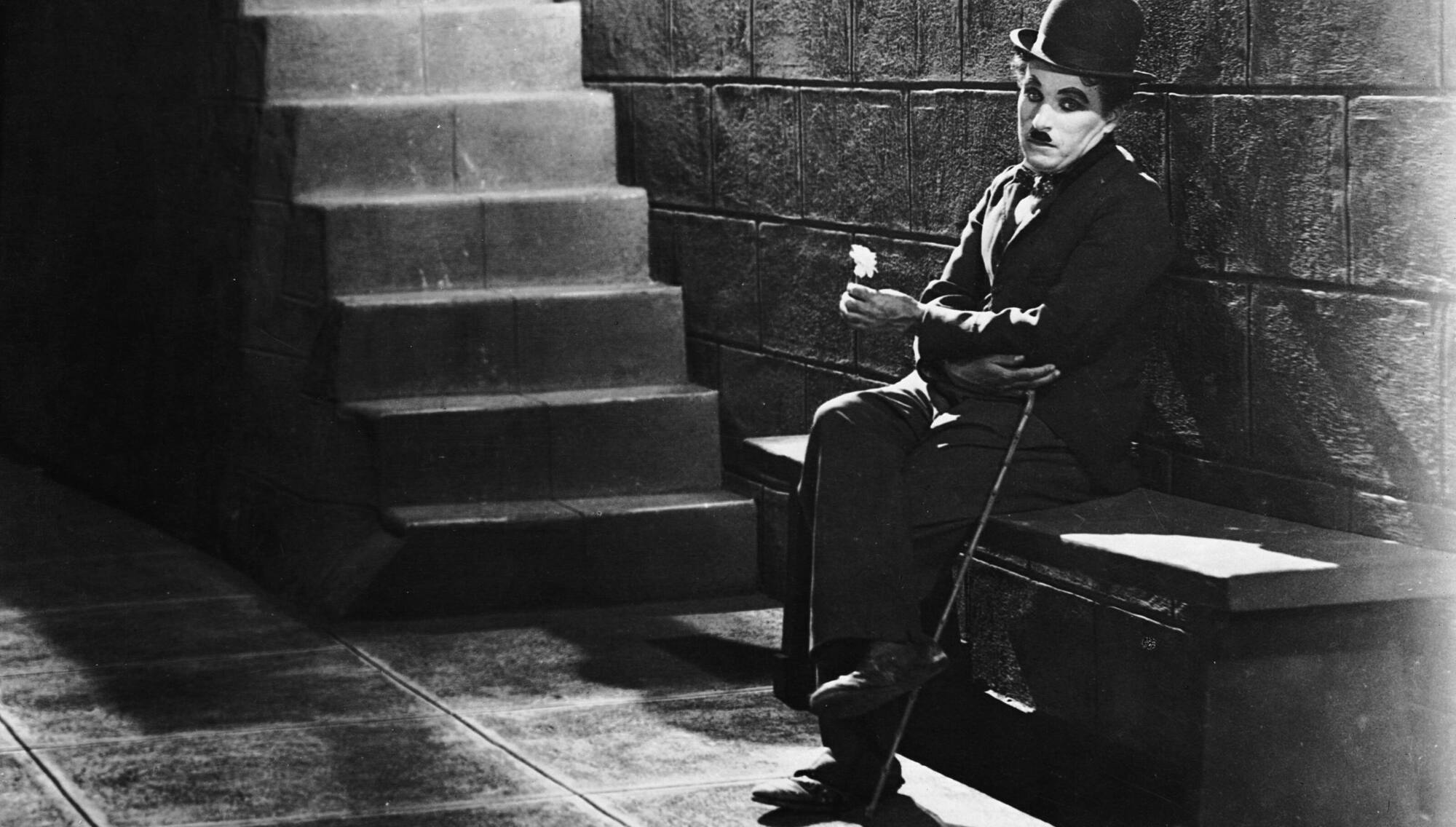
Charlie Chaplin sitting forlornly at the bottom of the steps in a scene from the film 'City Lights'. When we think of the poor, many of us are reminded of Charlie Chaplin and Charles Dickens, and those childhood memories of two memorable characters who found themselves destitute. Picture: Getty Images

On a cold Friday night back in March 2020, Ryan Tubridy stood in an empty television studio facing the cameras, and in a solemn and concerned voice he uttered the words: “We’re all in this together”.
His words that night had a certain ring of empathy to them, mixed with a sudden call to solidarity. If he had been pleading with viewers to join the army, the queues the following morning would have been longer than they were for Oasis tickets.
Such can be the rare but engrossing impact of live television. The show registered one of its best ratings of the year because, let’s face it, we were all prisoners in our own homes.
In hindsight, we all know now that his almost-saintly consensus of national harmony during that confusing and scary time was a load of tosh, the stuff that fairytales are made of; because in the months that followed it became evident that we were about as close to being “all in this together” as we were to a united Ireland.
In fact, Ireland became more divided and divisive during the pandemic than it was in the Civil War. Within six weeks, the wheels had come off the country.
Thousands of people, both north and south, died unnecessarily because of an absolute disregard by policymakers to make unpopular decisions that could have protected our island, the same decisions that Australia and New Zealand did undertake.
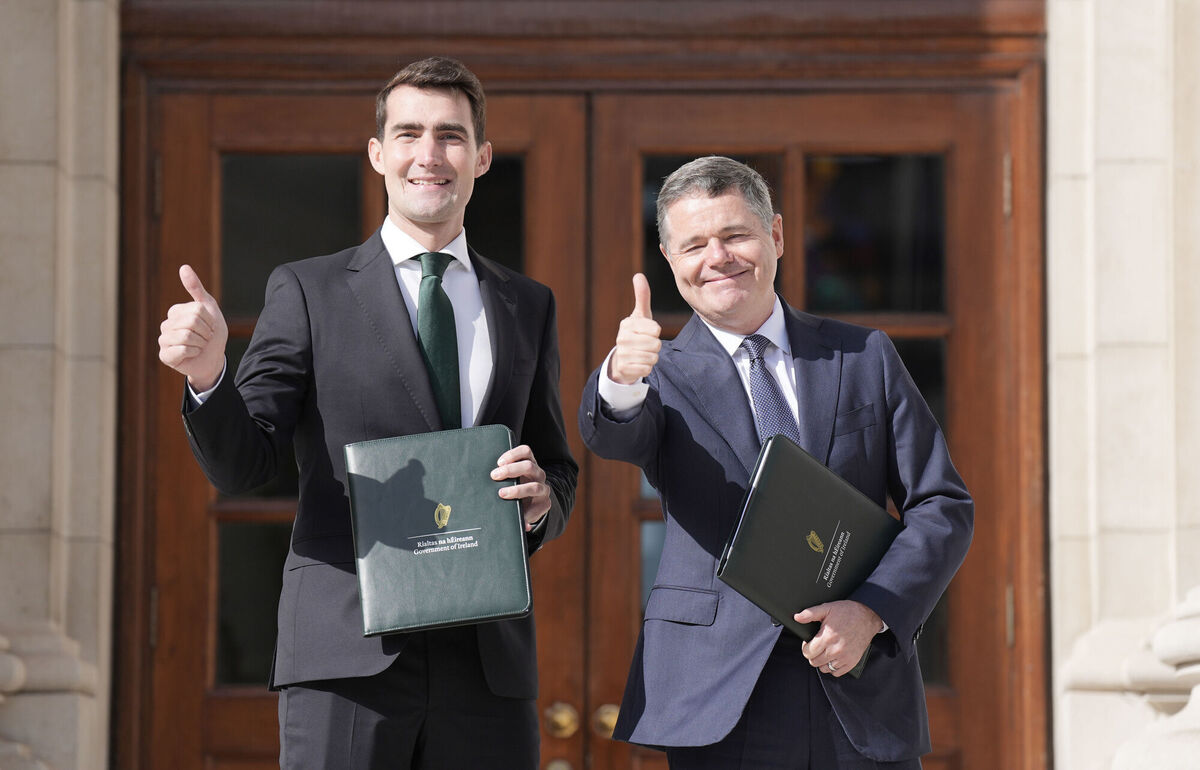
By the time both ministers stepped outside the doors of Leinster house for a quick photo opportunity on what many regard as the first day of the toughest time of the year, each giving the snappers a thumbs up as though it was a job well done, we all knew what to expect due to well-timed leaks.
Having taken my time to read through the budget details, it’s clear to assume it’s aimed at a wide electorate: one for everyone in the audience. But on deeper analysis, it becomes clearer how those who are facing another winter of hardship are ignored — giving with one hand, but taking with the other.
This was a budget designed to win votes. It was the Coalition’s perfectly pitched attempt — more so Fine Gael that Fianna Fáil — to stay in office. It was bribery, simple as that: the Government giving a classic tutorial in palm-greasing.
In the US, it’s always been accepted that the rich vote for the Republicans, while the poor vote for the Democrats; not unlike here, where the better-offs tick the boxes of Fine Gael, while those who are barely getting by from week to week vote for Labour, or Sinn Féin, or People Before Profit. Or, at least they used to, until those of a left wing political bent were perceived as being no different to what those voters find repulsive about FG and FF.
Using the word ‘poor’, I was reminded recently, is no longer politically correct. (Yawn.) But what word should I use to describe people who are so financially banjaxed that they often consider suicide as their only way out of the abysmal misery that comes with having little or no money, or bad health that they can’t afford to have treated; or children who have such horrendous illnesses, whose lives are miserable, and whose parents have to become their full time carers, mostly without any social welfare support?
When we think of poor, many of us are reminded of Charlie Chaplin and Charles Dickens, and those childhood memories of two memorable characters who found themselves destitute; the hapless, flat-footed tramp — a legend of the black and white cinema days, and the orphaned Oliver Twist, who became synonymous with Victorian London poverty
In real life, both men’s characters were influenced by their own separate experiences of childhood poverty. Chaplin spent time in workhouses, while Dickens witnessed his own family being convicted and sent to a debtor’s prison.
As a 12-year-old, Dickens was left to fend for himself without his parents and siblings, living in a tiny room while working in a boot-blacking factory in the Strand area of London for six shillings a week. “No words can express the secret agony of my soul,” he later wrote, “as I sunk into this companionship… and felt my early hopes of growing up to be a learned and distinguished man, crushed in my breast.”
He never told anyone about the poor times, except his biographer John Forster.
Poverty carries the stigma of shame, which is maybe why we don’t use the word poor, because “there but for the grace of God...”
We like to believe that Victorian poverty and the shocking history of our own beggarly past are behind us. Far from it.
But why should I have expected to hear any good news to support those who have been evicted from their homes by landlords who have been supported by this government — when you consider that some of those sitting in the Dáil chamber listening to the budget recently are wealthy landlords themselves?
Or those parents who choose to go without their dinners in the evening so their children can eat well before going to bed in a house that can’t afford heating?
Or those kids who arrive into school on an empty stomach? There was nothing in the budget to tackle child poverty, but yet €9 million has been set aside for pouches for children’s smartphones in our schools. Surely it’s the parents who should take responsibility for their children’s phones, not the teachers?
In the words of Social Justice Ireland, in their post-budget assessment, “combatting child poverty requires more than double payments and one-off credits”.
Our system of governance here and the ways in which our government spends taxpayers’ money is doolally, and that is reflected year after year in the annual budget. Who can we hold accountable? Is there any point in even trying to answer that question?
Two friends of ours who are in their 50s have just informed us that they, along with their dogs, are leaving Ireland for good “to live in a place with a slightly better climate and bugger all Irish politics in two weeks time”. Who could blame them?
Unfortunately, for all those who visit supermarkets late at night so as not to be recognised in the hope of buying cut-priced bread and vegetables before they’re binned, whose electricity and gas bills are in arrears, who genuinely believe that this will be the sum total of their lives forever, moving to a country where the sun shines all year round is not an option. And don’t get me started about mental health, and how it has been shamelessly ignored by successive governments.
The worlds of Chaplin and Dickens are not unlike the lives of people we rarely hear about — except at budget time.
Our government would prefer that they didn’t have a voice. We’re all in this together? I don’t think so.
Have you ever seen a government minister waiting in line for 14 hours in a hospital’s accident and emergency department? No further questions, your Honour.


CONNECT WITH US TODAY



Be the first to know the latest news and updates