Elaine Loughlin: Dignified death must be debated in a dignified manner
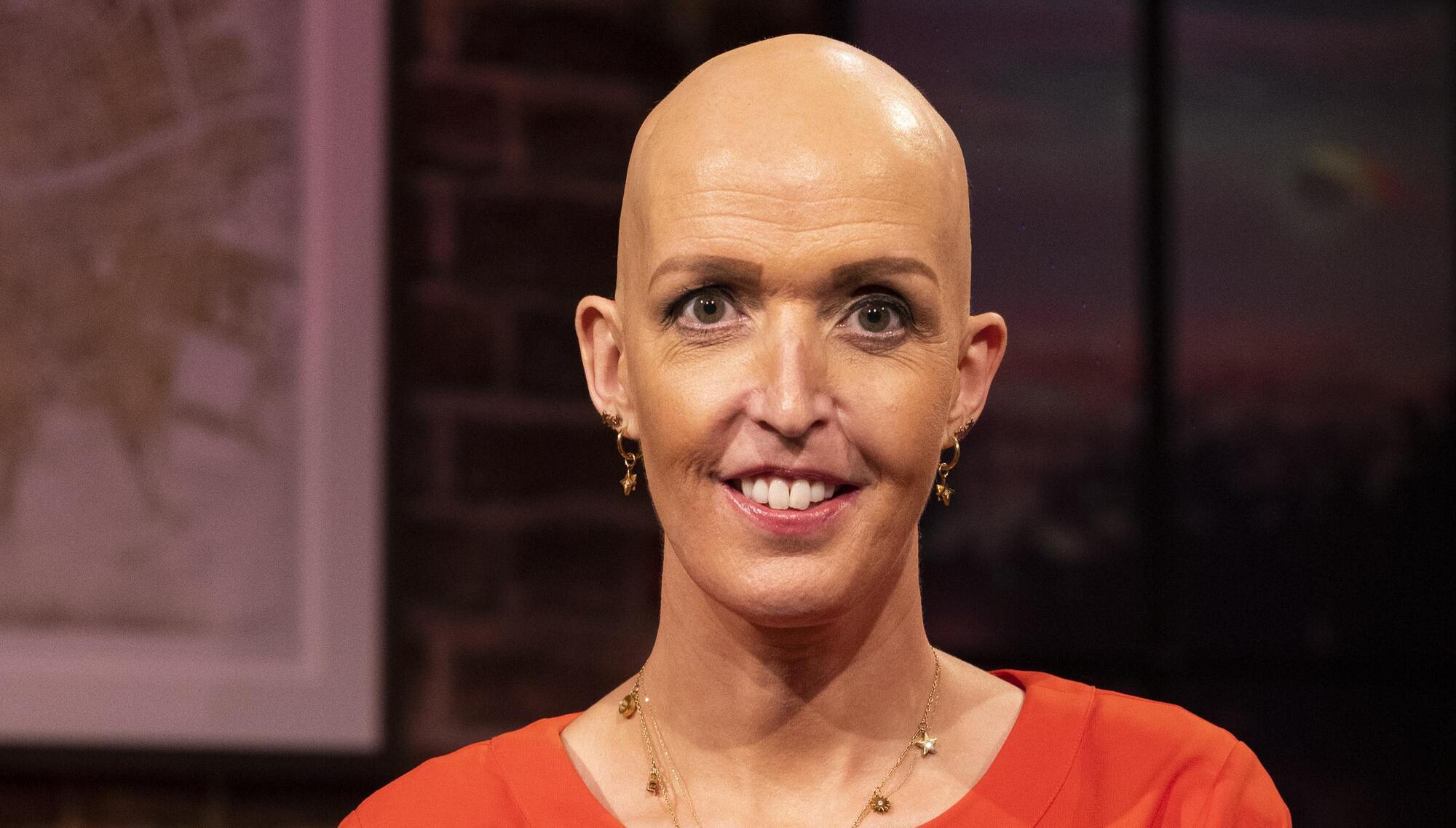
In 2021, Vicky Phelan said she was a young woman with young kids, who didn't want to die. She called on politicians to progress assisted dying legislation. 'I'd rather be well and have a shorter time frame. I'd like my children to have memories of doing stuff with me and if I die sooner, so be it.'
FOR those of a certain faith today, Holy Saturday, is a poignant and reflective day.
Jesus, having died on the cross on Good Friday, was laid in a tomb. Holy Saturday focuses the mind on death and the fragility of life.
Regardless of whether a person has a strong faith or none, death is something that none of us can escape, it’s also the next social issue that our politicians will have to confront in the coming weeks and months.
A discussion around providing dignity to those at the end of life has already shown the potential to descend into an unedifying spat which will only cause further hurt and anguish to those who have been calling for the right to die.
Politicians let this be your warning — this is not a topic that should be abused for political points scoring.
Most of us live in the hope that we will never be forced to contemplate our own end. But not everyone is fortunate enough to have a “good death”.
Those advocating for the introduction of assisted dying believe that people faced with a terminal illness or an incurable or progressive condition should have the right to choose how they die and when they have suffered enough.
Before her own passing, CervicalCheck campaigner Vicky Phelan had called on the Government to allow those with terminal illnesses the right to a dignified death.
“Just because you believe something for your own reasons, whether they’re religious or other, you shouldn’t be imposing your beliefs on somebody else,” the mother-of-two said.
Statutory right
While not included in the programme for government, the Green Party is in favour of providing a statutory right to an assisted death which would be distinguished in law from suicide, assisted suicide, and euthanasia.
The Green Party policy states that assisted dying can be defined as “a terminally ill, mentally competent adult choosing, of their own free will, and after meeting strict legal safeguards, to take prescribed medication which will end their life, applicable only to those with a terminal illness which is likely to result in death within six months”.
But others, including some in the medical profession, say that a palliative care approach and the introduction of assisted dying could be considered to run counter to the hospice philosophy which intends neither to hasten nor postpone death.
In a submission on the issue, the Irish Hospice Foundation said a more thorough investigation of all concerns should be undertaken. The organisation added that underpinning a good death is an assurance that every person will be afforded optimum access to specialist palliative care, which is not yet in place in Ireland.
Over the years, others including Marie Fleming and Gaynor French have in their final years and months fought for a right to die.
Former minister of state John Halligan first presented a Dying with Dignity Bill in 2015, but progress was halted with a change of government. Another Dying with Dignity Bill was introduced by Gino Kenny and passed the second stage in the Dáil.
In 2021, the justice committee, which had received 1,400 submissions from legal, medical, faith-based, and human rights groups, as well as members of the public, found that the bill needed greater consideration and recommended the establishment of a special Oireachtas committee.
It seems that death and how we die is even more complex than life
The special Oireachtas committee on assisted dying will meet in private for the first time to begin its work when politicians return from the Easter recess.
Chaired by Micheal Healy Rae, the committee has been asked to consider and make recommendations for legislative and/or policy change in relation to a statutory right to assist a person to end their life and a statutory right to receive such assistance.
The committee, which has been given nine months to carry out the work, has also been asked to explore safeguards and any constitutional, legal, and ethical issues as well as unintended consequences that the introduction of assisted dying might pose.
However, despite the committee not having met yet, disagreement has emerged.
Senator Rónán Mullen has voiced concerns that including a provision that would allow recommendations relating to changes to the law means the committee outcome is almost “pre-ordained” and “skews it from the outset”.
“The wording looks like almost we’re expected to assume change and to make recommendations about what change. It might be our decision, having heard all the evidence, to make no change and that we want to prevent euthanasia coming into the country in any form. So that’s the first issue that needs to be clarified,” said Mr Mullen, who has written to the committee chair about these concerns.
Fellow committee member Gino Kenny, who has been campaigning for the introduction of assisted dying for many years, has hit out Mr Mullen’s comments, claiming he is “seeking to delay the committee’s work and discredit it before it has even commenced.”
Another member, Emer Higgins, pointed out that special committees are usually established because there is a general view that laws need attention.
There would be little point in setting up a special committee on any issue if it was anticipated that members would not come up with any recommendations around legislative change.
Even the terms used have the potential to cause controversy — assisted dying, dying with dignity, assisted euthanasia, and assisted suicide are all referred to depending on the angle a person approaches the debate.
Again, Mr Mullen wants this clarification before the committee begins its work.
“Some people call it assisted dying other people call it assisted suicide. So, I would be saying that those terms need to be interchangeable, and again, the terminology shouldn’t sanitize the reality.”
Others would strongly believe that suicide is not an appropriate term and inflicts more pain on those already being forced to contemplate the life that is being snatched from them. While premature death is inevitable for many facing a terminal illness, it is not a choice they would have ever made if the circumstances were different.
Assisted suicide is for many an insulting term not based on the reality of what Mr Kenny’s Dying with Dignity Bill aims to achieve.
Leaving two grieving children behind is not a decision Vicky Phelan would ever have voluntarily made, but she also did not want her son and daughter to be haunted by the memory of her in pain and suffering.
Indeed, appearing on RTÉ’s Late Late show in November 2021, Ms Phelan said she was a young woman with young kids, who didn’t want to die.
Later, calling on politicians to progress legislation, she said: “The horrors of the treatment are often worse than the actual disease.
“I’d rather be well and have a shorter time frame. I’d like my children to have memories of doing stuff with me and if I die sooner, so be it.”
Words and actions do matter and the TDs and senators who have been appointed to the Oireachtas Committee on Assisted Dying should be hyperaware of this
They should also be conscious that while the public had meaningful and measured discussions around kitchen tables, the political debates ahead of the referendum to repeal the Eighth Amendment sometimes became distasteful, bitter, and inappropriate with some adamant that graphic content be needlessly inserted into the discussion.
The legal, social, ethical, and policy implications of legislating for assisted dying must be fully considered and a range of views both national and international sought.
Any legislation affording people the right to a dignified death must also be debated in a dignified manner.

Subscribe to access all of the Irish Examiner.
Try unlimited access from only €1.50 a week
Already a subscriber? Sign in
CONNECT WITH US TODAY
Be the first to know the latest news and updates