Maeve Higgins: For a small fish in a big pond, 'The Quiet Girl' has made quite a splash
Critics cannot praise the Irish film highly enough — but how will it fare at the Oscars?
Maeve Higgins: For a small fish in a big pond, 'The Quiet Girl' has made quite a splash

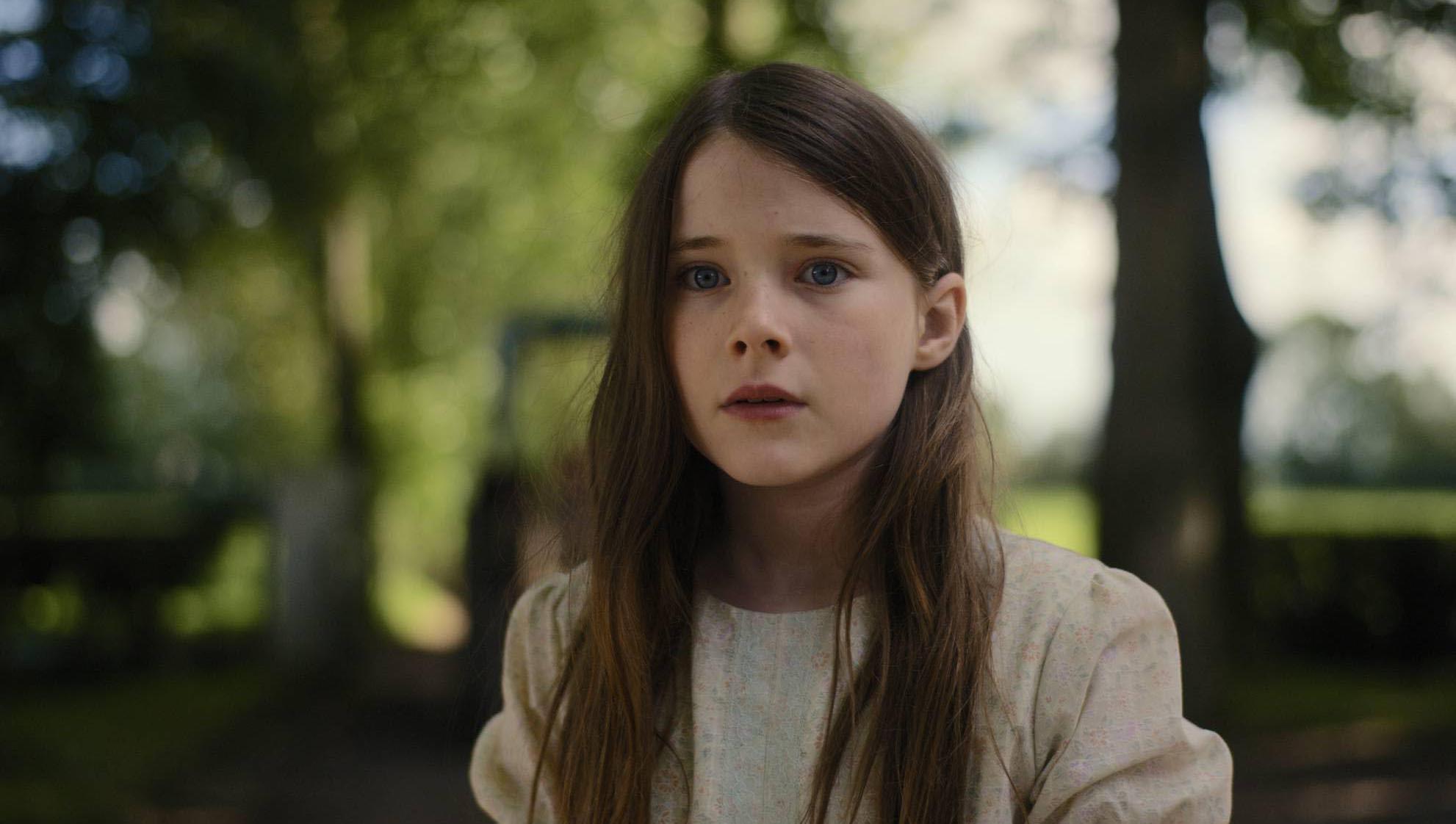
Catherine Clinch, who plays Cait, in a scene from ‘An Cailín Ciúin’ (‘The Quiet Girl’) which is one of the Oscar hopefuls this weekend.

At the US premiere of An Cailín Ciúin (The Quiet Girl) last week in a packed cinema in midtown Manhattan, I heard a number of sounds I’ve never heard in the city before.

These sounds included a spellbound silence, a collective sigh, and, most striking of all, the Irish language.

I also heard the film’s producer Cleona Ní Chrualaoi tell an amazing story about how a local funeral director led her to one of the main locations in the film, but more on that later.

The Quiet Girl is set in rural Ireland in 1981, and it’s resonating around the world now that it’s up for an Oscar this weekend.

Based on the Claire Keegan story Foster, the film is written and directed by Colm Bairéad. It’s about a nine-year-old girl named Cait who leaves her abusive home to stay with her mother’s cousin for the summer.

The cousin and her husband are an older couple and under their care, Cait thrives.

It’s a two-way street, and the couple gain a lot from having the little girl there too.

I won’t reveal any plot points here, although it occurs to me that many Irish readers have seen the film already. Some more than once, looking at the ticket sales.

Colm Bairéad with Cleona Ní Chrualaoi.

At home, people supported the film’s theatrical release in record numbers for a film in Irish. The Quiet Girl swept the IFTA awards last year, becoming the first debut feature to win best film. It also won best director, actress, cinematography, editing, production design, and original score.

I know, I know, give the other films a chance!

Here in the US with huge films battling it out for awards and acclaim, The Quiet Girl is a small fish in a big pond. That said (I promise I will stop with the fish in a pond metaphor after this) it’s really making a splash.

Critics here cannot praise the film enough. The Daily Beast did not hold back, stating: “Movies don’t come much more exquisitely heartbreaking than this.”

The Hollywood Reporter singled out the lead actor Catherine Clinch, who plays Cait: “With Clinch as its achingly vulnerable centre, the fine ensemble does unimpeachable work, all of them in sync with the film’s enveloping sense of place.”

And that’s true. In fact, that sense of place gave me déjà vu.

I sat in this fancy screening a stone’s throw from Times Square immersed in a world full of trees and Gaelige and Kimberley biscuits and felt like I’d been in it before.

It was only during the discussion after the film that I learned the film is set in the Gaeltacht in Ring, Co Waterford.

My grandmother is from Ring, and I visited there a lot as a child in the 1980s. So what I experienced wasn’t déjà vu, it was simply a forgotten memory that came back.

Speaking with Cleona Ní Chrualaoi after the screening, I told her my grandmother was from Ring. She lit up and asked if I spoke Irish.

Like so many of us when confronted with our failure at fluency in the language — even after many years of learning it — I felt embarrassed.

I stuttered that I didn’t. I wish I styled it out the way Paul Mescal famously did when he was asked about the film as Gaelige, ach go tobann, bhraith mé cúthail.

Yes, I had to google translate how to say ‘I felt shy’.

The thing is, language is and always will be political, whether that’s overt or not.

The only main character who does not speak Irish during the film is Cait’s father, played with great menace by Michael Patric. He is the oppressor, the alpha-male, the one who controls the family, and he uses only English.

The film has received widespread acclaim.

Cait’s mother is a shell of a woman, and she speaks to her daughters in Irish. A simple observation to make, but the important one is that the Irish language gives real power to the heart of the film; the healing and the beauty in this new and temporary little family.

Through the characters’ storytelling, community, and experiences of nature, all through Irish, they come together and understand one another on a deep level.

Back now to the New York showing, and the tale of how the filmmakers found one of the locations.

Looking around old houses as possible locations in Meath, Ní Chrualaoi spotted a brochure for a funeral home. She recognised the name of the undertaker as the man who had buried her father the previous year.

“I had a lightbulb moment, and thought, who knows old houses better than a funeral director?” she said.

Her instinct was right, and the undertaker did guide them towards the perfectly run-down house they needed for Cait’s family home. They still needed a second location, to serve as the house Cait spends the summer in, so they searched the area diligently until they uncovered a wonderful old house, with completely original furnishings.

The owner hadn’t modernised the house in decades because his stepmother, on her deathbed, made him promise never to change it.

“With this house we found everything — the cattle grid, the tree lined avenue, everything that was in Claire Keegan’s book — it was just perfect.”

A little bit spooky and a little bit lucky, it all worked out perfectly in the end.

More in this section

Revoiced

Newsletter

Sign up to the best reads of the week from irishexaminer.com selected just for you.

Cookie Policy Privacy Policy Brand Safety FAQ Help Contact Us Terms and Conditions

© Examiner Echo Group Limited






