Joyce Fegan: The problem is not Andrew Tate alone — society plays a part too
“Our systems and society allowed this man and his views to flourish. Tate, therefore, could have been anyone”
Joyce Fegan: The problem is not Andrew Tate alone — society plays a part too

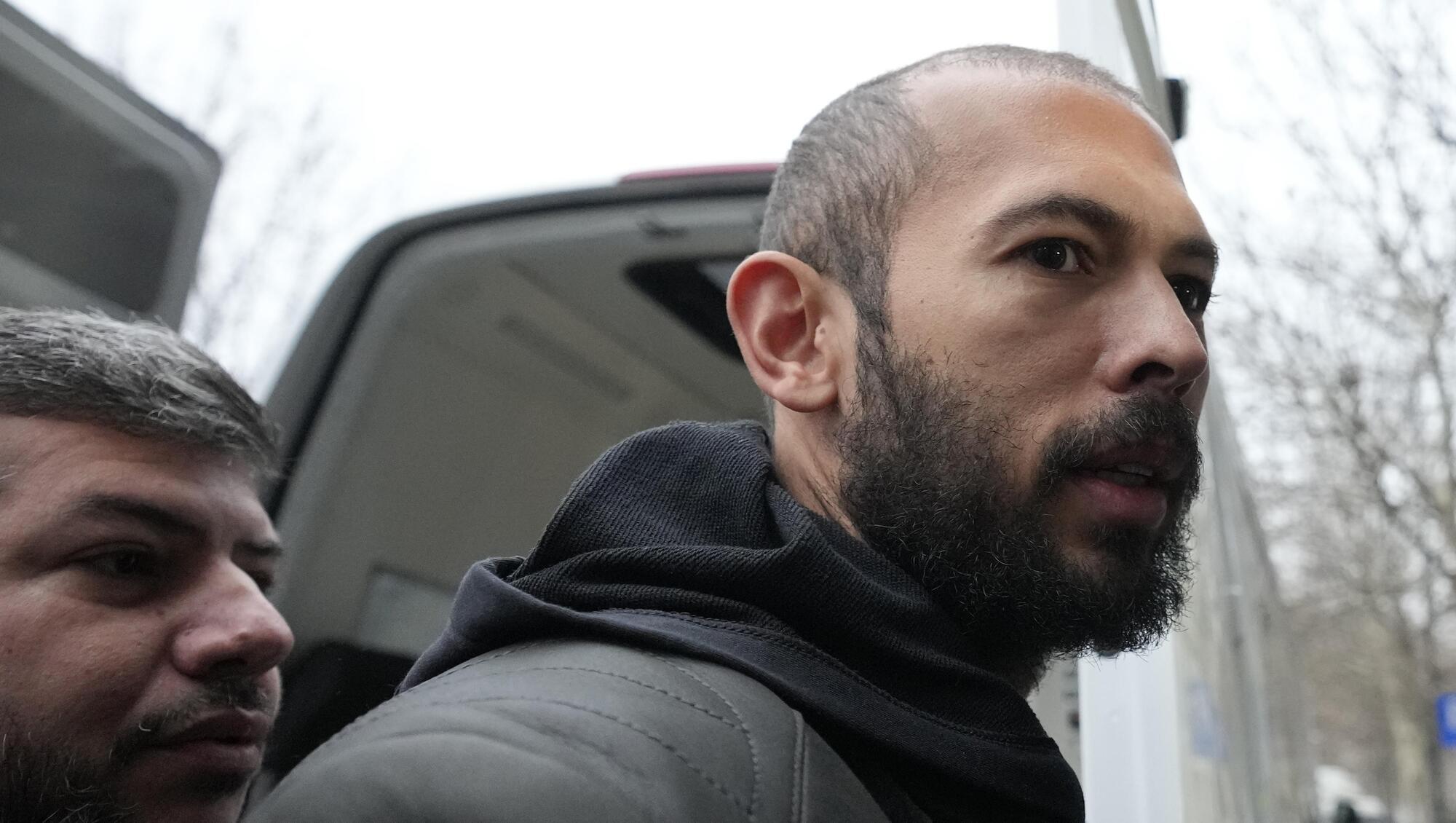
Andrew Tate is being held on charges of being part of an organised crime group involved in human trafficking and rape. Tate is banned from YouTube, TikTok, Twitter, Facebook, and Instagram. However, up until recently, he hadn’t been. These systems we created, which some profited from, gave him and those with views like him carte blanche. Picture: Andreea Alexandru/AP

Long before the popularity of Andrew Tate, a friend told of how she’d been out walking with her mother one evening. The pair walked past a group of teenaged boys dressed in the local school uniform. She clocked them at about 14. The group of boys were talking about a girl they “fancied”. One boy said: “I’d rape her.” Not that all of the boys laughed, but there was no major reaction to what had just been said. It was more that they didn’t really understand the significance or magnitude of it.

This week The New York Times ran a report called ‘Brainwashing a Generation: British Schools Combat Andrew Tate’s Views’.

For the blissfully unaware, Tate is a man who up until very recently made his living online, publishing controversial content on all of the major social media sites. He told his swathes of followers how women who are raped should bear some responsibility, how they belong to men, should stay at home, and need men’s direction. He also glorified wealth and fast cars, so there’s that attraction too — spawning the common catchphrase among our youth: “What colour is your Bugatti?”

He also positions men as victims of feminism and false rape accusations. He said he was raised by a single mother in England.

He was once on Big Brother but was removed from the show when a video of him hitting a woman with a belt began circulating — both parties claimed it was consensual.

Tate is currently in custody in Romania on charges of rape and human trafficking. He was arrested at the end of December, an arrest that has apparently not turned the youth of today off him. The New York Times looked at multiple schools in the UK that are running workshops and lectures to counterbalance Tate’s narrative and script that is widely in circulation, thanks to social media’s hosting of him.

One boy in an English school watches 10 Tate videos a day.

Up until Tate’s arrest, many adults in Ireland, especially parents of children, were unaware of this man’s presence in children’s lives. Such is the insular and bombarding nature of social media.

Yesterday, a friend found a phone in the playground while out with their toddler. The phone belonged to a 10-year-old girl and beeped incessantly with various social media notifications until its owner arrived to collect their prized possession. The finder said their phone wouldn’t light up that many times in a week. How could any parent keep check on the ingestion of that much information?

An undecided-upon point from the schools, students, and educators in England was this: Is Tate popularising misogyny or just reflecting it?

The point is: Our systems and society allowed this man and his views to flourish. Tate, therefore, could have been anyone. Only he capitalised on our modern media systems where every type of content is publishable without editing or fact-checking.

And it’s not just the structures within the walls of the social media system that gave him the open road, it’s the cheap, ultra-accessible porn that is less than a click away.

In Ireland, teens have spoken about this, and some of their sentiments included: “I wish I hadn’t been given a phone so young.” But then, parents are up against it, raising children in a screen-centred world, where they pick up their phone to send a quick email, transfer money on the banking app, check the weather for the walk, get back to a school-group WhatsApp, and they can’t exactly practise what they preach about reducing screen time. These devices are so entwined in our lives, and the apps that live on them are so rewarding to the brain.

Smartphones, and the myriad of benefits they provide us, are not going anywhere. But the first generation of digital natives are coming of age and they’ve been exposed to a lot of things that we now have to counteract.

In more traditional media, consumption could be a communal act with the radio on in the office or the TV on in the flatshare or family sitting room. Everyone saw what everyone was seeing. The same with newspapers. On trains or in offices, or in homes, your reading material and its headlines were perfectly visible to passers-by. Furthermore, it was at a far slower rate of consumption, fewer words, fewer images, fewer videos and comments, were coming at you by the millisecond.

Information is rapid and abundant, and consumption is insular. This is the unchecked, unedited, for-profit, and metric-driven world in which Tate has flourished.

Various human rights organisations have called on social media firms to do more to combat extremism of any kind on their platforms. Right now, Tate is banned from YouTube, TikTok, Twitter, Facebook, and Instagram. But up until recently, he hadn’t been. These systems we created, which some profited from, gave him and those with views like him the carte blanche to create.

But it goes far further back than that, quite far further back.

Nicola Bulley's private life was given public exposure.

In classicist Mary Beard’s book Women and Power, she starts with women’s representation at the “very near beginning” of western literature — Homer’s Odyssey. Here we find the first recorded example of a man telling a woman to “shut up”. A son tells a mother: “Speech will be the business of men, all men, and of me most of all; for mine is the power in this household.” The mother does as she is told, and goes back to her quarters. And so it began — Tate can claim little, only easy opportunism of misogyny that is millennia old and that finds a warm home in the online world.

In far more recent examples of our public relationship with women, we have the disappearance of Nicola Bulley in England — how a missing woman’s private life and the very common experience of menopause became a focal point of the search for her.

While social media, and how we use it, didn’t come out great, the menopause line came from the traditional powers that be. Also in England, there was the death of school principal Emma Pattison, understood to have occurred at the hands of her husband.

A narrative that emerged centred on how her success might have been a trigger for him. We’ve heard this line before — “she made me do it, your honour” — and if it wasn’t her success, it was the skirt.

Last month, Justice Minister Simon Harris said he is “really worried” about Tate’s influence on younger people, highlighting the importance of programmes teaching sex education and gender equality in our schools.

Next September, a new sex education programme will be rolled out in our primary and secondary schools. It has been met with opposition.

The programme contains information on consent, pornography, and gender identity — but in a world where these topics are commonplace online, perhaps we need to work with this progress not oppose it.

Many horses have bolted — denying this reality does not serve our kids.

More in this section

Revoiced

Newsletter

Sign up to the best reads of the week from irishexaminer.com selected just for you.

Cookie Policy Privacy Policy Brand Safety FAQ Help Contact Us Terms and Conditions

© Examiner Echo Group Limited