Paul Hosford: It's not popular to say so, but we need more ministers
As the Dáil grows and the world around us changes, it is reasonable to ask if the bare 15 is really sustainable
Paul Hosford: It's not popular to say so, but we need more ministers

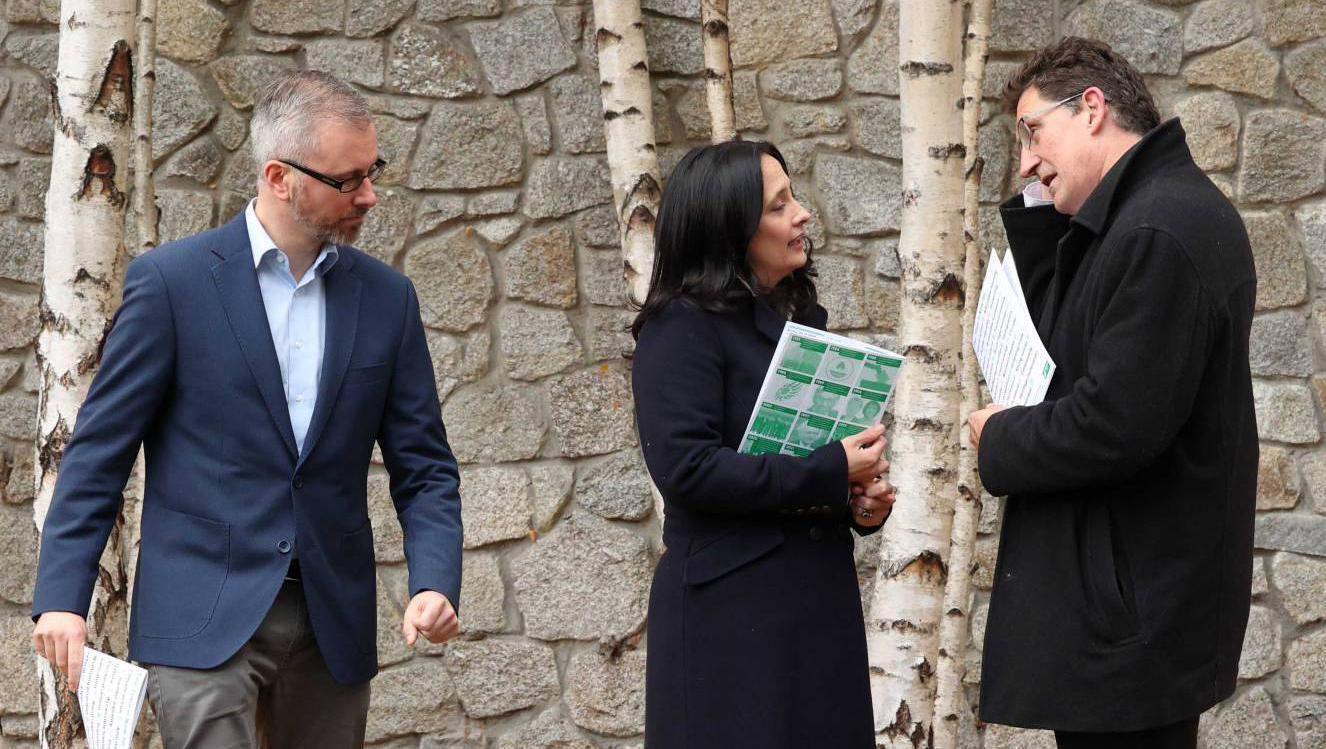
Eamon Ryan, Catherine Martin, and Roderic O’Gorman all command portfolios that are heavy on titles. The invasion of Ukraine and a rise in international protection applications has added to Mr O’Gorman’s workload significantly. Picture: Sam Boal / RollingNews.ie

I am aware that this will not be popular, but we may need more ministers.

Before you reach for your Twitter account to call me wrong or a victim of the Leinster House bubble or any number of expletives, hear me out.

According to Bunreacht na hÉireann, the Government “shall consist of not less than seven and not more than 15 members who shall be appointed by the President in accordance with the provisions of this Constitution” — but has that upper limit had its day?

Make no mistake, I am not arguing for a removal of an upper limit completely. Its existence allows an important safeguard against political patronage and ensures that the Dáil — the elected representatives of the people — is able to hold the Government accountable.

But that specific number, 15, was set at a time when the number of TDs in the Dàil was 138. With the Electoral Commission set to increase the numbers in the next legislature to at least 170, the argument can be made that 15 is disproportionately low. India, for example, ties the number of ministers to a percentage of overall members of parliament which allows for population growth without the need to revise the Constitution.

But this argument goes beyond pure numbers and percentages. Instead, we can look at the makeup of our current Cabinet and see that the original 15 number was simply not designed with modern challenges in mind. Green Party ministers Eamon Ryan, Catherine Martin, and Roderic O’Gorman all command portfolios which are heavy on titles.

Mr Ryan has the responsibility not just for Ireland’s response to the emergency of our age in climate change, he is minister for transport too. Oh, and environment. And
communications. 

Mr Ryan oversees the buses and trains and roads we commute on, the energy grid, natural resources, waste policy, the National Broadband Plan, airports, eircodes and 999 services. Among other things.

This is not to say that Mr Ryan is not a capable politician or that we should weep that his day is busy. It is to ask the question; should we have to group ministries in such a way because of a 90-year-old decision in our Constitution?

Likewise, Mr Ryan’s party colleague Catherine Martin has a lengthy brief. She is the minister for tourism, culture, arts, Gaeltacht, sport and media. It is easy to say that all of these individual briefs may not warrant a standalone ministry, but surely three together would?

Ireland is an island nation known for its culture and its arts. Our tourism industry employs nearly a quarter of a million people and has faced a difficult decade or so. If the Cabinet was allowed to be 16 or 17 or 18 ministers would we be better served by a Minister for tourism, culture and arts and one for the Irish-speaking regions, sport and media?

Refugee crisis

Another Green Party minister, Roderic O’Gorman, holds the title of Minister for Children, Equality, Disability, Integration and Youth. When the Government was formed, this may have looked like a brief that could be self-contained. But the outbreak of war in Ukraine means that Mr O’Gorman is carrying a department which is not yet fully legally responsible for all of its titles and must handle the most unprecedented emergency which Ireland has faced since its establishment as a nation.

Mr O’Gorman was always going to have a difficult time in abolishing the direct provision system, which may not happen during the lifetime of this Government, but the war in Ukraine and the subsequent humanitarian effort, along with a massive increase in international protection applications, beg the question of whether the minister would be better served with a clearer role.

There is also the issue of not just what is a senior ministry, but what isn’t.

At a time when there is a war on the continent of Europe, our Defence Forces are undergoing massive reform, and questions are being raised about our place in the world, there is no senior standalone minister for defence. 

The current office holder is Tànaiste Michéal Martin, who also serves as minister for foreign affairs, meaning he is out of the country through much of his work.

Defence had been its own ministry up until the end of the Fianna Fáil government in 2011 and was given to Alan Shatter along with Justice in that year. Since then, it has been under the Taoiseach’s office before Simon Coveney took it as minister for foreign affairs in 2017.

Defence not being a full ministry of its own has been a contentious issue for a number of years, but when the question is asked which ministry makes way, it’s hard to pick an easy one.

The newly established Department of Further and Higher Education, Research, Innovation and Science is something which that sector pushed for a long time, seeing its own challenges and desires as different to those of primary and secondary education.

Should we be constitutionally bound to choose which of these is given full importance at the Cabinet table?

The issue facing any increase is that it would require a likely unwinnable referendum. No Government is likely to burn political capital on an argument that there should be more highly paid members of Government.

And, so, it is likely we will continue with the 15 senior members of Cabinet, employing workarounds like super-junior ministers who sit at the table but don’t lead a department and increased junior ministers, each more specialised than the last.

But as the Dáil grows and the world around us changes, it is reasonable to ask if the bare 15 is really sustainable. The authors of Bunreacht na hÉireann could hardly have anticipated the need for a minister for climate change or the growth of the Irish population to the levels predicted.

Would a floating limit, tied to the number of TDs, not be a better use of our ministries?

Now you can reach for your phone. But please, be nice.

More in this section

IE_logo_newsletters

Select your favourite newsletters and get the best of Irish Examiner delivered to your inbox

Execution Time: 0.216 s