Maeve Higgins: Fear and anger as China struggles to control virus and growing dissent

Maeve Higgins: Fear and anger as China struggles to control virus and growing dissent

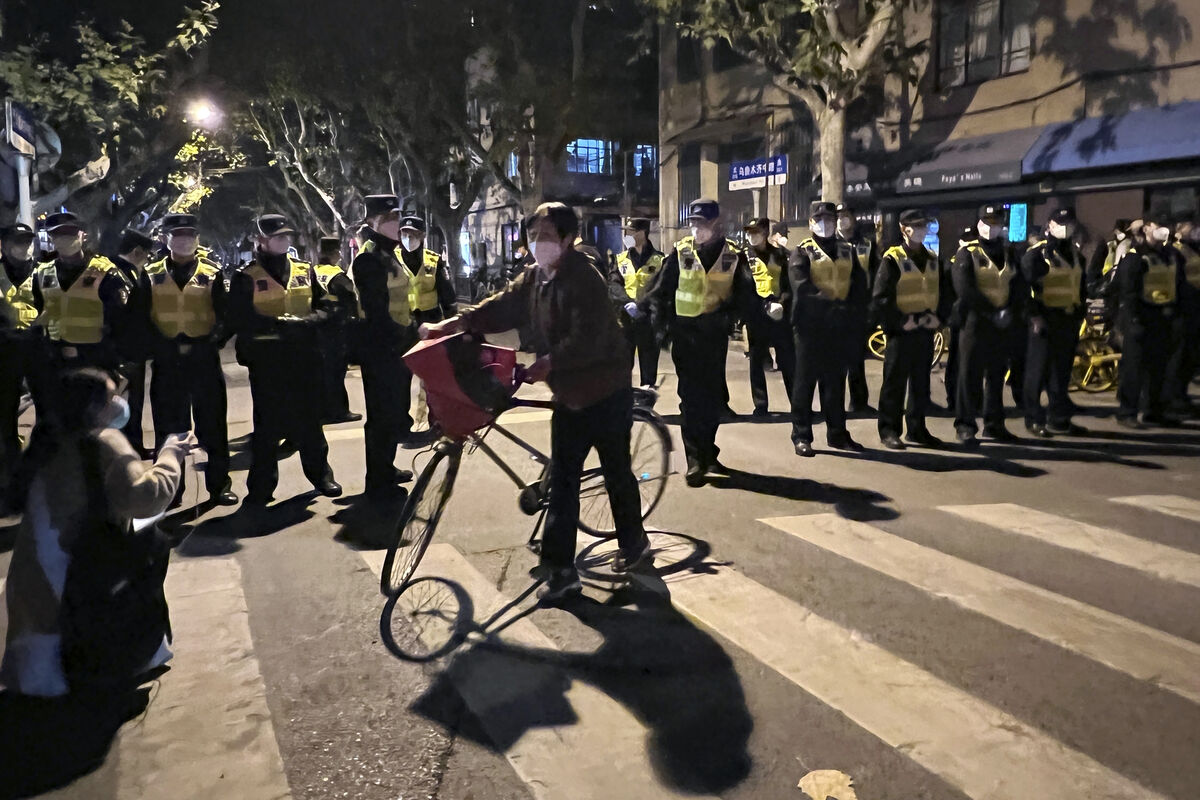
Chinese police officers block off access to a site where protesters had gathered in Shanghai to protest against China’s strict zero-Covid policies, continuing a round of demonstrations that spread across the country since a deadly apartment fire in the northwestern city of Urumqi led to questions over such rigid anti-virus measures.

As the third anniversary of the first recorded death from Covid-19 in Wuhan approaches, the Chinese government is still struggling to control both the virus and their population of 1.4bn people.

On Wednesday, the country’s National Health Committee released a 10-point plan easing its stringent but increasingly ineffective zero Covid measures. This was in response to a stunning series of protests against the measures that began late last month. Anti-lockdown protests broke out in many forms; with university students scrawling graffiti on campus walls and singing protest songs and hundreds of people holding up blank signs of paper to represent censorship. Others gathered on city streets to mourn their fellow citizens who had lost their lives because of the drastic lockdown measures.

On November 24, 10 people were killed in a fire in an apartment building in Xinjiang, where fire trucks couldn’t reach their building, seemingly because of barriers set up to keep residents under lockdown. In September, 27 people were killed when the bus they were travelling on crashed. They had been placed on the bus by the authorities who insisted on sending them to a preventative quarantine because they were close contacts of coronavirus patients.

The protestors also publicly expressed their anger against the enormous digital surveillance programs they are forced to live under, particularly as waves of Omicron cases trigger rolling lockdowns and impose travel restrictions on hundreds of millions of people. To understand the significance and impact of both the easing of restrictions and the protests, I spoke to Junjie (not their real name), a Chinese human rights activist who is in exile in the US because of their activism. Our conversation has been edited for length and clarity.

Chinese police officers block off access to a site where protesters had gathered in Shanghai.

Maeve: What do you think of the plan the Chinese government announced this week, softening some of the restrictions?
Junjie: It’s very clearly a response to the mass protests that happened in November, but it’s very problematic because they just did it because they felt anxious about maintaining social stability. They are trying to calm people down, but I just don’t trust that the government has the sufficient medical capacity to support a rising number of Covid-19 cases. China is an aging country and many people in the older population are still without a vaccine. I expect another wave of tragedy, especially during Chinese New Year when everyone is travelling and going back to their villages to see the old people. I support lifting the restrictions but I worry, because the Central Government cannot support the people during this Covid-19 crisis; they have already proven to be very weak there.

Maeve: You took part in the protests here in the US in support of the protests back in China. Are you worried about repercussions on you and other activists here?

Junjie: I have seen reports from another human rights defender living abroad that he was contacted by the police who warned him to stop organising or even participating in protests abroad. The police detained his mother in China and put her in a Covid-19 quarantine facility, and now are threatening to put her in a mental institution if he continuing protesting. This is a normal strategy in China, to forcefully put you in hospital on the grounds of your mental health, which is not the true reason in most of cases.

Maeve: So the people who actually protested in mainland China, that was a big risk?

Junjie: Of course! People have asked why the protests were short — well, after a couple of days of protest, the government flooded the cities and the main squares with police. The police have also been stopping people randomly and searching their phones for photos or social media about the protests, or to see if you are using a VPN. I have many friends who protested and since then they’ve been questioned in a police station for 24 hours. My guess is hundreds of people have been questioned, and an unknown number have been charged with ‘picking quarrels and provoking trouble.’ [This is a piece of vaguely worded legislation that is often used against human rights activists, lawyers, and reporters in China who speak up against the government, including Junjie who was arrested on this charge a number of times when they lived there].

Maeve: Do you see anything different about these protests to former protests in China?

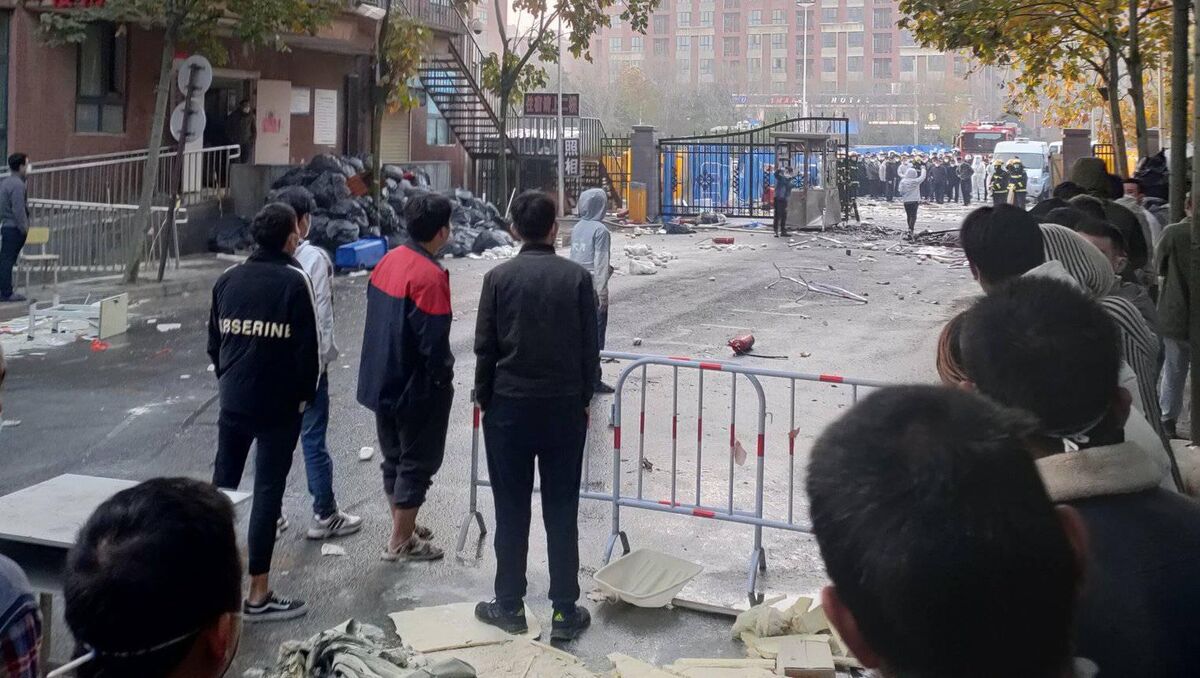
Employees at the world's biggest Apple iPhone factory in Central China protest over contract disputes amid anti-virus controls.

Junjie: Yes, starting with the workers at the Foxconn Factory who fought back against terrible working conditions, even after the police attacked them, and then posted about that on TikTok. That took great bravery. It created a new imagination of protest in urban people, and in intellectuals, because in China we don’t have freedom of expression and we don’t have the right to protest. But this working class and decentralised movement has inspired a lot of emotion. It has also taught everyone some strategies about how to stand up and fight back.

Maeve: Is there anything else you think is important to know about the situation in China right now?

Junjie: I think this could be a revolutionary moment. A lot of what is happening was previously unimaginable. The protests are because of the three years of lockdown, but there are other reasons too. Look at the economic situation; ten years ago you could easily find a job, now people with university degrees are struggling to find jobs. Nearly 20% of China’s urban youth are unemployed. The political situation has changed too, with Xi Jinping recently seeking something like a permanent presidency. This is all contributing to people developing more of a political consciousness. Even in the Tiananmen movement, people were not calling for the President to step down, but in these protests, some people were calling for that.

Maeve: So, holiday season is approaching here in the US and in China, how does it feel to be in exile and unable to go home to visit family and friends?

Junjie: I have been exiled for a while, so now I just see that as an established fact. Personally, I’m more worried because I don’t know how to support my people.

I don’t have the capability, because I’m out of China, to support the people who are arrested. I can’t physically go to the police station and ask them to release my friends.

I’m sorry to tell you but it is this alienation and this disconnection from the movement that is definitely causing me more suffering than missing the holidays.

More in this section

Revoiced

Newsletter

Sign up to the best reads of the week from irishexaminer.com selected just for you.

Cookie Policy Privacy Policy Brand Safety FAQ Help Contact Us Terms and Conditions

© Examiner Echo Group Limited