Alison O'Connor: We must not let fear of litigation halt future screening programmes
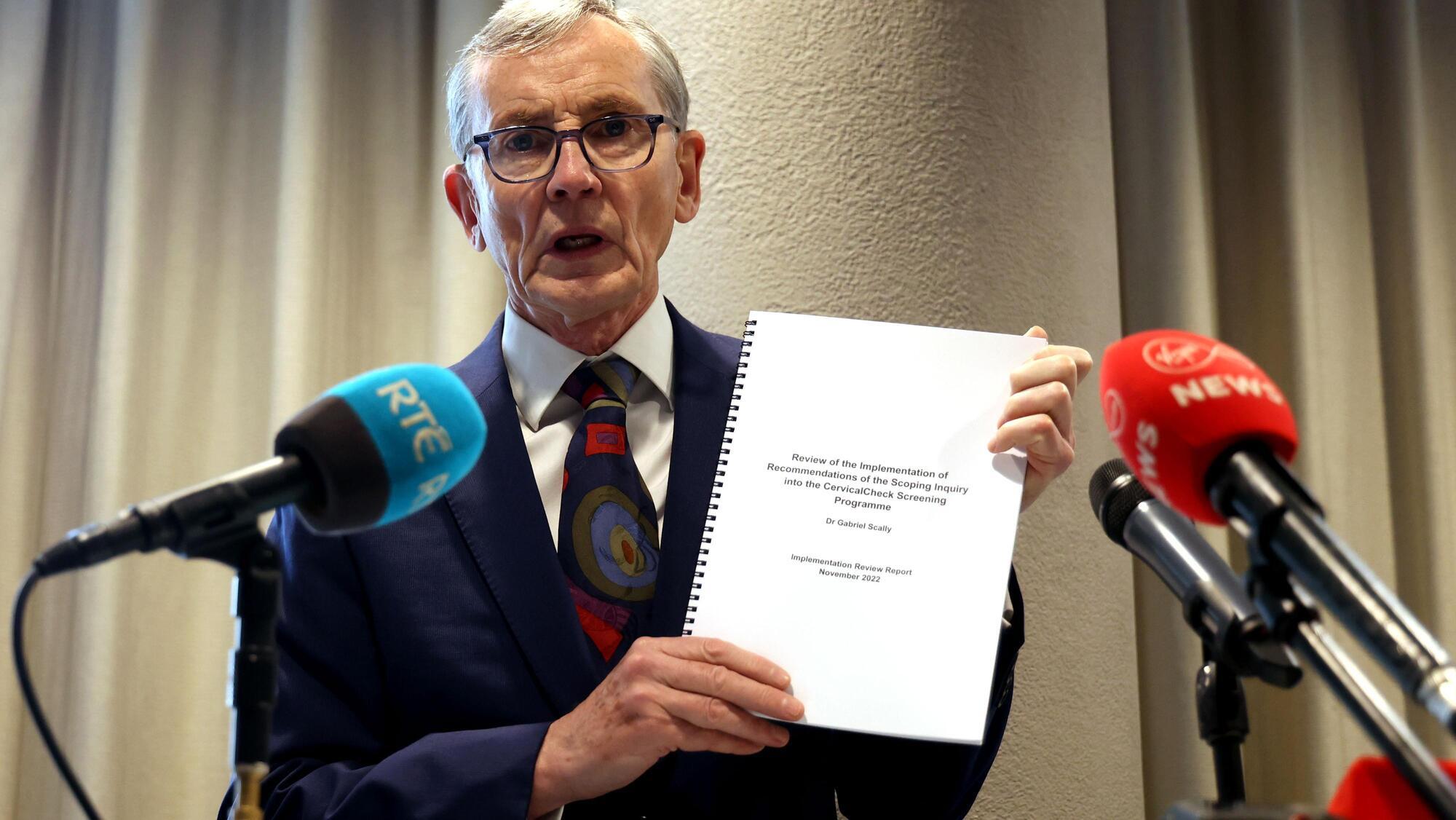
Gabriel Scally stated: âWomen can have confidence in and should take full advantage of the cervical screening programme.â Picture: Sam Boal
A Government establishes health screening services to protect its citizens on a population-wide basis. Despite being screened, some citizens still get cancer. They blame the State. They seek large amounts of compensation. Now the very existence of those programmes comes under threat, and the State thinks twice about setting up new ones. Itâs a cautionary tale.
This week, Gabriel Scally finally signed off on his examination of CervicalCheck, saying there is now a screening service that women can trust, that has improved substantially. The many recommendations he made in his 2018 report have been substantially completed.
âWomen can have confidence in and should take full advantage of the cervical screening programme,â Dr Scally states. âIt has saved many womenâs lives and will continue to do so.â
Time to move on, then. But no. The narrative continues to be pushed that there are questions to be asked about the safety of our screening services, and not just cervical screening.
A refusal to accept the known limitations of these services â the fact that they work to protect on a population-wide basis, detecting cancers that might never otherwise have been caught, but by their very nature miss out on a number.
Screening is not a diagnostic tool, but this fact was not stressed enough when programmes were introduced here. There is no such thing as foolproof. Just because something has not been found does not mean that something is not there. Sadly, this message was lost when the CervicalCheck controversy broke, as everyone, including politicians, ran for cover.
The fact is that long before Wednesdayâs sign-off by Dr Scally, our cervical screening programme, introduced in 2008, fared very well by international comparison.
The controversy arose in 2018, and some elements of it, especially communication with women, left a huge amount to be desired.
Unfortunately, some of the more awful cultural aspects of the medical profession remain unchanged.
Plus, if you look at Irelandâs history of the treatment of its females â well aired in this column â it is no surprise that Irish women reacted with so much dismay when they felt cancers that could and should have been detected were not; that women were dying and leaving distraught families behind them.
But experts in this area will tell you it is to be expected that around five out of 20 of the women who end up developing cancer will not have it detected by the screening programme. This statistic absolutely sucks for those five women, but unfortunately thatâs how population screening works.

Dr Scally did say this week that the cervical cytology slides of Irish women had been sent to âfar distant laboratories abroad that were entirely unknown to CervicalCheckâ, and that there was a quality assurance system within the HSE that was not fit for purpose. He spoke of how it was âentirely reprehensible to claim that, in the past, CervicalCheck was as good as any other cervical screening programme in the worldâ.
The good news here is that, despite what Dr Scally states, a number of reports have shown that the screening programme, when compared internationally, was operating to the same standard and with the same outcomes and the same number of missed cancers as you would expect. Perhaps this was down to simple good luck.
Experts from the Royal College of Obstetricians and Gynaecologists (RCOG) reported in 2019, after examining over 1,000 slides from women who developed cancer after screening. It found a similar rate of discordance [changed result] here on lookback as the UK programme. At the time, the RCOG group said: âWomen can have confidence in the CervicalCheck programme.â
Yet again this message did not get through to enough people, and many of those with an audience continue to insist there has been wrongdoing. Ireland stands out for the fact that we have so much litigation going on against screening programmes, not just CervicalCheck but BreastCheck as well.
As Dr Scally told the Business Post last summer, the fact that screening has a negative aspect to it was not well communicated by the HSE in 2018.
âGetting the balance right between earlier treatment for conditions and the negatives of over treatment and invasive investigations is difficult,â he explained.
âThey also get things wrong. Screening often involves human judgement. The boundaries of where that judgement lies can be difficult and once you introduce a human aspect, you always run the risk of error.â
A broad outline of figures from the State Claims Agency shows there have been 378 claims received by CervicalCheck up to the beginning of this month. These include psychological claims brought by family members. Of those, 225 claims are active and 153 have concluded. It is estimated that the eventual bill could go as high as hundreds of millions of euro.
Fear of payouts
Which brings us onto the possibility of new screening programmes and the idea that any Government would want to open itself up to further payouts.
At the beginning of the year, the Irish Cancer Society called for lung screening to be introduced. Lung cancer â the most common cause of cancer-related deaths â kills almost 2,000 people in Ireland each year. Just like breast and cervical, picking up lung cancer earlier gives people the best chance of survival.
In its submission to the National Screening Advisory Committee for the new programme, the Irish Cancer Society proposed that lung screening involving a CT scan be rolled out to current or former smokers aged 50-74, given this group is most at risk.
Last year, Health Minister Stephen Donnelly told the DĂĄil lung cancer screening is being considered and is referenced in the European Commissionâs recent Beating Cancer Plan.
In recent years, a limited screening programme was established in the UK, which began in some of the areas with the highest death rates from lung cancer. But when considering the viability of establishing such a programme here, the costs of possible future litigation would have to be factored in.
A national lung cancer screening programme would almost undoubtedly be a lifesaver for thousands of Irish citizens in years to come.
All things being equal, it would make eminently good sense to introduce one, or at least to investigate it properly.
But weâre all aware of the barrel of sawdust that is our health service â the more money that is poured in, the more that is soaked up. The prospect for decision-makers in the health services and around the Cabinet table of taking this step, only for it to be subsequently mired in cripplingly expensive legal actions, makes all involved understandably gunshy.
Itâs an awful situation for us to be landed in â for programmes that have such potential to do good.
Those who have lost loved ones are understandably hurting and questioning. But it is time for us all to realise that these programmes present the opportunity to save lives.
They are not infallible. But that does not mean they are not hugely valuable.

Subscribe to access all of the Irish Examiner.
Try unlimited access from only âŹ1.50 a week
Already a subscriber? Sign in
CONNECT WITH US TODAY
Be the first to know the latest news and updates