Alison O'Connor: We can be trans-inclusive without undermining women’s rights
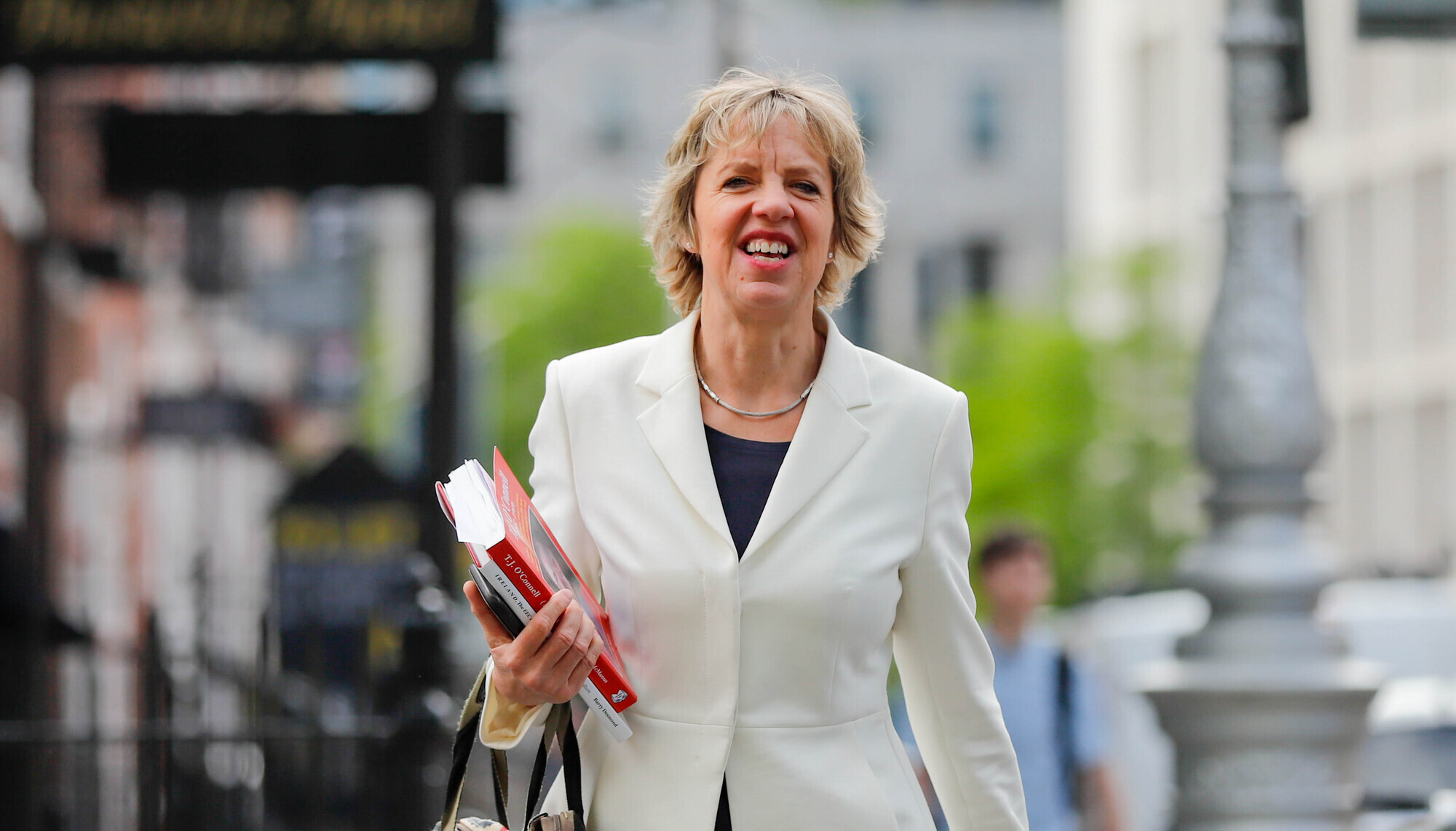
Labour leader Ivana Bacik, chair of the Oireachtas Committee on Gender Equality, has expressed her disagreement with the word ‘woman’ being removed from our maternity laws. Picture: Damien Storan
The chair of the Oireachtas Committee on Gender Equality this week expressed her disagreement with the word “woman” being removed from our maternity laws.
Labour Party leader and chair of the gender committee Ivana Bacik gave her backing to keeping the word “woman” in the laws that cover maternity rights in Ireland.
Following the issue being raised on Liveline in June Ms Bacik said she received a number of emails from people expressing concern about a proposed change to some definitions in the Maternity Protection Act 1994 aimed, the Department of Equality said, at making the language in that Act more inclusive.
“I think we can be trans-inclusive without removing the word woman,” she said. “We don’t want to undermine decades of campaigning for women’s rights.
“We have to remember that so much structural misogyny still exists, but along with that be very sensitive and respectful to trans people.”
As previously addressed in this column it can be a difficult thing to get a national politician to express views on this issue; many say they are afraid because the debate can be so toxic.
Ivana Bacik is to be admired for being willing to address it.
The Labour leader gave as an example the legal definition of ‘woman’ used in the laws governing abortion, the Health (Regulation of Termination of Pregnancy) Act 2019. Section 2 provides that ‘woman’ means a ‘female person of any age’.
The word ‘woman’ is used throughout the Act, she points out, adding it seemed sensible.
“There is a recognition embedded in there that a person who may not identify as a woman may be pregnant. Some of the debate has become very polarised. Most people would like to see recognition of trans rights, but not to see the removal of the word woman. I think we can be inclusive in language without removing agency.”
She points out it was Labour that steered the Gender Recognition Act 2015 through the Oireachtas.
In Britain, trans rights have become central to the culture wars, not least in the Conservative leadership race.
Liz Truss, almost a certainty to be the next British prime minister, has said that trans women are not women, aligning her with the view that sex is biological and should not be conflated with gender identity.
In this instance, Bacik does not agree. “I get lots of emails saying only a biological woman is a woman, but clearly we must respect people’s identity. A trans woman is a woman. A trans man is a man.”
Compromise in sport
On sport she said: “There has to be compromise” and favours a “case by case” approach rather than the recent rule by the Irish Rugby Football Union. That rule change meant transgender women will not be allowed to compete against adult female rugby players in Ireland “in order to ensure fair competition and the safety of competitors”.
The Labour leader added: “There also needs to be fairness for women in sport so nobody is disadvantaged. Blanket bans are not the right approach.”
Bacik, who has a long track record campaigning for women’s rights, and on LGBTI rights campaigns, makes some interesting points at some of the opposition to this proposed provision being based on a concerted attempt to drive a wedge between feminists and transgender activists: “We have seen this division being exploited by conservative forces in other countries.”
This is true but there are also a large number of people, not just women, concerned at the proposal to basically remove mention of “woman” here. There was a marked reluctance on the part of Equality Minister Roderic O’Gorman to make changes, even if these are now a possibility. That old reliable — legal advice — was cited, yet as we can see with the abortion legislation, introduced by then health minister Simon Harris, it can be done inclusively and with good common sense.
Meanwhile, four doctors at the National Gender Service (NGS) have met with Health Minister Stephen Donnelly to express their concerns about our continued use of the Tavistock gender identity clinic in London.
That clinic, which continues to treat Irish children with gender dysphoria, has been criticised in a report by paediatrician Dr Hilary Cass. The former president of the Royal College of Paediatrics led the independent review of the Tavistock.
Psychiatrists Dr Paul Moran and Dr Ian Schneider, and endocrinologists Professor Donal O’Shea and Dr Karl Neff, met with Mr Donnelly on Tuesday to discuss their concerns.
In an interview on RTÉ’s This Week, Dr Karl Neff said they want to establish a service in Ireland for children within the existing NGS.
He spoke of “desperate” people waiting up to eight years to be referred to the NGS and expressed concern that as a result people are being pushed to the fringes and in desperation resorting to “unprescribed, unmonitored hormone therapies”.
Holistic approach
A new Irish service would involve a multi-disciplinary team and take “a very holistic view of the person and address all of their needs, not just address gender, which is what happens in many gender services”.
Dr Neff made the point that the “evidence base” in treatment of children is currently very poor, and, as identified by Cass, there is no medical consensus on “gender affirming interventions”.
He pointed to an absence of evidence in the use of puberty-blocking drugs on young people or their long-term health consequences. “But that is not to say we should not provide them or deliver them, it just means we don’t really know how best to do it or what the risks and benefits are and what the long-term outcomes are.”
Dr Neff said the final Cass report is likely to recommend that if you prescribe puberty-blockers it is done within a research protocol setting so that evidence is gathered as it is being done — unlike what happened at the Tavistock.
Asked about how the emotions that surround this subject might influence why a service has not been set up for children in Ireland, Dr Neff said he detected, although didn’t know for sure, that “within the political establishment and within senior HSE management there is a fear”.
People are afraid of putting their stamp on something which may later have turned out to be the wrong decision.
“That is where the clinicians come in. We have 20 years of clinical experience and training in our adult service — collecting data, auditing what we are doing, checking what we are doing, all the time. By doing that and relying on the clinicians doing the work we can really help and reassure people who are afraid of investing and supporting gender services in this country.”
In a statement, the Department of Health said the meeting with the minister was constructive and he now intends meeting with other clinicians and stakeholders. It also said the minister “believes the development of a service in Ireland for children and young people is essential”.
This makes sense. Just as long as decisions are taken quickly and the recommendations of the Cass report taken fully on board.

Subscribe to access all of the Irish Examiner.
Try unlimited access from only €1.50 a week
Already a subscriber? Sign in
CONNECT WITH US TODAY
Be the first to know the latest news and updates